
Morning Routine vs. Evening Routine: Why Timing Actually Matters in Skincare

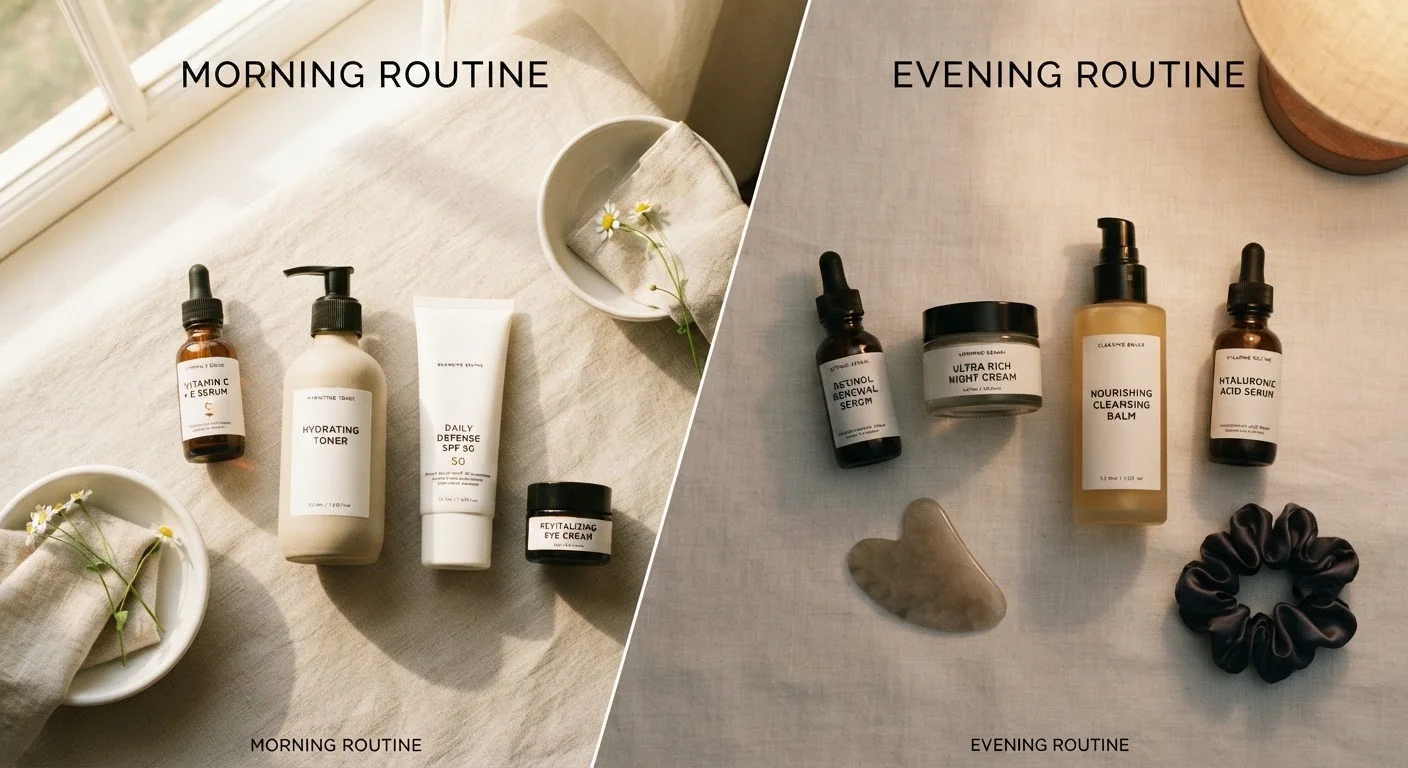
Photo: AscendWit.com | Explore Engaging Blogs. editorial
Key Takeaways
- Morning routines should focus on protection: antioxidants and SPF defend against daily environmental damage.
- Evening routines are when skin repairs itself, making night the ideal time for actives like retinoids and exfoliants.
- Some ingredients - like retinol and certain acids - are less effective or even harmful if used in morning sunlight.
- Doubling up on actives morning and night without guidance can cause irritation rather than faster results.
- A consistent two-routine structure doesn't have to be complicated - even a few targeted steps make a real difference.
Why Timing Is a Real Factor, Not a Marketing Gimmick
Skin doesn't behave the same way in the morning as it does overnight. During the day, your skin acts as a barrier - defending against UV radiation, pollution, and environmental stressors. At night, it shifts into recovery mode: cell turnover increases, blood flow to the skin rises, and repair processes accelerate. These biological rhythms are well-documented in dermatology research and are exactly why your AM and PM products shouldn't be identical.
Using a product at the wrong time of day doesn't just reduce its effectiveness - in some cases it can cause real harm. Certain active ingredients become unstable or even irritating when exposed to sunlight. Others work in harmony with the skin's nighttime repair cycle and deliver noticeably better results when timed correctly.
If you're still working out what your routine even needs, see our guide to what a skincare routine actually requires before adding timing considerations on top.
What Belongs in a Morning Routine
Your AM routine has one overarching job: prepare and protect. The products you apply in the morning are setting up a defense system your skin will rely on for the next several hours.
- Gentle cleanser (or water rinse): Morning cleansing removes sweat and any overnight product residue without stripping the skin barrier. A heavy cleanser isn't usually necessary after a full night of sleep.
- Antioxidant serum (such as vitamin C): Antioxidants neutralize free radicals generated by UV exposure and pollution. Vitamin C is most widely studied for this purpose and is best applied in the morning when environmental exposure is highest. It also degrades in sunlight - applying it before SPF gives it a chance to absorb first.
- Moisturizer: Hydration supports the skin barrier's ability to function as a protective layer throughout the day. See what each classic routine step is actually doing for more detail.
- Broad-spectrum SPF: Sunscreen is non-negotiable in any morning routine. UV damage is cumulative and is the single most evidence-backed cause of premature skin aging. Apply it as the final step.
Vitamin C and SPF Work Best Together
What Belongs in an Evening Routine
Your PM routine is where transformation happens - slower, less visible, but highly impactful over time. Because skin is in active repair mode overnight and you're no longer exposed to UV light, this is the ideal window for ingredients that accelerate cell turnover or that sunlight would otherwise degrade or activate into irritants.
- Thorough cleanser: Evening cleansing is more important than morning. You're removing sunscreen, makeup, pollution particles, and sebum that have accumulated all day. Skipping this step means your skin repairs itself in a layer of debris.
- Retinoids: Retinol and prescription-strength retinoids (which a dermatologist would need to recommend) are among the most studied active ingredients in skincare. They work by accelerating cell turnover and stimulating collagen. They must be used at night because they degrade in UV light and can increase photosensitivity. Start slowly - see this checklist for introducing actives safely.
- Exfoliating acids (AHAs/BHAs): Glycolic acid, lactic acid, and salicylic acid remove dead skin cells and can improve texture over time. Like retinoids, they increase sun sensitivity and are better suited to evening use.
- Richer moisturizer or facial oil: Nighttime is when you can apply heavier formulas without worrying about texture under makeup or SPF.
Don't Combine Retinoids and Acids on the Same Night
Side-by-Side: AM vs. PM at a Glance
The table below summarizes how these two routines differ across several practical dimensions. Note that these are general principles - individual skin types, conditions, and any products recommended by a dermatologist may shift what applies to you.
| Morning Routine | Evening Routine | |
|---|---|---|
| Primary purpose | Protection from environmental damage | Repair and cellular renewal |
| Key ingredients | Antioxidants, SPF, lightweight hydration | Retinoids, exfoliating acids, rich moisturizers |
| Retinoids appropriate? | No - degrades in UV light | Yes - core use case |
| SPF required? | Yes - final step always | No - unnecessary at night |
| Cleanser intensity | Gentle or water rinse sufficient | Thorough cleanse essential |
| Exfoliating acids appropriate? | Generally avoid - increases sun sensitivity | Yes - preferred timing |
| Routine complexity | Keep lean for consistency | Can support more steps |
One common mistake is layering too many actives across both routines without considering how they interact. Applying products in the wrong order - or pairing aggressive actives - can reduce absorption or cause unnecessary irritation.
Building Both Routines Without Overcomplicating Things
A well-timed routine doesn't require a dozen products. The goal is strategic, not exhaustive. If you're starting from zero, building a routine from scratch explains how to add steps gradually so you can actually tell what's working.
A practical starting framework:
- AM: Cleanser (or water) → antioxidant serum → moisturizer → SPF
- PM: Cleanser → active (retinoid or acid, not both at first) → moisturizer
Once these feel consistent, you can layer in additional steps based on your specific concerns. Keep in mind that routines may also need seasonal adjustment - what your skin needs in humid summer months differs from what it needs in dry winter air. Our guide to seasonal skincare adjustments covers this in detail.
This article is for general informational purposes only and is not a substitute for professional dermatological advice. If you have a skin condition or concerns about a specific ingredient, consult a licensed dermatologist before making changes to your routine.
The content on this site is for informational purposes only and is not a substitute for professional advice. Always consult a qualified professional for guidance specific to your situation.