
Added Sugar vs. Natural Sugar: Why the Distinction Matters

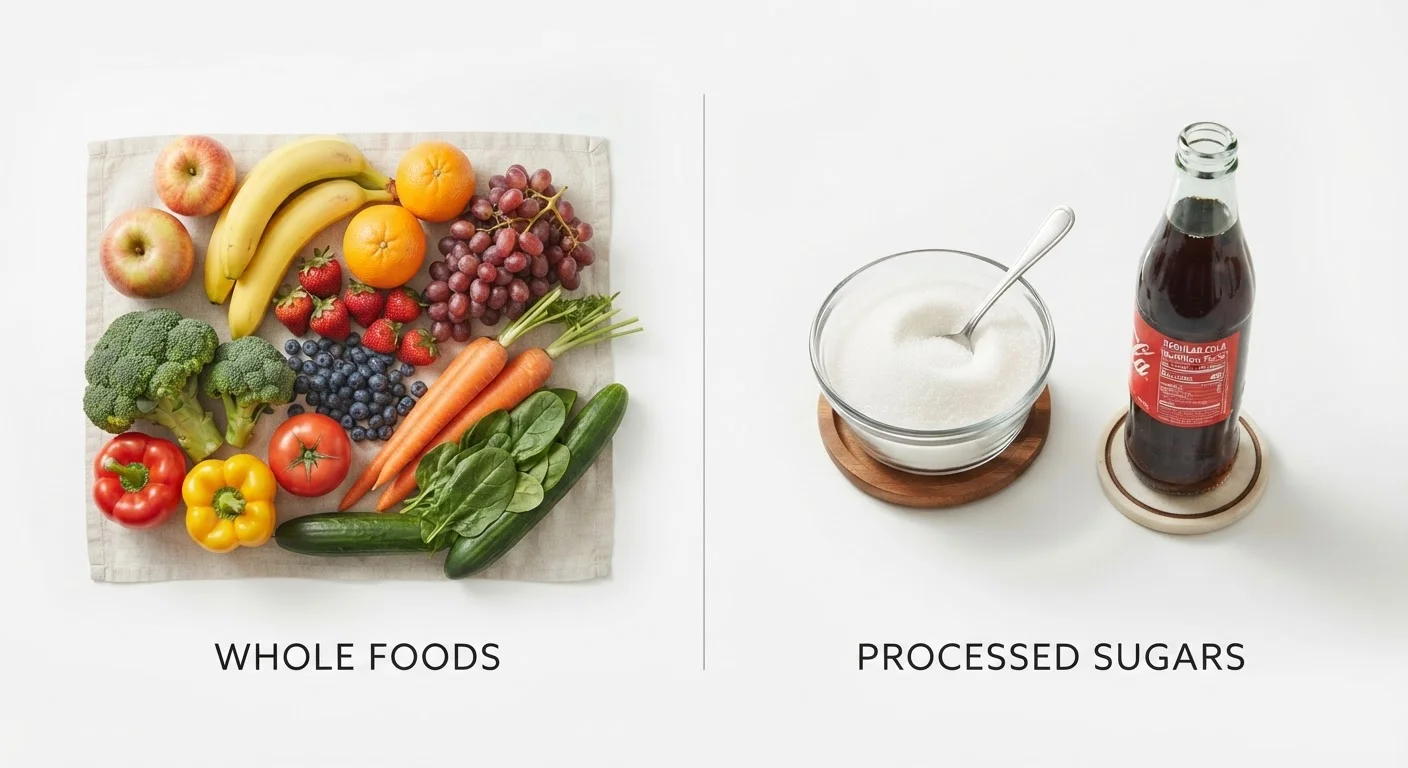
Photo: AscendWit.com | Explore Engaging Blogs. editorial
Key Takeaways
- Natural sugars occur in whole foods alongside fiber, vitamins, and other nutrients that affect how your body processes them.
- Added sugars are introduced during manufacturing or cooking and come with no accompanying nutritional benefit.
- The Dietary Guidelines for Americans recommend limiting added sugars to under 10% of daily calories.
- The FDA now requires food labels to list added sugars separately, making it easier to track your intake.
- Eating fruit does not carry the same health risks as consuming equivalent sugar from processed foods.
- Learning to spot added sugar on ingredient lists helps consumers make more informed everyday food choices.
What Makes a Sugar 'Natural' or 'Added'?
The difference between natural and added sugar isn't about chemistry - at the molecular level, the fructose in an apple and the fructose in a soft drink are identical. What differs is context: the food matrix the sugar arrives in, and what else comes with it.
Natural sugars are those that exist inherently in a food before any processing takes place. Fructose and glucose in whole fruit, and lactose in milk and plain yogurt, are classic examples. These foods deliver their sugars bundled with fiber, protein, water, vitamins, and minerals - all of which influence how quickly sugar enters the bloodstream and how satisfied you feel afterward.
Added sugars, by contrast, are any sugars or caloric sweeteners incorporated into a food or beverage during processing or preparation. This category includes obvious sources like table sugar (sucrose) and high-fructose corn syrup, but also honey, agave nectar, maple syrup, fruit juice concentrate, and dozens of other sweeteners that manufacturers use. When added to a product, these sweeteners contribute calories without the nutritional packaging that makes natural sugars less of a concern.
This distinction is why nutrition science - and public health guidance - treats the two categories differently, even when the sugar molecule itself is technically the same.
How Your Body Responds Differently
Consuming sugar from a whole orange versus drinking the equivalent sugar in a sweetened beverage produces meaningfully different physiological responses, even if the gram count is similar.
When you eat a whole orange, its fiber slows digestion, moderating the rate at which glucose and fructose reach your bloodstream. You also feel fuller more quickly, making overconsumption less likely. The vitamins (notably vitamin C) and plant compounds in the fruit add further nutritional value.
A sugar-sweetened beverage, on the other hand, delivers sugar rapidly, with no fiber to slow absorption. Research published in nutrition and metabolism journals has consistently linked high intake of added sugars - especially from liquid sources - to elevated triglyceride levels, increased risk of weight gain, and associations with type 2 diabetes and cardiovascular disease risk factors. The concern is not a single can or cookie; it is the cumulative effect of high added-sugar diets over time.
17 tsp
Average daily added sugar intake in the US
According to CDC analysis of National Health and Nutrition Examination Survey (NHANES) data, American adults consume roughly 17 teaspoons of added sugar per day on average.
~47%
Share of added sugar from beverages
The CDC reports that sugary drinks - including soft drinks, energy drinks, and sports drinks - account for nearly half of all added sugar consumed by US adults.
<10%
Recommended daily calorie limit for added sugar
The 2020-2025 Dietary Guidelines for Americans advise keeping added sugar intake below 10% of total daily calories for adults and children over age 2.
It is worth noting that even 100% fruit juice, while containing natural sugar, has lost much of the fiber benefit of whole fruit through pressing. Nutrition guidance from organizations like the American Academy of Pediatrics generally recommends limiting juice and favoring whole fruit for this reason.
What the Evidence and Guidelines Say
Major health bodies have drawn a clear line around added sugar specifically. The 2020-2025 Dietary Guidelines for Americans recommend that added sugars account for less than 10% of total daily calorie intake. For a 2,000-calorie diet, that translates to roughly 50 grams (about 12 teaspoons) per day as an upper boundary - not a target.
The American Heart Association sets even stricter recommendations: no more than 25 grams (6 teaspoons) per day for most adult women and 36 grams (9 teaspoons) for most adult men. These limits are aimed at reducing cardiovascular risk.
Notably, none of these guidelines suggest limiting natural sugars from whole fruits or dairy. In fact, current evidence consistently supports eating whole fruit as part of a health-promoting dietary pattern.
| Criterion | Natural Sugar | Added Sugar |
|---|---|---|
| Origin | Inherent in whole food | Added during processing or cooking |
| Examples | Fructose in fruit, lactose in milk | Table sugar, HFCS, honey, syrups |
| Comes with nutrients? | Yes - fiber, vitamins, minerals | Generally no |
| Effect on blood sugar | Moderated by fiber and food matrix | Often faster absorption, especially in drinks |
| Covered by dietary limits? | No specific limit recommended | Yes - under 10% of daily calories (DGA) |
| Listed separately on labels? | No | Yes - required by FDA since 2020 |
To navigate labels confidently, it helps to know that the FDA now requires "Added Sugars" to appear as a separate line item on the Nutrition Facts panel - a change that took effect in 2020 for most manufacturers. See our guide to reading a Nutrition Facts label for a plain-language walkthrough of how to interpret this and every other section of the panel.
Spotting Added Sugar in Everyday Foods
One challenge is that added sugar hides under more than 60 different names in ingredient lists. Beyond "sugar" and "high-fructose corn syrup," watch for terms like: dextrose, maltose, evaporated cane juice, rice syrup, coconut sugar, barley malt, and any ingredient ending in "-ose."
Some of the highest sources of added sugar in the American diet are not obvious indulgences. Flavored yogurts, breakfast cereals marketed as "healthy," pasta sauces, salad dressings, granola bars, and flavored coffees can each contribute significant added sugar - often without the consumer realizing it. This is the kind of nutrition trap hidden in everyday food choices that quietly adds up over time.
A useful practical habit: check the "Added Sugars" line on the Nutrition Facts panel and compare it against the daily value percentage (10% DV = 20 grams). Foods where added sugars account for 20% DV or more per serving are considered high in added sugar.
Processing also matters beyond just sugar. The pattern of stripping nutritional context from whole foods - seen with refined grains as well - is explored in our piece on whole grains vs. refined grains.
This article is for general informational and educational purposes only and is not a substitute for professional medical or dietary advice. Consult a qualified healthcare provider or registered dietitian for guidance specific to your health needs.
The content on this site is for informational purposes only and is not a substitute for professional advice. Always consult a qualified professional for guidance specific to your situation.