
Building a Balanced Plate: The Concepts Behind Portion Proportion

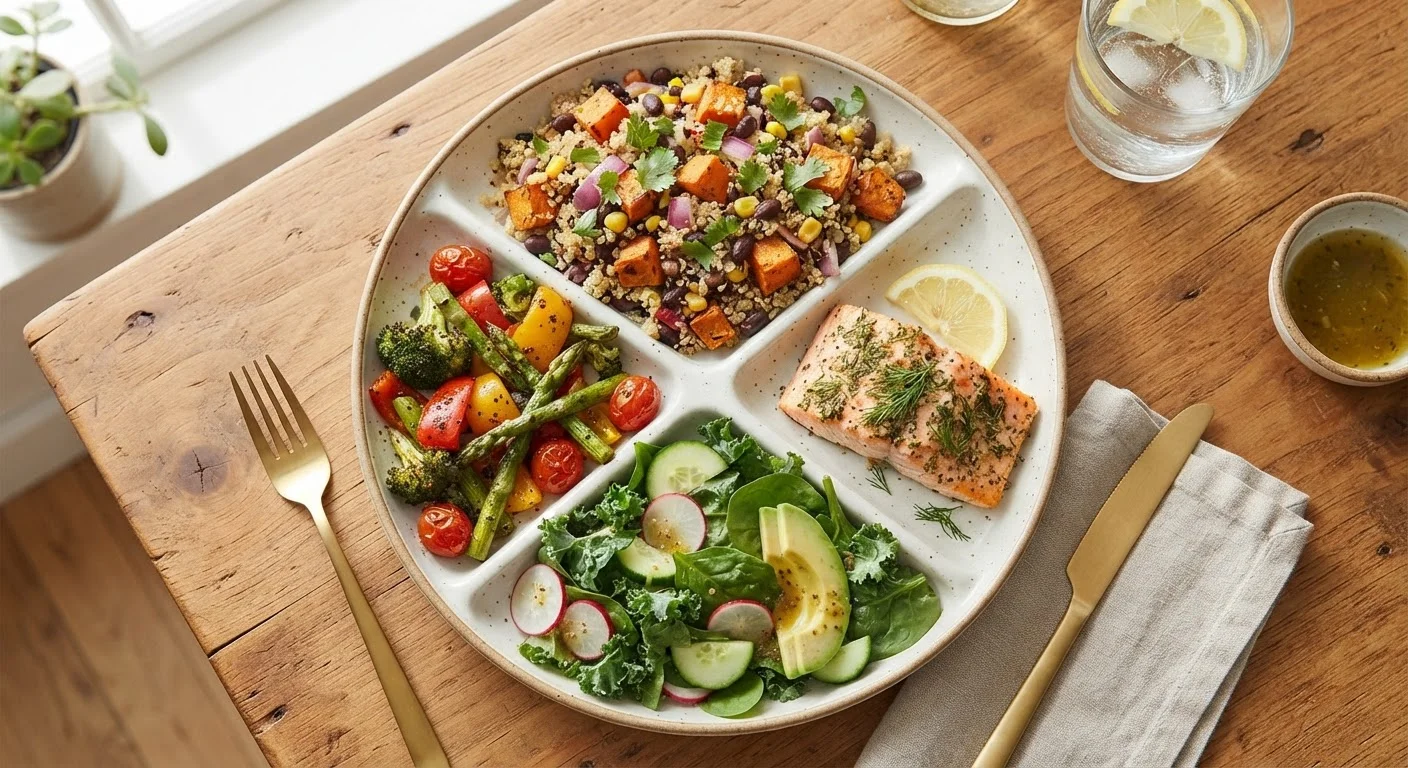
Photo: AscendWit.com | Explore Engaging Blogs. editorial
Key Takeaways
- Visual frameworks like the 'plate method' help structure meals without counting every calorie.
- Half the plate as vegetables and fruit, a quarter as whole grains, and a quarter as protein is a widely used guideline.
- Portion proportion supports balanced nutrient intake and can be adapted to most dietary patterns.
- Everyday objects like your hand or a standard dinner plate serve as reliable, portable measuring references.
- Consistent meal structure matters more than occasional perfection - flexibility is built into balanced eating.
Why Proportion Matters More Than Perfection
Most Americans don't have a kitchen scale nearby at every meal - and nutrition educators largely agree that isn't necessary for eating well. Instead, the concept of portion proportion focuses on the relative amounts of different food groups on your plate, rather than precise gram-by-gram measurements.
The idea is grounded in research from dietary pattern science: what you eat consistently over time shapes long-term health far more than any single meal. The U.S. Department of Agriculture's MyPlate framework, along with guidance from organizations like the American Heart Association, endorses proportion-based thinking as an accessible entry point for most adults.
Understanding how to arrange your plate is closely tied to recognizing the broader nutritional landscape of your diet. For a comprehensive primer, see our full nutrition guide covering everything from macronutrients to food labels.
This Approach Works Across Dietary Patterns
The Core Framework: A Visual Plate Divided
The most widely taught portion-proportion model divides a standard dinner plate (roughly 9 inches in diameter) into three zones:
- Half the plate: non-starchy vegetables and fruit. Think leafy greens, broccoli, carrots, peppers, tomatoes, and seasonal fruit. This half delivers fiber, vitamins, and minerals with relatively lower calorie density.
- One quarter: whole grains or starchy vegetables. Brown rice, quinoa, whole-wheat pasta, oats, sweet potatoes, and corn provide sustained energy through complex carbohydrates.
- One quarter: lean protein. Beans, lentils, eggs, fish, poultry, tofu, or tempeh supply amino acids essential for tissue repair and satiety. For plant-based options, plant proteins offer strong alternatives worth exploring.
A modest portion of healthy fat - olive oil, avocado, nuts - is a useful complement, though it doesn't occupy a plate zone in most visual models.
Proportion Frameworks Are a Starting Point
Tools and What You'll Need Before Starting
Practicing portion proportion requires almost no special equipment - which is part of its appeal.
What you will need
9-inch dinner plate
Serves as the primary visual guide for dividing food into proportional sections.
Your hand
A portable measuring reference - a palm for protein, a cupped hand for grains, and a fist for vegetables.
Measuring cups (¼ to 1 cup)
Useful during a learning phase to calibrate visual estimates against actual volumes.
Nutrition facts label (on packaged foods)
Helps identify serving sizes when portioning packaged grains, proteins, or condiments.
Steps to Build a Balanced Plate
The following steps walk through the process of applying portion-proportion thinking to any meal, whether cooking at home, eating from a cafeteria, or assembling takeout on a plate.
Start with the vegetable half
Before adding anything else, fill half your plate with non-starchy vegetables or a combination of vegetables and fruit. Aim for variety in color - different pigments reflect different phytonutrients. Raw salad greens, steamed broccoli, roasted peppers, and sliced tomatoes all count.
Add a quarter portion of whole grains or starchy vegetables
On one of the remaining quarters, place your grain or starchy vegetable. A rough visual benchmark: about the size of your cupped hand, or half a cup cooked. Choose minimally processed options when available - brown rice over white rice, for example - to retain fiber and micronutrients.
Fill the final quarter with a protein source
The last quarter of your plate holds your protein. A palm-sized portion - roughly 3 to 4 ounces - is a common reference point for cooked animal protein. For plant proteins such as beans or lentils, a half-cup serving is a reasonable equivalent. Plant-based proteins can satisfy this quarter just as effectively as animal sources for most adults.
Add a small amount of healthy fat
Drizzle a teaspoon or two of olive oil, add a few slices of avocado, or include a small handful of nuts or seeds. Healthy fats support fat-soluble vitamin absorption and contribute to satiety. They are calorie-dense, so a modest amount goes a long way.
Evaluate and adjust over time - not meal by meal
Look at your assembled plate and compare it against the proportion model. If it's close, that's sufficient. The goal is consistency across days and weeks, not rigid perfection at every meal. Track patterns informally - notice if vegetables consistently get crowded out or if the grain quarter routinely doubles in size. Small, recurring adjustments are more sustainable than dramatic overhauls.
Once you've internalized this structure, applying it becomes second nature. You may also find it pairs naturally with budget-friendly eating strategies that keep nutritional quality high without added expense.
Be aware of common pitfalls too: hidden nutrition traps like portion distortion and health halos can subtly undermine even well-intentioned meal habits.
This article is for general informational and educational purposes only and does not constitute medical or dietary advice. Individual nutritional needs vary. Consult a registered dietitian or qualified healthcare professional for guidance tailored to your health status and goals.
The content on this site is for informational purposes only and is not a substitute for professional advice. Always consult a qualified professional for guidance specific to your situation.