
Your Car's Maintenance Schedule, Explained

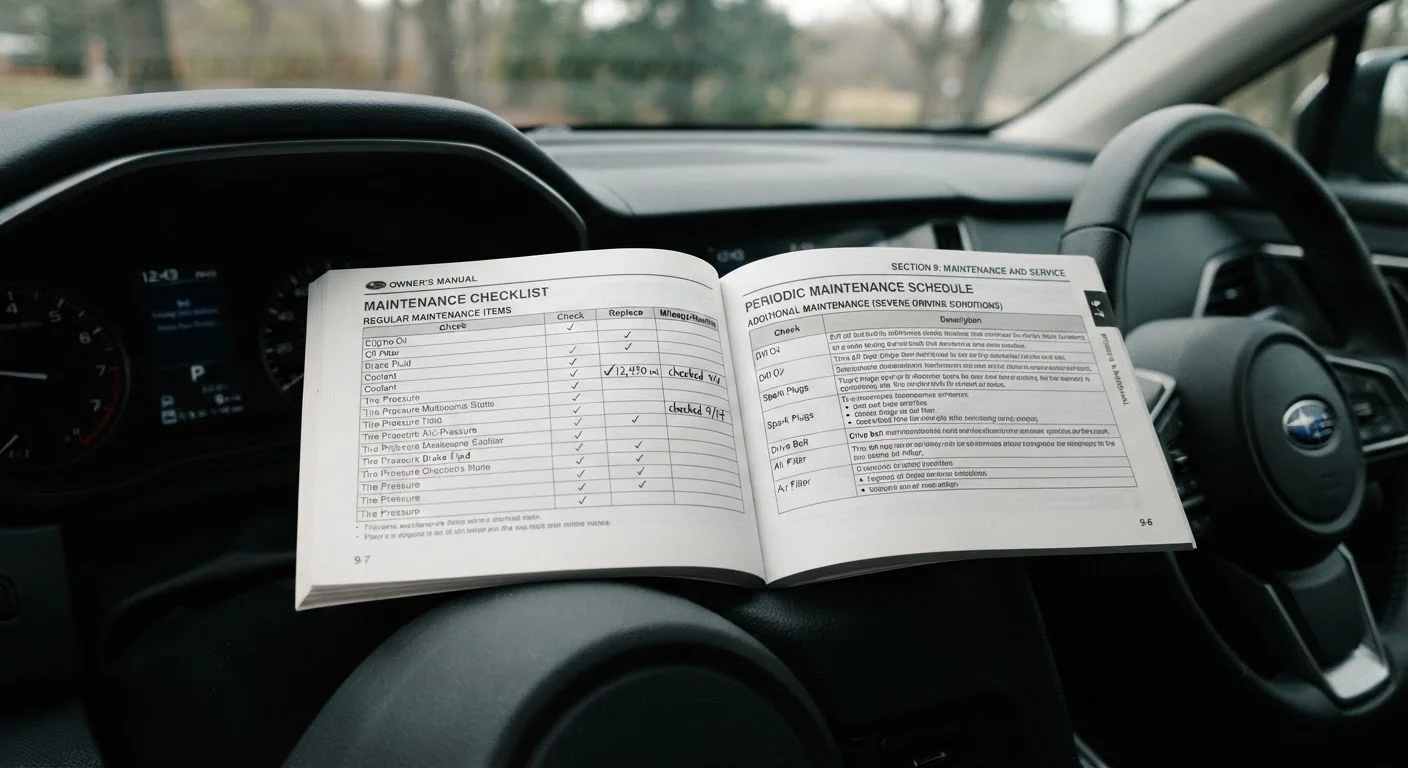
Photo: AscendWit.com | Explore Engaging Blogs. editorial
Key Takeaways
- Your owner's manual contains the only maintenance schedule built specifically for your vehicle.
- Service intervals are given in miles, months, or both - whichever comes first applies.
- Skipping scheduled maintenance can void portions of your warranty and lead to costlier repairs.
- Driving conditions affect how quickly your car needs service, not just mileage.
- A simple logbook or app makes tracking service history easy and useful for resale.
What a Maintenance Schedule Actually Tells You
Open most owner's manuals and you'll find a grid or list that pairs services - oil changes, tire rotations, brake inspections, fluid replacements - with specific mileage or time intervals. That grid is your maintenance schedule, and it's built from the engineering data behind your specific engine, drivetrain, and component lifespan.
Intervals are typically written as a combination of miles and months. For example, "every 5,000 miles or 6 months, whichever comes first." That second trigger matters for drivers who don't accumulate miles quickly: even low-mileage oil degrades from heat cycles, moisture, and age, so time counts as much as distance.
For a broader look at what routine service involves, routine maintenance every car owner should know about walks through the most common tasks and why each one matters.
The Manual Beats Generic Advice Every Time
The Services You'll See Most Often
While every vehicle differs, most maintenance schedules rotate through a predictable set of services:
- Engine oil and filter: The most frequent task. Clean oil lubricates engine components and carries away heat and contaminants. Intervals vary widely by oil type and engine - your manual is the only reliable reference. Synthetic vs. conventional motor oil explains how oil type affects how long you can go between changes.
- Tire rotation: Moving tires between positions evens out wear. Most manufacturers recommend every 5,000-7,500 miles, often scheduled alongside oil changes for convenience.
- Air and cabin filters: Engine air filters protect the combustion system from dust and debris; cabin filters clean the air you breathe inside the car. Both degrade over time and typically need replacing every 15,000-30,000 miles.
- Brake inspection: Brake pads, rotors, and fluid condition are typically reviewed at annual intervals or whenever unusual noise or feel is noticed.
- Fluids: Coolant, transmission fluid, brake fluid, and power steering fluid all have replacement intervals. Some, like brake fluid, absorb moisture over time regardless of mileage.
5,000-10,000 mi
Typical modern oil change interval
Many vehicle manufacturers now recommend oil changes every 5,000 to 10,000 miles depending on oil type and engine design - well beyond the old 3,000-mile rule.
Every 5,000-7,500 mi
Common tire rotation interval
Most manufacturers recommend tire rotation at this frequency to promote even tread wear and extend overall tire life.
15,000-30,000 mi
Typical air filter replacement interval
Driving in dusty or polluted environments can shorten this interval significantly; your owner's manual will list the specification for your vehicle.
Why Your Driving Conditions Change the Equation
Manufacturer schedules usually offer two tracks: a standard schedule and a severe service schedule. Severe service applies when you regularly encounter conditions that put extra stress on your vehicle:
- Frequent short trips under five miles (engine never fully warms up)
- Stop-and-go traffic or urban driving
- Towing, hauling, or carrying heavy loads
- Dusty, muddy, or unpaved road environments
- Extreme heat or cold
If your daily driving looks like any of these, the severe-service intervals - which call for more frequent service - likely apply to you. Ignoring this distinction is one of the more common ways drivers unknowingly shorten the life of their engine and transmission.
For seasonal stressors specifically, seasonal car care for weather changes covers how temperature extremes affect individual systems.
Combine Services When You Can
Common Misconceptions Worth Clearing Up
Plenty of maintenance habits circulate as common wisdom but don't hold up to scrutiny. The 3,000-mile oil change rule, for instance, originated decades ago when engine and oil technology was far less advanced than it is today. For most modern vehicles, following that rule means changing oil more often than necessary - which costs money without adding benefit.
Similarly, some drivers believe a dashboard warning light is the appropriate trigger for maintenance. Warning lights signal that something has already gone wrong; a schedule-based approach catches wear before a light appears. For a full breakdown of what those lights mean when they do appear, see warning lights on your dashboard and what they're telling you.
For a broader look at habits that can actually harm your vehicle, car maintenance myths that could hurt your vehicle is worth reading alongside this guide.
Keeping Track Without the Hassle
The simplest system is a written log kept in your glove box - note the date, odometer reading, and what was serviced. Many repair shops provide a sticker on the windshield for oil changes, but that covers only one service. A complete record is more useful, especially if you sell the vehicle or need to diagnose a recurring problem.
Smartphone apps designed for vehicle tracking can send service reminders based on mileage and automatically log your history. They're not required, but they remove the mental load of remembering intervals yourself.
If you're newer to car ownership and want a broader foundation, car maintenance from the ground up covers the full picture. And once your vehicle crosses the 100,000-mile mark, keeping a high-mileage car running well addresses the additional attention high-mileage vehicles typically need.
Frequently Asked Questions
The content on this site is for informational purposes only and is not a substitute for professional advice. Always consult a qualified professional for guidance specific to your situation.