
What Happens to Unpaid Debt Over Time

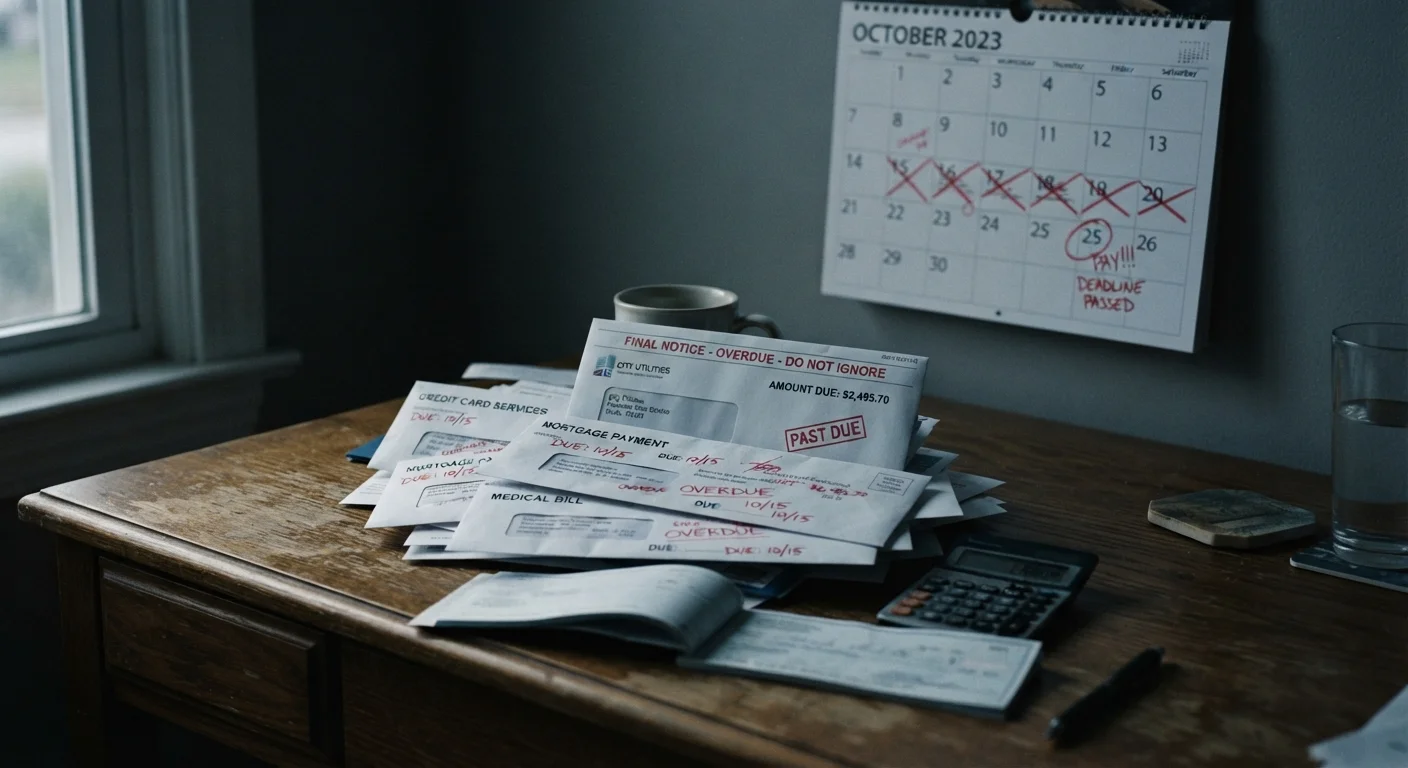
Photo: AscendWit.com | Explore Engaging Blogs. editorial
The General Timeline of Unpaid Debt
When a bill goes unpaid, most people assume the consequences are immediate and severe. In reality, debt moves through a series of stages - each with its own set of penalties and implications. Understanding this timeline helps you prioritize action and avoid unnecessary damage to your financial health.
| Days until credit bureau reporting | Typically 30 days past due (Consumer Financial Protection Bureau (CFPB)) |
| Days until most charge-offs occur | Around 180 days (6 months) (General industry standard; varies by lender) |
| How long a charge-off stays on credit report | Up to 7 years from first missed payment (Fair Credit Reporting Act (FCRA)) |
| Federal law governing debt collectors | Fair Debt Collection Practices Act (FDCPA) (Federal Trade Commission (FTC)) |
| Statute of limitations on debt | Varies by state (typically 3-10 years) (State law; consult a legal professional) |
The stages below reflect general patterns across most consumer debt types - credit cards, personal loans, medical bills, and similar obligations. Timelines and consequences can vary by lender, loan type, and state law. This article is general financial education, not personalized advice. For guidance specific to your situation, consult a licensed financial professional.
Stage 1: Missed Payment (Days 1-30)
A single missed payment typically triggers a late fee, which most creditors charge after a grace period of a few days past the due date. For credit cards, late fees are federally capped, though the exact amount depends on the issuer and your account history.
At this stage, your credit score may not yet be affected. Most creditors do not report a payment as late to the credit bureaus until it is at least 30 days past due. That 30-day window is often a practical opportunity to catch up without lasting credit damage.
Interest continues to accrue on any outstanding balance. If you've been paying only the minimum, compounding interest may already be adding to the amount owed.
Stage 2: Delinquency and Credit Reporting (30-180 Days)
Once a payment is 30 days late, most lenders report the delinquency to one or more of the three major consumer credit bureaus. A delinquency notation on your credit report can lower your credit score, sometimes significantly, depending on your existing credit profile.
Delinquency
A status assigned to a debt account when a payment is past due, typically after 30 days. Delinquencies are reported to credit bureaus and can lower your credit score.
Charge-Off
An accounting action where a creditor writes off a debt as a loss after extended non-payment, usually around 180 days. The debt still exists legally and may be sold to a collection agency.
Statute of Limitations
A state-specific time limit during which a creditor or collector can legally sue to collect a debt. After this period, the debt is considered time-barred but may not disappear from your record.
Penalty APR
A higher interest rate that some credit card issuers apply when an account becomes severely delinquent. It can significantly increase the cost of carrying a balance.
Debt Collector
A third party - either a company or individual - that purchases or is assigned unpaid debts and then attempts to recover payment from the borrower. Their practices are regulated by the FDCPA.
FDCPA
The Fair Debt Collection Practices Act, a federal law that sets rules on how third-party debt collectors may contact and interact with consumers seeking to collect debts.
Creditors typically continue to report delinquencies at 60-day and 90-day intervals, and each milestone can carry additional scoring impact. During this period, some lenders may raise your interest rate (called a penalty APR), and your credit limit may be reduced or frozen.
Many lenders will attempt contact - by phone, mail, or email - to arrange payment. This is also the stage where debt consolidation or hardship programs may be worth exploring, since you are still dealing directly with the original creditor.
Stage 3: Charge-Off and Collections (Around 180 Days)
After roughly six months of non-payment, most creditors will charge off the debt. A charge-off is an accounting action - the lender declares the debt unlikely to be collected and removes it from their active receivables. Critically, a charge-off does not erase what you owe. The debt remains legally valid.
7 years
Credit report impact of a charge-off
Under the Fair Credit Reporting Act, a charge-off can remain on a consumer's credit report for up to seven years from the date of the original missed payment.
30 days
Minimum late period before bureau reporting
Most creditors do not report a late payment to credit bureaus until the account is at least 30 days past due, according to the CFPB.
Following a charge-off, the account is often sold to or assigned to a third-party debt collector. That collector then has the right to pursue repayment. Debt collection activity is regulated at the federal level by the Fair Debt Collection Practices Act (FDCPA), which limits how and when collectors can contact you.
A charge-off notation on your credit report can remain there for up to seven years from the date of the first missed payment, affecting your ability to qualify for credit, housing, or certain employment opportunities.
If repayment feels out of reach, structured methods like those described in the debt avalanche and snowball approaches can help prioritize which balances to address first once your finances stabilize.
Stage 4: Legal Action and the Statute of Limitations
If a debt goes unresolved after collections, creditors or collectors may pursue legal action - filing a lawsuit to obtain a court judgment. A judgment can authorize wage garnishment or bank account levies, depending on state law. Not all debts proceed to this stage, but the risk increases with the size of the balance and the type of creditor.
Every state sets a statute of limitations on debt - a window during which a creditor can sue to collect. After this period expires, the debt is considered "time-barred," meaning a creditor generally cannot win a lawsuit over it. However, the debt may still appear on your credit report and you may still technically owe it; making a payment on a time-barred debt can sometimes restart the legal clock in certain states.
Separate from legal collection, it's worth reading about common credit card debt myths - including misconceptions around debt settlement - to ensure any decisions you make are based on accurate information. And when you're ready to weigh your broader financial priorities, saving vs. paying off debt is a useful framework to consider.
This article is for general informational purposes only and does not constitute personalized financial, legal, or tax advice. Laws governing debt collection, credit reporting, and statutes of limitations vary by state and situation. Consult a licensed financial adviser or attorney for guidance specific to your circumstances.
The content on this site is for informational purposes only and is not a substitute for professional advice. Always consult a qualified professional for guidance specific to your situation.