
Common Myths About Credit Card Debt That Keep People Stuck

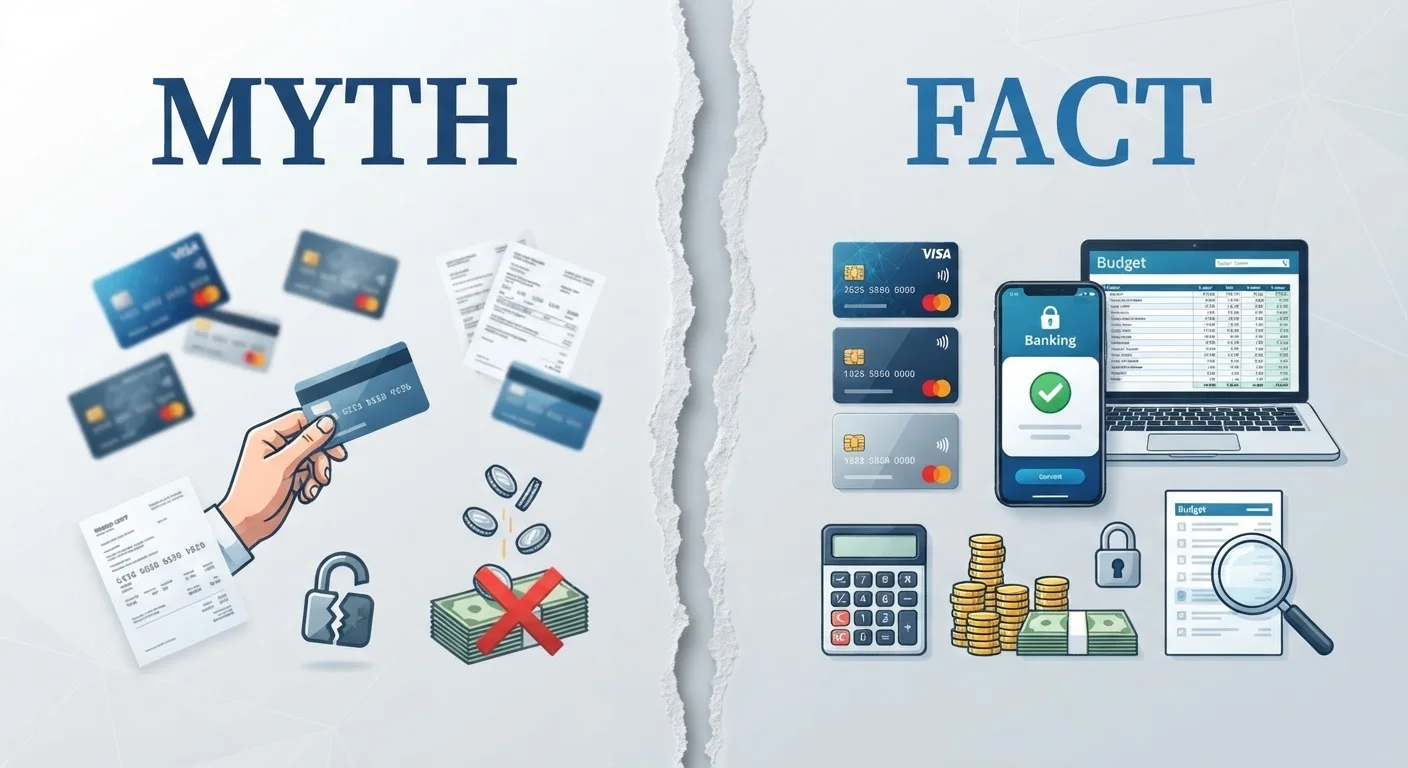
Photo: AscendWit.com | Explore Engaging Blogs. editorial
Key Takeaways
- Carrying a credit card balance does not improve your credit score - paying in full does.
- Debt settlement can severely damage your credit and trigger a tax bill on forgiven amounts.
- Saving a small emergency fund while paying debt reduces the risk of going deeper into debt.
- Minimum payments keep you current but can extend repayment by years and multiply interest costs.
- All high-interest debt deserves attention - not just what feels emotionally significant.
Why Credit Card Myths Are So Costly
Credit card debt is one of the most common financial challenges American households face, yet it is also one of the most misunderstood. Misconceptions spread through casual conversation, outdated advice, and oversimplified headlines - and acting on them can cost real money and years of unnecessary stress.
The myths below are among the most persistent. Understanding where they go wrong is a practical first step toward a clearer, more effective approach to managing debt. For a broader foundation, see our introduction to savings and debt basics.
This article provides general financial education, not personalised financial advice. Consult a qualified financial professional before making decisions about your specific situation.
Myth
Carrying a balance on your credit card each month helps build your credit score.
Fact
Paying your balance in full each month is better for your score than carrying a balance and paying interest.
This myth likely grew from a misunderstanding of how credit utilization works. Your credit score does benefit from using your card, but the scoring models used by the major bureaus reward low utilization - the ratio of your balance to your credit limit - not the act of carrying a revolving balance. Paying in full avoids interest charges entirely while still demonstrating responsible use to lenders.
Myth
Making the minimum payment each month means you're managing your debt responsibly.
Fact
Minimum payments keep your account current but can stretch repayment over many years and significantly increase total interest paid.
Credit card issuers are required to disclose on each statement how long it would take to pay off a balance making only minimum payments. For a $3,000 balance at a typical high interest rate, that timeline can exceed a decade with total interest exceeding the original balance. Minimum payments are a floor, not a strategy. Paying more than the minimum - even a modest additional amount - measurably shortens repayment time and reduces costs. For a factual look at what prolonged unpaid debt involves, see our article on what happens to unpaid debt over time.
Myth
Debt settlement is always a smart way to get out of credit card debt for less than you owe.
Fact
Debt settlement can damage your credit significantly and may result in a tax liability on the forgiven amount.
When a creditor agrees to settle a debt for less than the full balance, the forgiven portion is generally considered taxable income by the IRS - meaning you may owe taxes on money you never actually received. Additionally, the negotiation process typically requires stopping payments, which causes serious credit damage before any agreement is reached. Settlement may be appropriate in limited circumstances, but it carries real costs that are often glossed over. Always consult a licensed financial or tax professional before pursuing this route.
Myth
You should pay off the debt that feels the most stressful first, regardless of interest rate.
Fact
Targeting higher-interest balances first minimizes the total cost of your debt over time, though psychological factors also have real value.
The avalanche method - paying the highest-interest debt first while making minimums on others - is mathematically optimal for reducing total interest paid. The snowball method - paying the smallest balance first regardless of rate - can provide motivational wins that help people stay on track. Neither approach is universally superior; the best method is the one a person will actually follow through on. If consolidation is being considered as part of the strategy, the pros and cons of using a personal loan offers a balanced overview.
Myth
Closing old credit cards after paying them off will help your credit score.
Fact
Closing old accounts can actually lower your credit score by reducing your available credit and shortening your average account age.
Two key components of most credit scoring models are credit utilization (how much of your available credit you're using) and length of credit history. Closing an old account reduces your total available credit, which can push your utilization ratio higher - and it removes that account's history from the positive side of your profile. Unless a card carries an annual fee you can't justify, leaving paid-off accounts open and occasionally used is generally the better approach.
Balancing Debt Payoff With Saving: What the Evidence Suggests
One of the quieter myths in personal finance is that you must choose between saving and paying off debt - that doing both at once is financially naive. In practice, carrying zero emergency savings while aggressively paying down debt leaves you one car repair or medical bill away from reaching for the credit card again, potentially erasing months of progress.
~$6,500
Average credit card balance per US cardholder
According to TransUnion's consumer credit data, the average credit card balance among US cardholders has hovered in this range in recent years.
20%+
Average APR on credit cards carrying a balance
Federal Reserve data on consumer credit consistently shows average interest rates on revolving credit card balances above 20 percent in recent periods.
Most personal finance frameworks suggest building a modest starter emergency fund - often cited as $500 to $1,000 - before directing every spare dollar toward debt. Once that buffer exists, directing additional income toward high-interest balances makes strong mathematical sense. You can explore the nuances of this decision in our article on saving versus paying off debt.
Motivation also matters. Research in behavioral finance suggests that the sequence in which you tackle debts - not just the interest rates - can affect whether people follow through. Our piece on the psychology behind debt payoff momentum breaks this down further.
Don't Skip Emergency Savings Entirely
If you suspect that some of the same thinking errors affecting your debt strategy also show up in your budgeting habits, our article on budget myths that keep people from starting may be a useful companion read.
The content on this site is for informational purposes only and is not a substitute for professional advice. Always consult a qualified professional for guidance specific to your situation.