
Saving vs. Paying Off Debt: Understanding the Trade-Offs

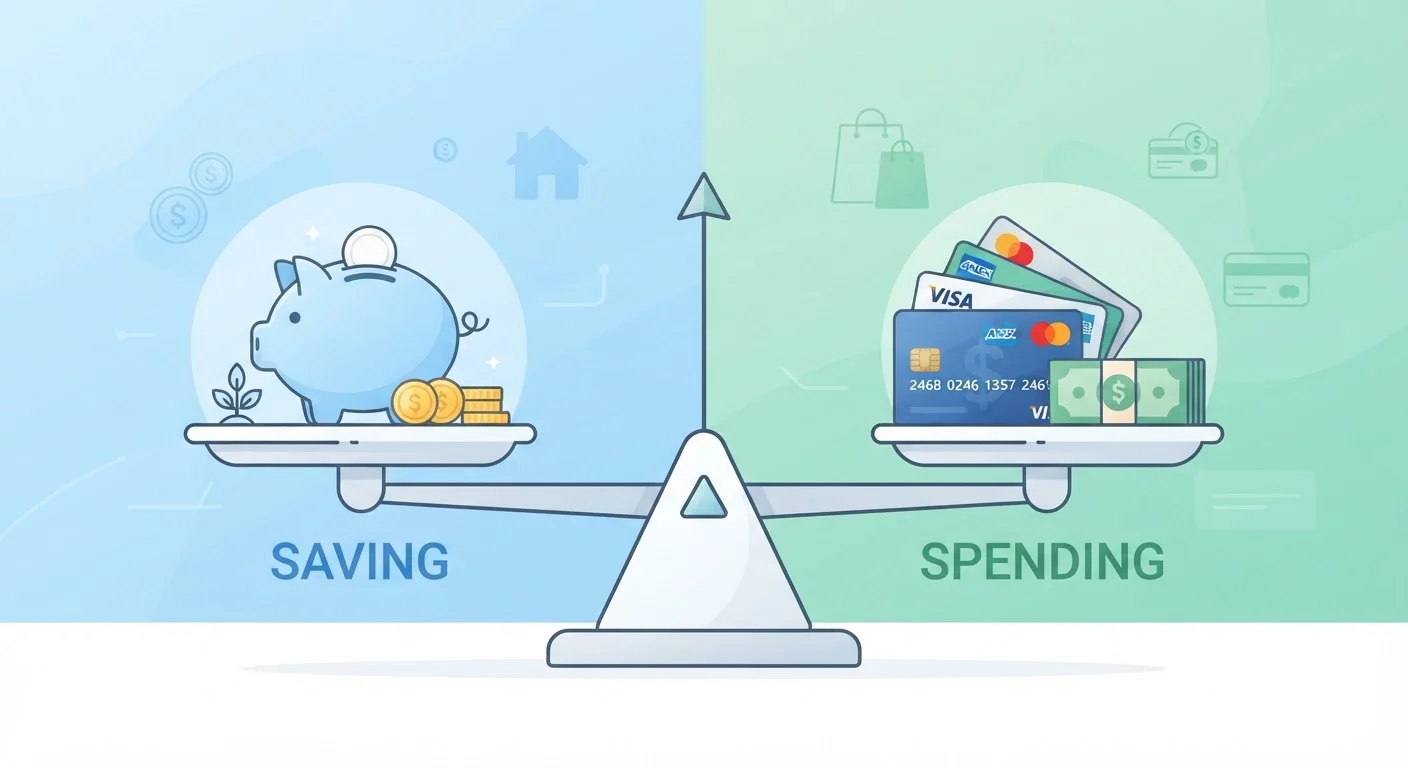
Photo: AscendWit.com | Explore Engaging Blogs. editorial
Key Takeaways
- High-interest debt, like credit card balances, typically costs more than most savings accounts earn.
- A small emergency fund can protect you from taking on new debt when unexpected costs arise.
- Employer retirement matches are often worth capturing even while carrying debt.
- Most people benefit from a blended approach rather than an all-or-nothing strategy.
- The right balance depends on interest rates, income stability, and personal stress tolerance.
Why This Decision Is Harder Than It Looks
Most personal finance questions eventually come down to one tension: should I put extra money toward debt, or save it? The frustrating answer is that it genuinely depends - on your interest rates, your income stability, and how financial stress affects your behaviour.
If you're new to thinking through these trade-offs, our primer on savings and debt basics is a useful starting point before diving into the comparison here.
At its core, the debate is a math problem with a human layer. The math tells you which option preserves more money. The human layer determines which option you can actually stick to.
The Math: Interest Rates Are the Deciding Factor
The clearest way to frame this decision is by comparing two rates: the interest rate on your debt versus the expected return on your savings.
- High-interest debt (typically above 7-8%): Credit card balances commonly carry rates between 20% and 30% annually. Paying down this debt is the equivalent of earning that same rate, risk-free. No standard savings account comes close to matching that return.
- Low-interest debt (typically below 5%): A federal student loan or a fixed-rate mortgage at a low rate may cost less than a diversified investment portfolio could plausibly return over the long run - though investment returns are never guaranteed and involve real risk.
Understanding how minimum payments compound over time illustrates just how expensive high-interest balances become when left unchecked.
| Prioritise Debt Repayment | Prioritise Saving | Blended Approach | |
|---|---|---|---|
| Best suited when | Carrying high-interest debt | Debt is low-interest; no emergency fund | Moderate debt with some stability |
| Interest rate impact | Eliminates high guaranteed cost | Savings return may lag debt cost | Balances cost reduction and growth |
| Emergency resilience | Lower if all cash goes to debt | Higher with growing cash reserves | Moderate with starter fund in place |
| Retirement savings effect | May miss employer match | Preserves retirement contributions | Captures match, then pays debt |
| Psychological effect | Motivating as balances drop | Security from growing savings | Sense of progress on both fronts |
| Risk of new debt | Higher without cash buffer | Lower with emergency fund | Reduced with basic cushion |
The Safety Net Problem: Why Saving Something Matters
Even when high-interest debt makes aggressive payoff look mathematically attractive, eliminating every spare dollar toward debt leaves you exposed. Without any cash reserve, a car repair or medical bill can force you straight back into debt - often at high interest rates.
Financial educators commonly suggest building a modest starter emergency fund - even a few hundred to a thousand dollars - before accelerating debt payoff. This isn't a magic number; it's a buffer against the cycle of paying down debt only to borrow again.
Balancing an emergency fund while carrying debt is a nuanced decision worth exploring in detail, especially if your income is irregular.
Start Small With Your Emergency Fund
Retirement Accounts: A Special Case
One situation where saving can clearly win - even against high-interest debt - is an employer-sponsored retirement plan with a contribution match. If your employer matches, say, 50% of your contributions up to a certain percentage of salary, declining that match is, in effect, leaving part of your compensation on the table.
Contributing enough to capture the full employer match, then directing remaining extra income toward debt, is a widely recommended approach. Retirement savings are also subject to long compounding timelines, meaning delays in starting can be costly in ways that are hard to recover later.
For a broader framework on allocating money across needs, savings, and debt, the 50/30/20 budget rule offers a useful structural model.
The Psychology: Momentum and Motivation Count
Pure math doesn't capture how motivation affects financial outcomes. Research in behavioural economics suggests that people often stick with repayment plans longer when they experience early, visible progress - even if a strictly mathematical approach would rank debts differently.
If watching a balance hit zero keeps you engaged and consistent, that psychological reward has real financial value. Conversely, if saving provides a sense of security that keeps you from feeling financially precarious, that security may prevent impulsive decisions.
For a deeper look at why momentum matters in debt repayment, the psychology behind debt payoff momentum is worth reading. And for structured repayment strategies, the debt avalanche and snowball methods cover two well-established approaches.
20-30%
Typical credit card APR range in the US
Federal Reserve data consistently shows credit card interest rates among the highest of common consumer debt types.
~50%
US workers without adequate emergency savings
Federal Reserve surveys have found that a significant share of US adults would struggle to cover an unexpected expense without borrowing.
This article is for general informational and educational purposes only and does not constitute personalised financial, investment, tax, or legal advice. Consult a qualified financial professional for guidance specific to your situation.
The content on this site is for informational purposes only and is not a substitute for professional advice. Always consult a qualified professional for guidance specific to your situation.