
The Debt Avalanche and Debt Snowball Explained

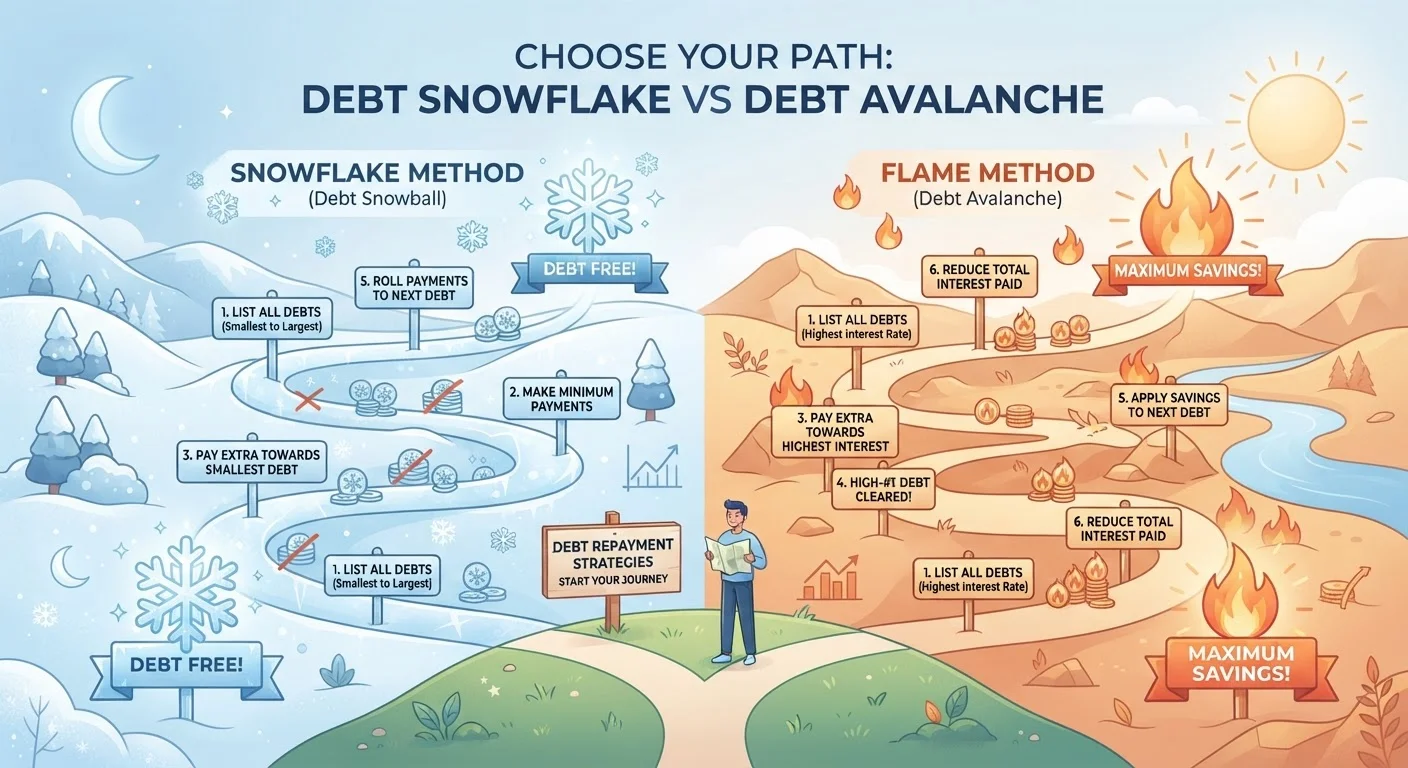
Photo: AscendWit.com | Explore Engaging Blogs. editorial
Key Takeaways
- The debt avalanche targets the highest-interest debt first, reducing the total cost of repayment over time.
- The debt snowball pays off the smallest balance first, building motivation through quick early wins.
- Neither method is universally superior - the best choice depends on your financial situation and psychology.
- Both strategies require making minimum payments on all debts while directing extra funds to one priority debt.
- Consistency matters more than method - the plan you actually stick to is the one that works.
How Each Method Works
Both the debt avalanche and debt snowball are structured repayment strategies. They share the same core mechanic: you make the minimum payment on every debt you owe, then direct any additional funds toward one specific target debt. The difference lies entirely in how you choose that target.
Debt Avalanche: You rank your debts by interest rate, highest to lowest. Every extra dollar goes toward the highest-rate debt first. Once it's eliminated, you roll that freed-up payment into attacking the next-highest rate, and so on. This approach minimizes the total interest you pay across all your debts.
Debt Snowball: You rank debts by outstanding balance, smallest to largest. You direct extra funds toward the smallest balance first, regardless of its interest rate. When that debt is gone, you redirect its payment toward the next-smallest balance. The goal is momentum - frequent payoffs that sustain your motivation.
If you're new to these concepts, the foundational guide to savings and debt basics is a helpful starting point before diving into either strategy.
| Criterion | Debt Avalanche | Debt Snowball |
|---|---|---|
| Repayment order | Highest interest rate first | Smallest balance first |
| Total interest paid | Lower (mathematically optimal) | Potentially higher |
| Time to first payoff | Longer if high-rate debt is large | Faster - targets smallest balance |
| Motivational structure | Delayed milestones | Frequent early wins |
| Best suited for | Disciplined, long-term planners | Those needing visible progress |
| Complexity | Requires tracking interest rates | Simple balance-based ranking |
The Real-World Trade-Off: Math vs. Motivation
The avalanche method is the winner on paper. Because you eliminate high-interest debt faster, less of your money goes to lenders over time. Depending on your debt load, the savings can be substantial - particularly if you carry credit card balances at rates of 20% or higher.
But personal finance isn't purely mathematical. Research in behavioral economics suggests that people are more likely to continue a debt repayment plan when they experience early, visible progress. The snowball method is designed around this insight. Paying off a small balance in a few months feels like a real achievement - and that feeling can power continued effort.
~20-30%
Typical APR on credit card debt in the US
Federal Reserve data consistently shows average credit card interest rates in this range, underscoring why interest rate targeting can matter significantly.
77%
Americans carrying some form of debt
According to Experian's State of Credit report, the vast majority of US consumers carry at least one form of debt, from mortgages to credit cards.
The psychology behind debt payoff momentum explores this dynamic in detail, explaining why motivation often matters as much as math when it comes to following through on a repayment plan.
A useful rule of thumb: if your debts carry widely different interest rates, the avalanche's savings are harder to ignore. If rates are similar across your accounts, the snowball's motivational advantage may outweigh the marginal interest cost.
Fitting Debt Repayment Into Your Broader Financial Picture
Whichever method you choose, debt repayment rarely happens in isolation. Most financial planners recommend maintaining at least a small emergency fund - even while aggressively paying down debt - to avoid relying on credit cards when unexpected expenses arise. The guide to building an emergency fund while carrying debt walks through how to balance these two priorities simultaneously.
It's also worth knowing that these two strategies aren't the only options. Some people use debt consolidation to simplify multiple balances into a single payment, potentially at a lower interest rate. The overview of debt consolidation covers how that approach works and what trade-offs to weigh before pursuing it.
Staying organized around a household budget also supports either repayment strategy - understanding exactly where your money goes each month makes it easier to find the extra funds you need to accelerate debt payoff. The Budgeting Basics hub offers practical guidance on building that foundation.
This article is for general informational and educational purposes only and does not constitute personalized financial advice. Please consult a qualified financial professional for guidance specific to your situation.
The content on this site is for informational purposes only and is not a substitute for professional advice. Always consult a qualified professional for guidance specific to your situation.