
Following Distance: The Space Between You and a Collision

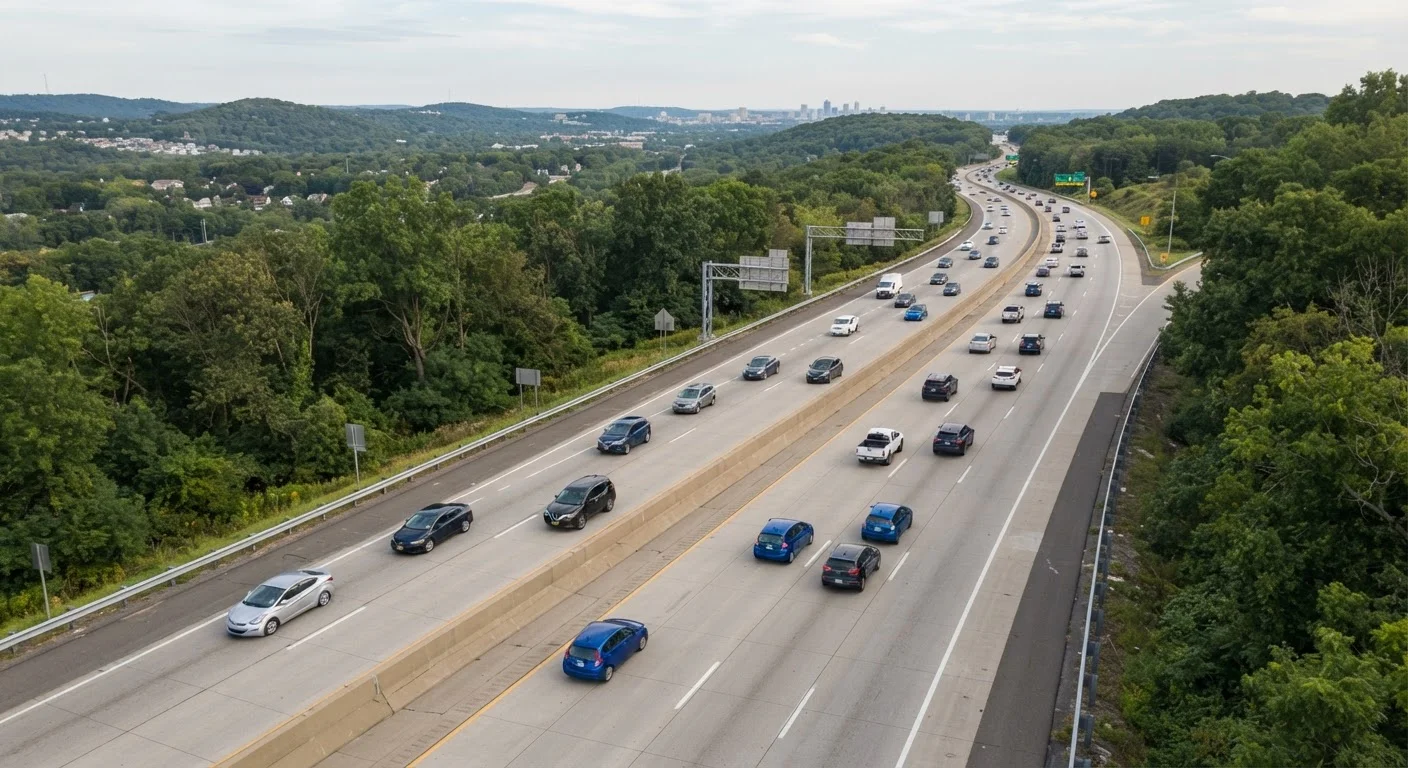
Photo: AscendWit.com | Explore Engaging Blogs. editorial
Key Takeaways
- The two-second rule is the standard baseline for following distance in normal conditions.
- Speed dramatically increases stopping distance - a small gap safe at 30 mph is dangerous at 60 mph.
- Rain, snow, fog, and fatigue all require you to extend your following distance beyond two seconds.
- Rear-end collisions are among the most common crash types and are largely preventable with adequate spacing.
- Tailgating doesn't meaningfully reduce travel time but significantly raises crash risk.
Why Following Distance Is a Life-Safety Margin
Rear-end collisions are consistently among the most frequently reported crash types in the United States, according to federal highway safety data. The common thread in most of them: the following driver didn't have enough space to stop in time.
Following distance isn't about being overly cautious - it's about physics. Once you press the brake pedal, your vehicle still travels a significant distance before stopping. That stopping distance has two components: your reaction distance (the ground covered in the fraction of a second before your foot hits the brake) and your braking distance (the distance it takes the vehicle to actually stop). Together, they define the minimum space you need between your bumper and the one ahead.
At 60 mph, total stopping distance for an average passenger car in good conditions can exceed 240 feet - roughly the length of eight car lengths. A one-car gap doesn't come close to covering that. This is why defensive driving fundamentals put following distance at the center of crash prevention.
~29%
Share of all U.S. crashes that are rear-end collisions
According to the National Highway Traffic Safety Administration (NHTSA), rear-end crashes consistently represent a large share of all reported accidents, making following distance a top safety priority.
240+ ft
Stopping distance at 60 mph in ideal conditions
Combining reaction time and braking distance, a typical passenger vehicle traveling at 60 mph requires well over 200 feet to come to a complete stop, per general driving safety guidelines.
2x
Increase in stopping distance on wet pavement
Wet road surfaces can approximately double the distance required to stop compared to dry conditions, according to driving safety education sources.
The Two-Second Rule - and When to Stretch It
The two-second rule is the standard taught in driver education across the U.S. It works like this: when the vehicle ahead passes a fixed landmark, count "one-one-thousand, two-one-thousand." If you pass the same landmark before you finish, close the gap by backing off the accelerator.
The rule's strength is that it scales with speed - a two-second gap at 30 mph is about 88 feet; at 60 mph it's roughly 176 feet. The distance adjusts automatically because you're measuring time, not length.
But two seconds is a minimum in ideal conditions. You'll need more in these situations:
- Rain or wet roads: Double the gap. Wet pavement can double stopping distance.
- Snow or ice: Triple the gap or more. Ice reduces tire traction dramatically.
- Fog or low visibility: Extend distance so you have time to react to what you can't yet see.
- Towing a trailer or hauling a load: Extra weight adds braking distance - your vehicle won't stop as quickly.
- Driver fatigue: Slower reaction times mean you need more buffer space.
- Following large trucks or SUVs: They block your forward view, reducing the warning you get before a hazard appears.
Safe speed isn't just about the posted limit - conditions dictate how much distance you truly need to stop safely.
Use a Landmark, Not Your Own Judgment
The Tailgating Trap: Why Drivers Close the Gap
Most drivers who follow too closely aren't thinking about crash risk - they're thinking about getting there faster, or they're frustrated by traffic. But the math doesn't support the trade-off. Following a vehicle at one car length instead of four car lengths at highway speeds saves only seconds over a typical commute, while dramatically increasing the chance of a collision if traffic ahead slows unexpectedly.
There's also a false sense of security that comes with experience. Experienced drivers often underestimate their following distance because nothing has gone wrong yet - familiarity makes the habit feel safe when it isn't.
Social pressure plays a role too. When someone tailgates you, it can feel natural to close your own gap with the car ahead to "keep up." Resist this. Instead, gradually increase your gap so you can brake more softly if traffic slows - and avoid the chain-reaction crash that often unfolds when gaps are too small throughout a line of vehicles.
For anyone changing lanes in dense traffic, maintaining a safe gap is equally important. See how to handle lane changes correctly to understand how spacing fits into safe merging. Separately, remember that distracted driving also kills reaction time - an inadequate gap combined with a distracted driver is a particularly dangerous combination.
Frequently Asked Questions
The content on this site is for informational purposes only and is not a substitute for professional advice. Always consult a qualified professional for guidance specific to your situation.