
Distracted Driving vs. Impaired Driving: Two Risks, Two Different Conversations

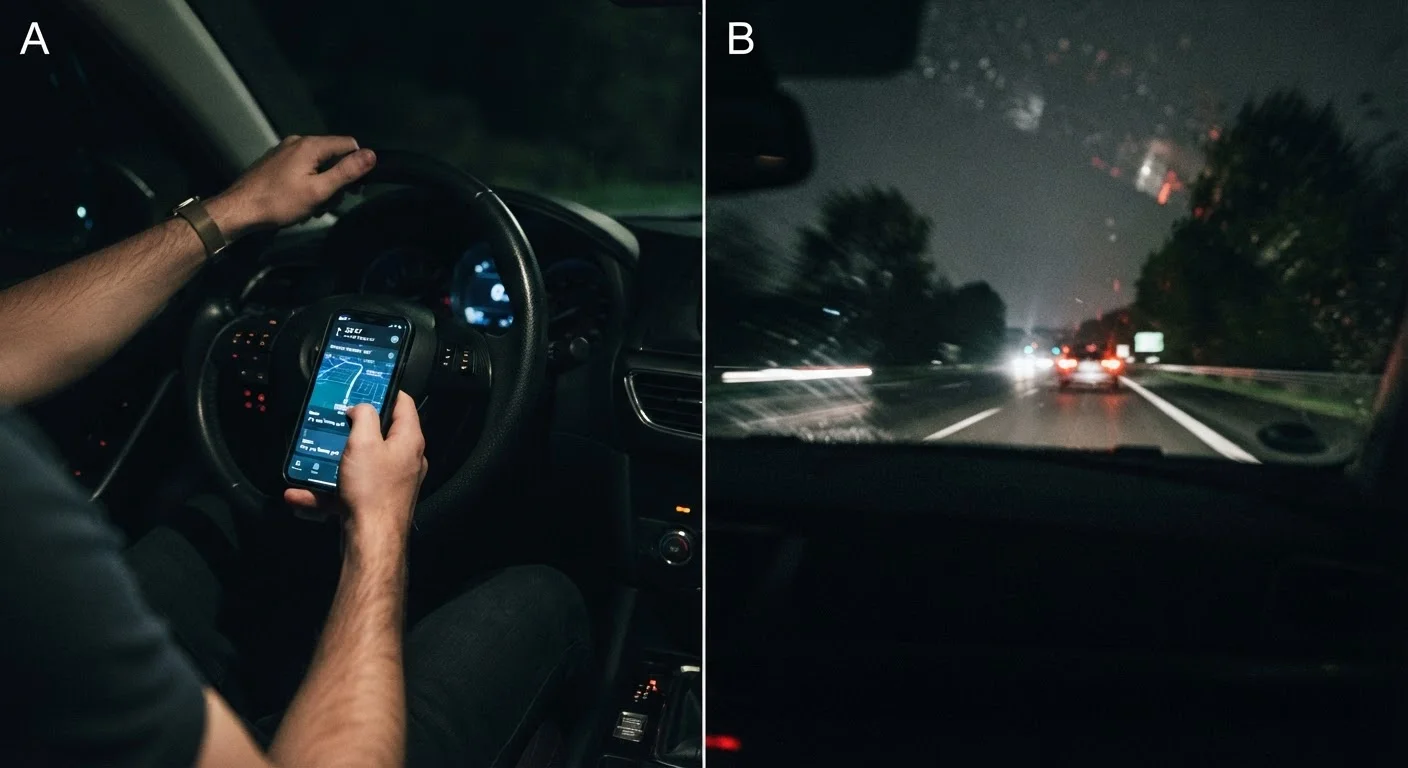
Photo: AscendWit.com | Explore Engaging Blogs. editorial
Key Takeaways
- Distracted driving involves a lapse in attention; impaired driving involves degraded physical and cognitive function.
- Both are leading causes of traffic fatalities in the United States, according to NHTSA data.
- Distraction is often brief but can be self-managed; impairment typically requires not driving at all.
- Cognitive distraction persists even with hands-free devices, making it harder to eliminate than it appears.
- Legal consequences for impaired driving are generally more severe and immediate than for distracted driving.
- Recognizing both risks separately helps drivers take more targeted, effective precautions.
What Each Term Actually Means
The two phrases are sometimes used interchangeably in casual conversation, but they describe fundamentally different problems with different causes and different solutions.
Distracted driving refers to any activity that pulls a driver's focus away from the task of operating the vehicle. The National Highway Traffic Safety Administration (NHTSA) identifies three categories: visual (eyes off the road), manual (hands off the wheel), and cognitive (mind off driving). Texting combines all three simultaneously, which is why it gets particular attention - but eating, adjusting controls, and even talking to passengers can qualify depending on the circumstances.
Impaired driving refers to operating a vehicle while your physical or cognitive abilities are compromised by a substance - most commonly alcohol, but also prescription drugs, cannabis, and over-the-counter medications that cause drowsiness or slowed reaction time. The defining feature of impairment is that it degrades the underlying capabilities a driver needs: coordination, reaction speed, depth perception, and judgment.
The key distinction: distraction is an interruption to an otherwise capable driver. Impairment undermines the capability itself. That difference matters enormously when you're thinking about how to address each one. See our overview of defensive driving for how awareness of both risks fits into a broader safety mindset.
| Criterion | Distracted Driving | Impaired Driving |
|---|---|---|
| Core mechanism | Attention diverted from driving | Physical/cognitive function degraded |
| Driver awareness of the risk | Usually aware they looked away | Often unaware of own impairment |
| Primary causes | Phones, passengers, controls, eating | Alcohol, drugs, some medications |
| Can habits reduce it? | Yes - significantly | Only by not driving at all |
| Legal framework | Varies by state; mostly civil penalties | Criminal in all 50 states |
| Cognitive distraction from hands-free? | Still present even without a device in hand | Not applicable |
| Duration of risk | Lasts seconds to minutes per incident | Persists until substance clears the system |
What the Data Shows
Both risks show up consistently in national crash data, though measuring them presents challenges - especially for distraction, which often goes unreported or undetected at crash scenes.
According to NHTSA, distracted driving was reported as a factor in roughly 3,300 traffic fatalities in a recent year. That figure is widely considered an undercount, since distraction is difficult to verify after a crash. The agency also notes that sending or reading a text takes an average of five seconds - at 55 mph, that's the equivalent of driving the full length of a football field with your eyes closed.
Alcohol-impaired driving fatalities consistently represent about 30 percent of all US traffic deaths annually, according to NHTSA data. That translates to roughly one alcohol-impaired driving fatality every 45 minutes. Drug impairment - including legal prescription and over-the-counter drugs - is harder to quantify but increasingly recognized as a contributing factor in crashes.
~3,300
Distracted driving fatalities reported annually
NHTSA data; widely considered an undercount due to post-crash detection challenges.
~30%
Share of US traffic deaths involving alcohol impairment
Consistent figure in annual NHTSA traffic safety reporting.
27 seconds
Cognitive distraction lag after putting down a phone
Finding from AAA Foundation for Traffic Safety research on mental distraction and driving.
Importantly, these risks aren't mutually exclusive. A driver can be both impaired and distracted at the same time, compounding risk significantly. Even experienced drivers can fall into habitual patterns that leave them vulnerable to both.
How Each Risk Works in Practice
Understanding the mechanics of each risk helps explain why generic advice like "just pay attention" doesn't fully address either one.
With distraction, the core problem is that humans have limited attentional bandwidth. The brain doesn't truly multitask - it switches between tasks rapidly, and each switch carries a processing lag. Research from the AAA Foundation for Traffic Safety has shown that cognitive distraction can persist for up to 27 seconds after a driver puts down a phone or stops a voice conversation. That means going hands-free reduces one type of distraction while leaving another largely intact. Our article on hands-free devices and their limitations covers this in more detail.
With impairment, the challenge is that alcohol and many other substances affect judgment before they affect perceived function. A driver who has had several drinks may genuinely believe they're driving fine - that false confidence is itself a symptom of the impairment. This is fundamentally different from distraction, where a driver generally knows they looked away from the road.
Conditions like reduced visibility after dark can amplify both risks. Night driving demands specific adjustments that matter even more when distraction or impairment is also present.
Prescription and OTC Drugs Count Too
Different Problems, Different Responses
Because distraction and impairment work differently, addressing them requires different strategies.
For distraction, behavioral change is both possible and effective. Practical steps include silencing your phone and placing it out of reach before starting the car, programming navigation before you drive, and pulling over safely if you need to handle something urgent. These are habits, and like all habits, they require deliberate repetition to take hold. Maintaining proper following distance also gives you more margin when attention briefly lapses.
For impairment, the core response is simpler in principle but harder to execute in social situations: don't drive. This means planning transportation before drinking or using substances that affect function, understanding that a drug doesn't have to be illegal to impair driving, and not relying on personal judgment in the moment - because impairment compromises that judgment first.
The legal landscape also differs. Distracted driving laws vary by state, with most states banning handheld phone use but carrying relatively modest penalties. Impaired driving - particularly alcohol-related - is subject to criminal law in all 50 states, with DUI/DWI charges carrying potential license suspension, fines, and jail time depending on circumstances and jurisdiction.
This article is for general educational purposes only. For specific legal questions about driving laws in your state, consult a qualified legal professional. For questions about how medications or health conditions may affect your driving, speak with your healthcare provider.
The content on this site is for informational purposes only and is not a substitute for professional advice. Always consult a qualified professional for guidance specific to your situation.