
The Case for Hands-Free Devices - and Where It Still Falls Short

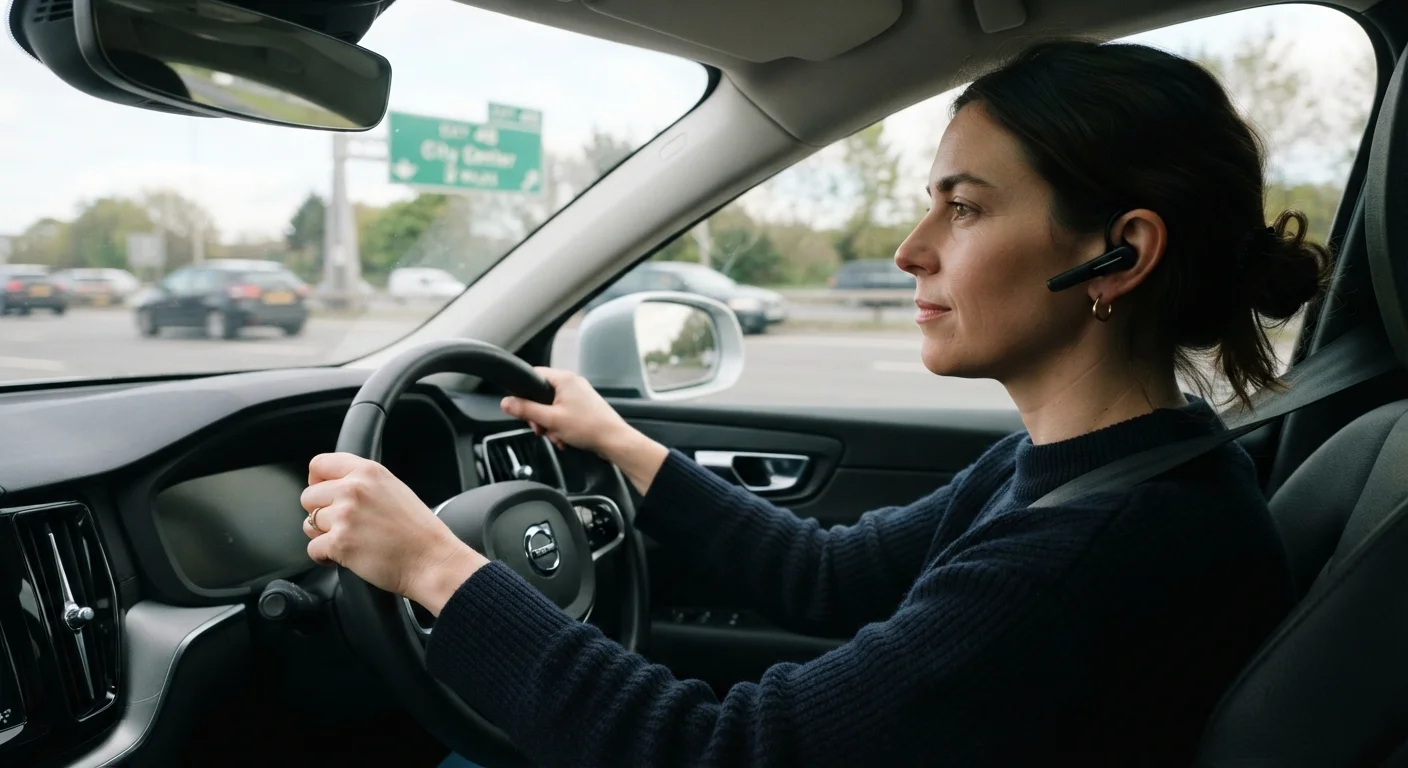
Photo: AscendWit.com | Explore Engaging Blogs. editorial
Key Takeaways
- Hands-free devices reduce physical distraction but do not eliminate cognitive distraction while driving.
- Voice-activated calls and navigation keep your hands on the wheel, which addresses one major crash risk factor.
- Research consistently shows that mental workload from conversation remains elevated even without holding a phone.
- Laws in most US states restrict handheld phone use, but hands-free operation is generally permitted for drivers.
- Understanding the limits of hands-free technology is part of becoming a genuinely safer driver.
Keeps both hands on the steering wheel
Eliminating the need to hold a device removes manual distraction, which is one of three distraction types linked to increased crash risk.
Eyes remain on the road
Without a screen to glance at, visual distraction is significantly reduced compared to texting or navigating on a handheld phone.
Legal in most US states
Most states that restrict handheld phone use explicitly permit hands-free operation, reducing legal risk for drivers who need to stay reachable.
Enables voice-controlled navigation
Speaking a destination rather than typing it is considerably safer than interacting with a touch-screen map app while in motion.
Lower total distraction profile than handheld
Even though cognitive distraction persists, eliminating manual and visual distraction still represents a net risk reduction compared to holding a phone.
Cognitive distraction remains significant
Research from organizations like the AAA Foundation for Traffic Safety shows that voice conversations impose measurable mental workload, reducing a driver's ability to process road hazards fully.
Inattention blindness still occurs
Drivers on hands-free calls can look at the road without fully seeing it - a documented phenomenon where the brain misses visual information it would otherwise catch.
Not equivalent to undistracted driving
Legal permission to use hands-free devices does not mean the activity is without risk; the cognitive cost is real regardless of how the call is placed.
Complex conversations increase risk further
Emotionally charged, problem-solving, or multi-party calls impose more cognitive load than simple exchanges, meaning not all hands-free calls carry the same risk level.
Can create false confidence
Drivers who switch to hands-free may believe they have fully addressed their distraction risk, when in fact they have only partially reduced it.
What Hands-Free Technology Actually Does
Hands-free devices - Bluetooth earpieces, speakerphone, in-dash calling systems, and voice-activated assistants - are designed to let drivers communicate without physically holding a phone. The core benefit is straightforward: both hands stay on the wheel, and your eyes stay on the road.
That physical element matters. Handheld phone use while driving is a documented crash risk factor because it combines manual distraction (holding the device), visual distraction (glancing at the screen), and cognitive distraction (thinking about the conversation). Hands-free technology eliminates the first two of those three. That's a genuine, meaningful reduction in risk - not a trivial one.
Voice-activated navigation adds another layer of value. Rather than typing a destination into a map app while driving - one of the most dangerous in-vehicle tasks - a driver can speak a destination and receive turn-by-turn audio prompts without touching the screen at all. For route guidance, this is a clear improvement over alternatives.
3x
Crash risk increase with handheld phone use
The National Highway Traffic Safety Administration cites research indicating that handheld phone use while driving roughly triples crash risk compared to undistracted driving.
2.3x
Cognitive distraction increase during phone calls
AAA Foundation for Traffic Safety research found drivers on voice calls - handheld or hands-free - experienced cognitive distraction more than twice that of undistracted drivers.
The Cognitive Distraction Problem
Here's where the case for hands-free gets complicated. Multiple studies from traffic safety researchers, including work published by the AAA Foundation for Traffic Safety, have found that voice-based conversations create measurable cognitive load - meaning your brain is doing more work than it would be doing if you were simply driving.
This matters because your brain's ability to process the visual information needed to drive safely can degrade even when your eyes are technically open and pointed at the road. Researchers sometimes call this "inattention blindness" - your eyes are scanning, but your attention is partly elsewhere, so you may fail to notice a hazard, a pedestrian, or a light changing. It's a subtle but real effect, and it doesn't disappear just because you're not holding a phone.
Importantly, studies suggest this cognitive load is comparable whether you're on a hands-free call or a handheld one. What hands-free devices don't replicate, however, is the additional visual and manual distraction of holding the device - so the total risk profile is still lower, even if it isn't zero.
Why Talking to a Passenger Is Different
For a deeper look at how familiarity can erode safe driving habits, see why experienced drivers still make dangerous assumptions.
Pros and Cons at a Glance
Understanding both sides of hands-free device use helps you make smarter choices behind the wheel rather than just assuming technology has solved the problem.
Keeps both hands on the steering wheel
Eliminating the need to hold a device removes manual distraction, which is one of three distraction types linked to increased crash risk.
Eyes remain on the road
Without a screen to glance at, visual distraction is significantly reduced compared to texting or navigating on a handheld phone.
Legal in most US states
Most states that restrict handheld phone use explicitly permit hands-free operation, reducing legal risk for drivers who need to stay reachable.
Enables voice-controlled navigation
Speaking a destination rather than typing it is considerably safer than interacting with a touch-screen map app while in motion.
Lower total distraction profile than handheld
Even though cognitive distraction persists, eliminating manual and visual distraction still represents a net risk reduction compared to holding a phone.
Cognitive distraction remains significant
Research from organizations like the AAA Foundation for Traffic Safety shows that voice conversations impose measurable mental workload, reducing a driver's ability to process road hazards fully.
Inattention blindness still occurs
Drivers on hands-free calls can look at the road without fully seeing it - a documented phenomenon where the brain misses visual information it would otherwise catch.
Not equivalent to undistracted driving
Legal permission to use hands-free devices does not mean the activity is without risk; the cognitive cost is real regardless of how the call is placed.
Complex conversations increase risk further
Emotionally charged, problem-solving, or multi-party calls impose more cognitive load than simple exchanges, meaning not all hands-free calls carry the same risk level.
Can create false confidence
Drivers who switch to hands-free may believe they have fully addressed their distraction risk, when in fact they have only partially reduced it.
Legal Status and What the Rules Are Actually Saying
Most US states have laws restricting or banning handheld phone use while driving. Many specifically allow hands-free operation as the compliant alternative. However, it's worth reading what those laws are actually communicating: they are setting a minimum legal threshold, not declaring hands-free calling to be without risk.
Some states and localities go further, restricting all phone-based conversation - handheld or hands-free - for certain driver categories, such as new drivers or school bus operators. The legal landscape varies, so checking the rules for your state is worthwhile. The National Highway Traffic Safety Administration (NHTSA) maintains public resources on distracted driving regulations.
Legal permissibility and safety are not the same thing. Wearing a seatbelt is legally required and dramatically reduces injury risk, but it doesn't make crashes consequence-free. Hands-free is similar - it's the safer, legally preferred option, but it isn't a declaration that calls during driving are safe.
The broader context of distracted versus impaired driving is worth understanding, too. Distracted driving and impaired driving are two distinct risks that call for different responses - and both are leading causes of crashes on US roads.
Practical Habits That Make Hands-Free Safer
If you use hands-free calling while driving, the following habits reflect what safety researchers and driving educators generally recommend - not as a guarantee of safety, but as a way to minimize the added cognitive load:
- Keep calls short. Brief, task-focused conversations impose less mental load than extended emotional or complex discussions.
- Avoid high-demand situations. If you're merging onto a highway, navigating a busy intersection, or driving in poor weather, consider letting the call go to voicemail. The road demands full attention in those moments.
- Use voice commands sparingly and at appropriate times. Setting up navigation before you move is safer than doing it at a stop light or while in motion.
- Don't treat hands-free as equivalent to undistracted driving. Conversations - even audio-only ones - take mental resources. That's simply how human attention works.
If you're curious about how wireless technology more broadly affects your in-car experience, the trade-offs between wired and wireless accessories are worth understanding before assuming wireless always means better.
The content on this site is for informational purposes only and is not a substitute for professional advice. Always consult a qualified professional for guidance specific to your situation.