
Fixed-Rate vs. Adjustable-Rate Mortgages: How Each One Behaves Over Time

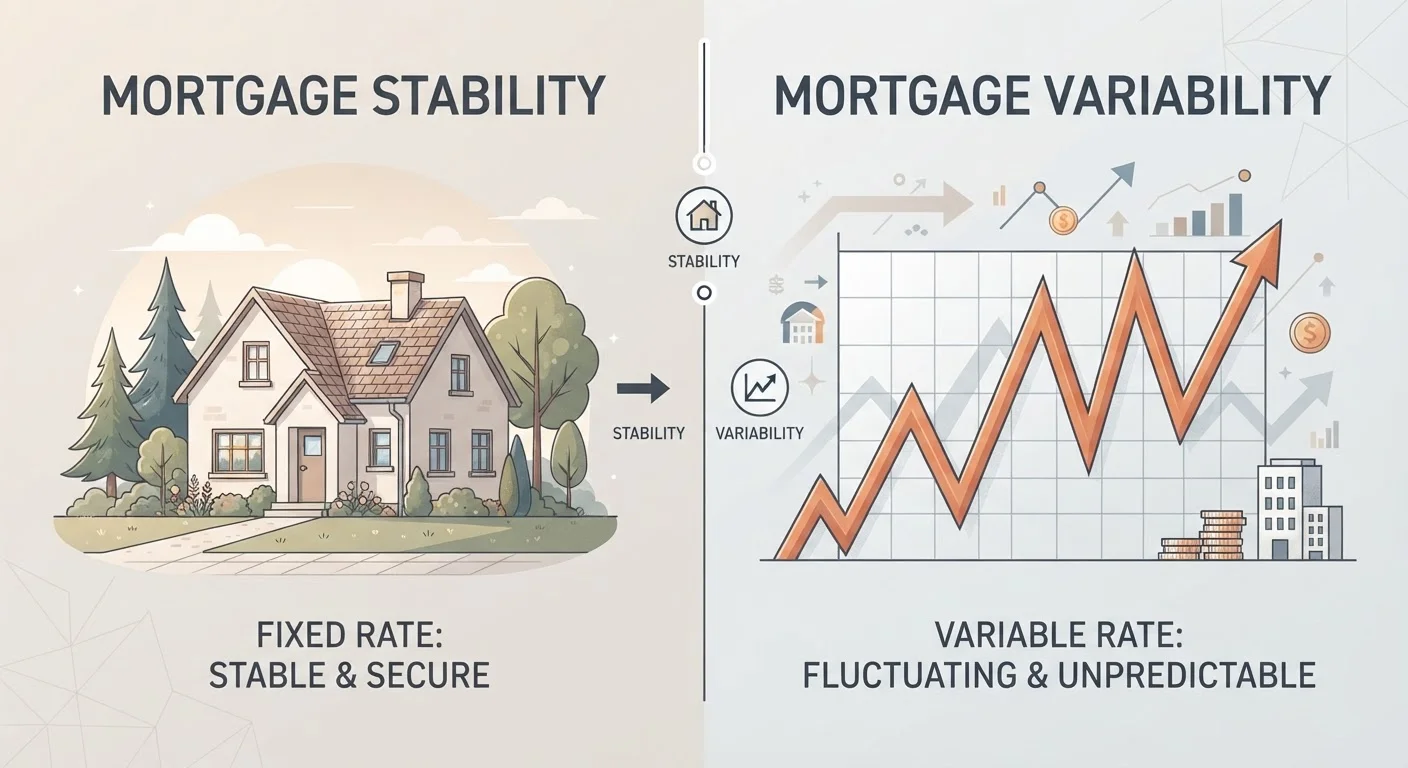
Photo: AscendWit.com | Explore Engaging Blogs. editorial
Key Takeaways
- Fixed-rate mortgages lock in your interest rate for the entire loan term, keeping monthly payments predictable.
- Adjustable-rate mortgages (ARMs) start with a lower rate that resets periodically based on a market index.
- ARMs carry payment uncertainty after the initial fixed period - rates can rise significantly.
- Fixed-rate loans typically cost more upfront but offer long-term stability ideal for buyers who plan to stay.
- The right choice depends on your timeline, risk tolerance, and current interest rate environment.
How Each Mortgage Type Is Structured
A fixed-rate mortgage locks your interest rate at the time you close - it never changes. Whether you take a 15-year or 30-year term, your rate (and the principal-plus-interest portion of your payment) stays identical every month. This predictability makes budgeting straightforward, which is one reason fixed-rate loans remain the most common mortgage type in the U.S.
An adjustable-rate mortgage (ARM) works differently. It starts with a fixed introductory rate - often for 5, 7, or 10 years - then adjusts periodically based on a benchmark interest rate index, such as the Secured Overnight Financing Rate (SOFR). A loan labeled "5/1 ARM" means the rate is fixed for five years, then resets once per year afterward. ARMs typically carry caps: limits on how much the rate can rise per adjustment period and over the life of the loan, though these caps vary by lender and product.
Understanding this structural difference is the starting point for any mortgage decision. If you're also weighing the broader rent-versus-own question, explore the financial trade-offs between renting and buying before committing to either mortgage type.
| Fixed-Rate Mortgage | Adjustable-Rate Mortgage (ARM) | |
|---|---|---|
| Rate stability | Constant for full loan term | Fixed briefly, then adjusts periodically |
| Initial interest rate | Typically higher at closing | Typically lower at closing |
| Payment predictability | Fully predictable | Uncertain after introductory period |
| Risk of payment increase | None | Yes, subject to rate caps |
| Best loan horizon | Long-term (7+ years) | Short-term (under 7 years) |
| Common terms | 15-year or 30-year | 5/1, 7/1, or 10/1 ARM |
What Happens to Your Payments Over Time
With a fixed-rate mortgage, your principal and interest payment is the same in year one as it is in year twenty-nine. What changes over time is the composition of that payment - early on, more of it goes toward interest; later, more goes toward principal. This is called amortization. Your total outlay is entirely predictable from day one.
With an ARM, the story changes when the introductory period ends. If rates have risen, your adjusted payment could be noticeably higher. For example, a rate that climbs from 5% to 7.5% on a $350,000 loan balance could add hundreds of dollars to your monthly payment. Caps limit how steep a single adjustment can be, but they do not prevent cumulative increases over multiple adjustment cycles.
ARM Rate Caps Don't Eliminate Risk
This payment uncertainty has real budget implications. Just as carrying only minimum balances on debt compounds your total cost - a dynamic explained in our guide on how minimum payments compound over time - an ARM that resets upward can dramatically increase your total interest paid if you hold the loan long enough.
Comparing the Key Trade-Offs
Neither structure is inherently better. Each reflects a different trade-off between certainty and potential savings. Fixed-rate loans protect you from market fluctuations but typically start at a higher rate than comparable ARMs. ARMs reward borrowers who exit the loan (through sale or refinance) before or shortly after the adjustment period begins.
Use Your Expected Timeline as a Guide
Your timeline is the most important variable. If you're confident you'll sell or refinance within five to seven years, an ARM's lower initial rate may save you money without much exposure to rate resets. If you plan to stay long-term, the certainty of a fixed rate usually outweighs the early savings an ARM provides. Thinking through fixed versus variable costs in your broader financial picture - as outlined in our reference guide on fixed vs. variable expenses - can sharpen that decision.
It's also worth recognizing that mortgages are not the only loan where structure matters. Auto loans carry similar mechanics around rates, terms, and total cost - understanding those principles carries over.
Making the Right Call for Your Situation
No single mortgage type suits everyone. Before deciding, ask yourself: How long do I realistically plan to stay in this home? Can my household budget absorb a payment increase if rates rise? What is the current interest rate environment - are rates historically high, average, or low?
In a high-rate environment, some buyers choose ARMs hoping to refinance into a fixed rate once rates fall. This strategy carries its own risks - refinancing costs money, and rates may not drop on your preferred timeline. In a low-rate environment, locking in a fixed rate is generally more attractive because the gap between fixed and adjustable offerings narrows.
Also factor in the hidden costs of homeownership - property taxes, insurance, and maintenance - which affect what you can realistically afford in a higher-payment scenario.
A licensed mortgage professional or HUD-approved housing counselor can model specific payment scenarios for your situation. This article provides general educational context, not personalized financial advice. Always consult a qualified professional before making mortgage decisions.
This article is for informational and educational purposes only and does not constitute financial or mortgage advice. Consult a licensed financial professional for guidance specific to your circumstances.
The content on this site is for informational purposes only and is not a substitute for professional advice. Always consult a qualified professional for guidance specific to your situation.