
Fixed vs. Variable Expenses: A Reference Guide for Budget Builders

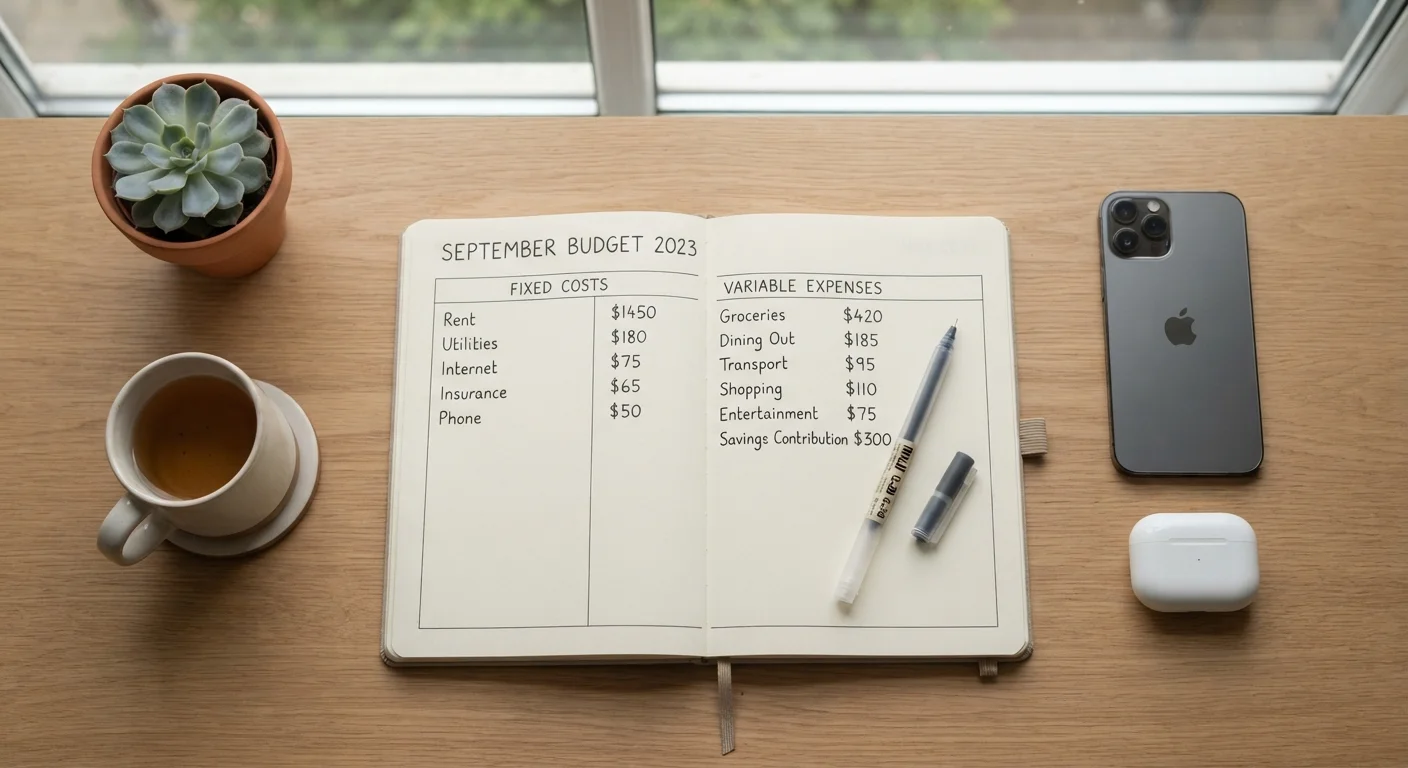
Photo: AscendWit.com | Explore Engaging Blogs. editorial
What Are Fixed Expenses?
A fixed expense is any cost that stays the same amount every billing cycle - month after month, regardless of how much you use a service or how your habits change. Because these amounts don't shift, they're the easiest expenses to plug into a budget with confidence.
Common examples of fixed expenses include:
- Rent or mortgage payments
- Car loan payments
- Student loan payments
- Health or auto insurance premiums
- Subscription services billed at a flat monthly rate
Because fixed expenses are predictable, they're typically the first items you should list when building a budget. Once you know your total fixed costs, you can see exactly how much income remains for everything else. For a step-by-step walkthrough of that process, see Your First Budget: A Plain-Language Starting Point.
This article is for general informational purposes only and does not constitute personalized financial advice. Consult a qualified financial professional for guidance specific to your situation.
What Are Variable Expenses?
A variable expense is a cost that changes from period to period, depending on your behavior, consumption, or circumstances. These are harder to predict precisely but are also where most people have the greatest opportunity to adjust their spending.
Variable expense
A cost that changes in amount from one billing period to the next based on usage, behavior, or circumstances. Examples include groceries, gas, and utility bills.
Discretionary spending
Money spent on non-essential wants rather than basic needs. Dining out, entertainment, and hobbies are typical discretionary expenses.
Needs vs. wants
A basic framework that distinguishes necessary expenses (housing, food, transportation to work) from optional ones (streaming services, vacations). Both can be variable in cost.
Budget baseline
The minimum amount of income required to cover all fixed and essential variable expenses before saving or discretionary spending begins.
Common examples of variable expenses include:
- Groceries and dining out
- Gasoline and transportation costs
- Utility bills (electricity, water, gas)
- Clothing and household supplies
- Entertainment and hobbies
- Medical co-pays and prescriptions
Some variable expenses - like groceries - are necessities that fluctuate in cost. Others - like dining out - are discretionary, meaning you choose how much to spend. Knowing which variable costs are needs versus wants helps you find realistic places to trim if your budget feels tight. For definitions of terms like "discretionary spending," see Key Budgeting Terms Every Beginner Should Know.
Why the Distinction Matters for Budgeting
Separating fixed from variable expenses gives your budget structure. Here's why that matters in practice:
~33%
Average share of income spent on housing
The U.S. Bureau of Labor Statistics Consumer Expenditure Survey consistently finds housing is the largest single expense category for American households.
2-3 months
Recommended tracking period for variable expenses
Personal finance educators commonly advise tracking variable spending for at least two to three months to identify reliable patterns before setting category limits.
- Fixed costs set your floor. These are non-negotiable in the short term. If your fixed costs consume most of your income, that's a signal to look at longer-term changes - like refinancing debt or downsizing - rather than trying to cut $5 here and there.
- Variable costs give you flexibility. This is where day-to-day spending decisions live. Tracking variable expenses over two or three months reveals patterns that are often invisible in the moment.
- Different budgeting methods treat them differently. For example, the 50/30/20 rule groups fixed necessities and variable needs together under the 50% "needs" bucket. Zero-based budgeting assigns every dollar - fixed or variable - a specific purpose. See how these approaches compare in Zero-Based Budgeting vs. the 50/30/20 Rule.
If you want to explore less common approaches - such as pay-yourself-first or value-based budgeting - Budgeting Approaches Worth Knowing Beyond the Popular Ones offers honest notes on who each method tends to suit.
Understanding how fixed and variable expenses fit into your broader financial picture - including saving and managing debt - is also covered in our Saving & Debt hub.
The content on this site is for informational purposes only and is not a substitute for professional advice. Always consult a qualified professional for guidance specific to your situation.