
Owning vs. Renting: The Hidden Costs People Rarely Factor In

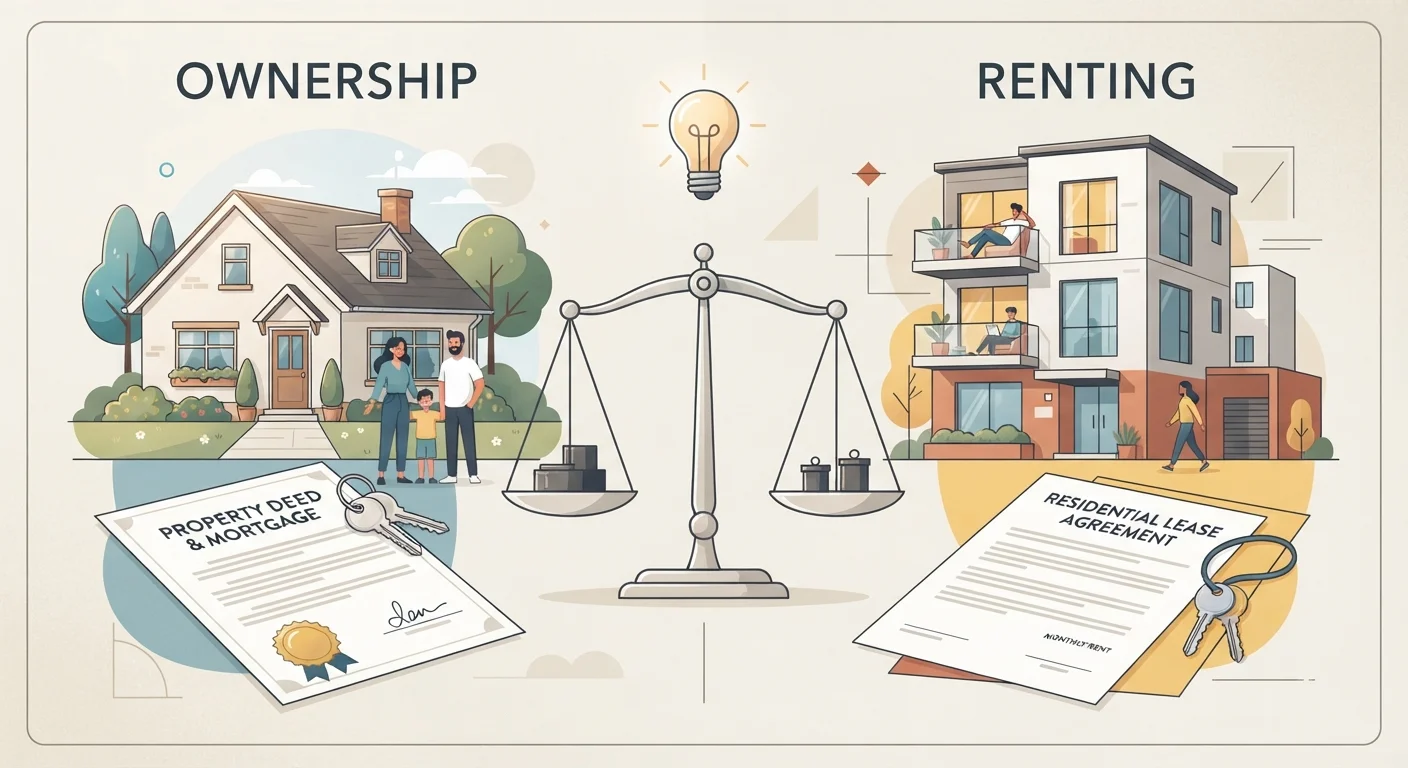
Photo: AscendWit.com | Explore Engaging Blogs. editorial
Key Takeaways
- Homeownership carries significant hidden costs - property taxes, maintenance, and HOA fees - beyond the mortgage.
- Renting has its own less-visible expenses, including renter's insurance and potential rent increases.
- Neither option is universally better; the right choice depends on your financial situation and life plans.
- Building equity through ownership takes time and is not guaranteed in every market.
- Flexibility is renting's most underrated advantage for people with uncertain plans.
Builds equity over time with consistent payments
Each mortgage payment reduces the loan balance, gradually increasing the owner's stake in the property - a form of forced savings unavailable to renters.
Stability and control over your living space
Owners can renovate, paint, landscape, and modify their home without a landlord's permission, giving far greater control over the environment.
Fixed-rate mortgage payments stay predictable
Unlike rent, a fixed-rate mortgage payment remains constant for the life of the loan, making long-term budgeting more reliable.
Potential appreciation in property value
Homes in many markets have historically increased in value over time, though this is not guaranteed and varies significantly by location and market conditions.
Property taxes add a significant ongoing cost
Property taxes are non-negotiable and can rise over time as assessed values increase, adding hundreds or thousands of dollars to annual housing costs.
Maintenance and repairs fall entirely on the owner
From a failing water heater to a damaged roof, owners bear the full cost of repairs - often at the least convenient times and without much warning.
HOA fees can be unpredictable and substantial
Special assessments for community repairs or upgrades can be levied with limited notice, and monthly fees in some developments rival a car payment.
Reduced flexibility compared to renting
Selling a home takes time and involves significant transaction costs, making it harder to relocate quickly for job changes or life circumstances.
Early mortgage payments build little equity
In the early years of a standard amortizing mortgage, most of each payment covers interest rather than principal, meaning equity accumulates slowly at first.
Why the Mortgage-vs.-Rent Comparison Misses the Point
Most people frame the housing decision as a simple monthly payment contest: is the mortgage cheaper than rent? But that comparison leaves out a long list of costs that can shift the math significantly. On the ownership side, expenses like property taxes, homeowner's insurance, routine maintenance, and HOA fees (homeowners association fees, charged in many planned communities and condos) are real, recurring, and often underestimated. On the renting side, costs are generally more predictable - but not zero.
For a fuller picture of financial trade-offs between the two paths, see our guide to the real financial trade-offs between renting and buying.
1%-2%
Annual home maintenance cost estimate
A widely cited rule of thumb suggests homeowners should budget 1%-2% of their home's value each year for maintenance and repairs.
2%-5%
Typical closing cost range for buyers
According to general industry guidance, buyers typically pay 2%-5% of the purchase price in closing costs - an expense that must be saved in advance.
The Hidden Costs of Owning a Home
Beyond the mortgage payment, homeowners regularly face expenses that renters largely avoid:
- Property taxes: These vary widely by location but commonly run between 0.5% and 2.5% of a home's assessed value annually. On a $350,000 home, that could mean $1,750-$8,750 per year.
- Maintenance and repairs: A commonly cited rule of thumb is to budget 1%-2% of the home's value per year for upkeep. A new roof, HVAC replacement, or plumbing repair can each run into the thousands.
- HOA fees: Where applicable, these can range from under $100 to over $500 per month - and special assessments for major repairs can arise without warning.
- Closing costs: Buyers typically pay 2%-5% of the purchase price upfront. Closing costs explained breaks down exactly what those fees cover.
- Mortgage interest: Especially in the early years of a loan, a large share of each payment goes toward interest rather than building equity. Fixed-rate vs. adjustable-rate mortgages explains how your loan type shapes this over time.
Builds equity over time with consistent payments
Each mortgage payment reduces the loan balance, gradually increasing the owner's stake in the property - a form of forced savings unavailable to renters.
Stability and control over your living space
Owners can renovate, paint, landscape, and modify their home without a landlord's permission, giving far greater control over the environment.
Fixed-rate mortgage payments stay predictable
Unlike rent, a fixed-rate mortgage payment remains constant for the life of the loan, making long-term budgeting more reliable.
Potential appreciation in property value
Homes in many markets have historically increased in value over time, though this is not guaranteed and varies significantly by location and market conditions.
The Hidden Costs of Renting
Renting is often treated as the financially simpler option, and in many ways it is - but renters face their own overlooked costs:
- Renter's insurance: Landlords' insurance covers the building, not tenants' belongings. Renter's insurance is a separate expense, though typically modest.
- Rent increases: Unlike a fixed-rate mortgage, rent can rise at lease renewal. In competitive markets, significant annual increases are common.
- Move-related costs: Security deposits, moving expenses, and application fees add up, particularly if a renter moves frequently.
- Limited control: Renters cannot make structural improvements that build value. For decorating within those limits, reversible decorating ideas for renters offers practical options.
For a clear explanation of what landlords are and aren't legally allowed to do, renter's rights explained covers the basics.
Property taxes add a significant ongoing cost
Property taxes are non-negotiable and can rise over time as assessed values increase, adding hundreds or thousands of dollars to annual housing costs.
Maintenance and repairs fall entirely on the owner
From a failing water heater to a damaged roof, owners bear the full cost of repairs - often at the least convenient times and without much warning.
HOA fees can be unpredictable and substantial
Special assessments for community repairs or upgrades can be levied with limited notice, and monthly fees in some developments rival a car payment.
Reduced flexibility compared to renting
Selling a home takes time and involves significant transaction costs, making it harder to relocate quickly for job changes or life circumstances.
Early mortgage payments build little equity
In the early years of a standard amortizing mortgage, most of each payment covers interest rather than principal, meaning equity accumulates slowly at first.
What Actually Determines Which Path Makes Sense
No formula produces a universal answer, but these factors consistently matter most:
- How long you plan to stay
- Buying typically makes more financial sense the longer you remain in the home. Transaction costs and slow early equity growth mean short-term owners often come out behind.
- Local market conditions
- In some metros, home prices are so elevated relative to rents that renting and investing the difference may produce better outcomes. In others, the reverse is true. Neither conclusion is permanent.
- Your financial cushion
- Homeownership requires an emergency fund specifically for home repairs, on top of the down payment. Buying at the edge of affordability leaves little room for the unexpected costs described above.
- Career and life flexibility
- Renting preserves the option to relocate for work, family, or lifestyle changes without the friction of selling a property. That flexibility has real, if hard-to-quantify, value.
Before making either decision, anchoring it in a solid household budget is essential. Budgeting basics offers straightforward strategies for tracking your actual spending and understanding what you can genuinely afford.
Equity Isn't the Same as Profit
This article is for general informational purposes only and does not constitute financial, legal, or real estate advice. Consult a qualified financial adviser or real estate professional for guidance specific to your situation.
The content on this site is for informational purposes only and is not a substitute for professional advice. Always consult a qualified professional for guidance specific to your situation.