
Home Décor

Mixing Old and New Furniture Without It Looking Like a Mistake

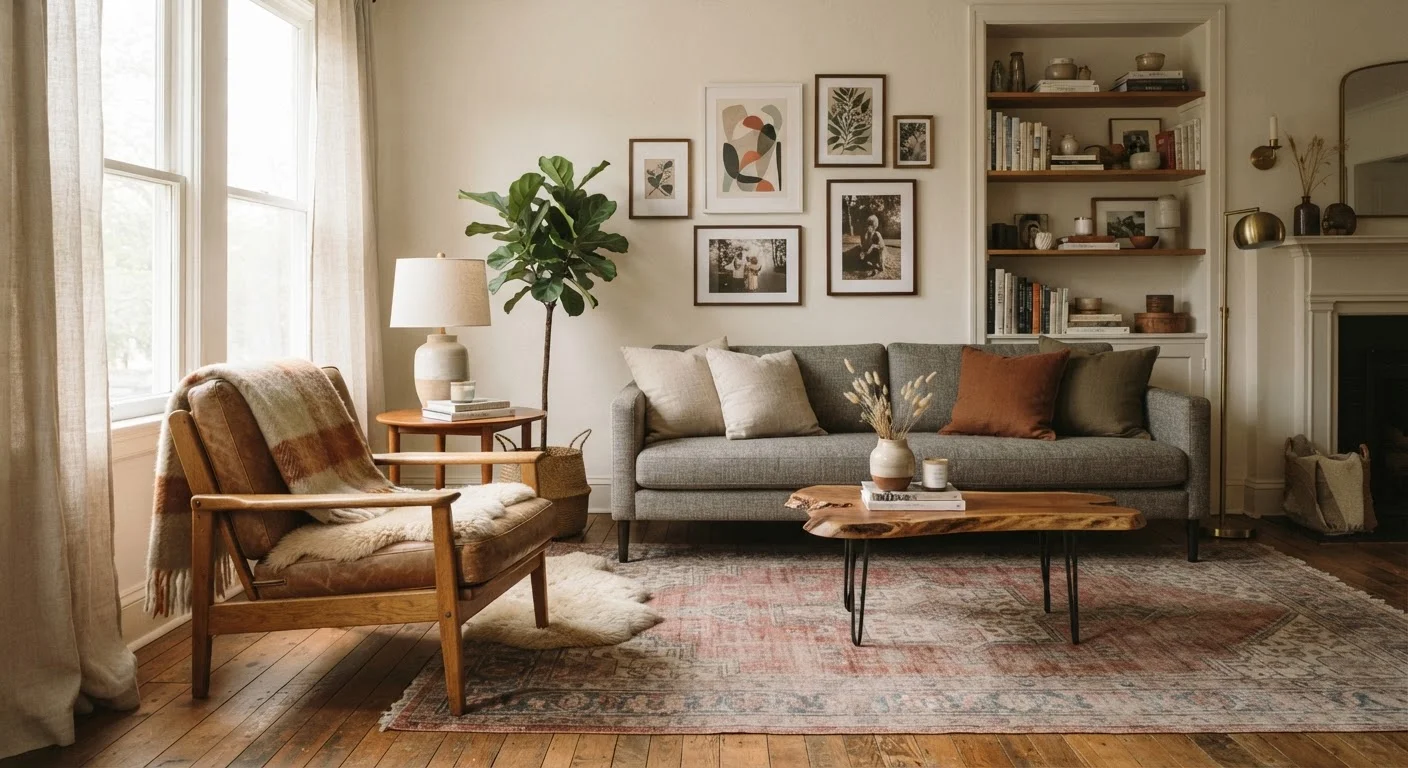
Mixing Old and New Furniture Without It Looking Like a Mistake

Photo: AscendWit.com | Explore Engaging Blogs. editorial

Eclectic rooms work when there's intention behind the mix. These guiding principles help you blend different eras and styles successfully.

Key Takeaways

  • A unifying color palette is the most reliable way to connect furniture from different eras.
  • Repeating shapes, finishes, or materials across pieces creates visual continuity without matching styles.
  • Scale and proportion matter more than era — mismatched sizes are the most common cause of a room feeling off.
  • One dominant style anchored by accent pieces from another era tends to feel intentional rather than chaotic.
  • Mixing textures — wood, metal, fabric, glass — adds depth and helps eclectic rooms feel cohesive.

Why Mixing Eras Works — When It's Done With Intention

Most rooms that feel truly interesting aren't decorated in a single, strict style. They're layered — a mid-century credenza alongside a contemporary sofa, a grandmother's side table paired with a minimalist floor lamp. The mix is what gives a room personality. But without some guiding logic, the same approach can look unplanned and chaotic.

The difference between an eclectic room that works and one that doesn't usually comes down to intention. Designers who blend eras successfully aren't randomly combining whatever they have on hand — they're working with principles. Understanding a few of those principles gives you the same toolkit. See our guide to foundational design principles for a deeper look at balance, scale, and contrast.

1

Anchor the room in one dominant style, then layer in accents from another era.

Without a dominant style, a mixed room can read as indecisive. Choosing one era or aesthetic as the primary voice — and treating pieces from other periods as supporting characters — gives the eye a place to settle. The contrast becomes a feature rather than a problem.
Example: A room that's primarily mid-century modern in its furniture lines reads as cohesive even when a rustic farmhouse bench sits beneath the window, because the bench is clearly an accent, not a competing anchor.
2

Establish a unified color palette across all pieces, regardless of style or era.

Color is the fastest way the eye decides whether a room belongs together. When pieces from different eras share a palette — even loosely — visual tension drops considerably. You don't need matching colors, just a limited, harmonious range.
Example: A Victorian-style upholstered chair and a Scandinavian-influenced sofa can coexist comfortably when both are upholstered in the same warm neutral linen family.
3

Repeat a material or finish at least twice in the room.

Repetition signals intention. When the same brass finish appears on a vintage lamp and a contemporary cabinet handle, the room feels curated rather than assembled by accident. This works with wood tones, metals, glass, and fabric textures.
Example: A dark walnut antique side table feels at home next to a sleek modern coffee table when the coffee table's legs share the same walnut stain.
4

Match scale and proportion across pieces, not style.

Oversized and delicate pieces clash more noticeably than pieces from different decades. When furniture shares a general sense of visual weight — all substantial, or all light and slim — the room holds together even when the styles diverge dramatically.
Example: A heavy, carved antique bookcase overwhelms a room full of slender-legged modern pieces; swapping it for a simpler antique with similar proportions resolves the imbalance without sacrificing character.
5

Use textiles and rugs as transition pieces between mismatched furniture.

Soft furnishings are among the most effective tools for tying disparate pieces together. A rug that pulls colors from both the older and newer furniture, or throw pillows that echo a vintage fabric pattern in a modern colorway, build a visual bridge between eras.
Example: An abstract geometric rug in warm terracotta and cream works equally well under a mid-century sofa and an antique armchair, connecting both without favoring either.

The Practices That Make Mixed Rooms Look Deliberate

These approaches don't require design expertise or a large budget — they require awareness of what your pieces share and how to emphasize those connections.

high Choose one metal finish — brass, black, chrome — and replace mismatched hardware or light fixtures throughout the room to create an immediate throughline.
high Lay a rug that incorporates at least two colors already present in your existing furniture — this single step often resolves a room's fragmented feel.
medium Pull one item from a different era (a vintage stool, an heirloom lamp) into an otherwise modern room to test whether your current color palette can accommodate it before making larger changes.

If your room still feels slightly unresolved after applying these ideas, common layout and styling imbalances may be the culprit.

Putting It Into Practice

Start by auditing what you already own. Identify the pieces you genuinely love and plan to keep — these become your anchors. Then look for the threads they share: a wood tone, a leg shape, a color in the upholstery. Those threads are your palette for building around them.

You Don't Have to Match Everything

Cohesion in a mixed room comes from shared threads — color, finish, proportion — not from identical styles or matching sets. Rooms where every piece is too coordinated can actually feel less interesting and less personal than rooms that have been thoughtfully assembled over time. Aim for intentional variety, not uniformity.

Not sure which style family your existing pieces fall into? The home décor style glossary can help you name what you're working with and identify compatible directions. And if you're starting from scratch, this beginner-friendly room-planning guide walks through decisions in a logical order.

Mixing old and new furniture is one of the most forgiving approaches to decorating — it accommodates the reality that most households accumulate pieces over time rather than furnishing all at once. The goal isn't a perfect showroom; it's a room that feels considered and genuinely yours. For more on what that actually looks like, see what cohesion really means in home décor.

Home Editorial Team

AscendWit.com | Explore Engaging Blogs.

Home Editorial Team is the collective byline for our editorial team and contributor network. Articles published under this byline or an editorial pen name are researched, written, and reviewed according to our editorial standards for clarity, consistency, and independence before publication.

Home MaintenanceHome DécorReal Estate Basics
View author profile

The content on this site is for informational purposes only and is not a substitute for professional advice. Always consult a qualified professional for guidance specific to your situation.