
Envelope Budgeting in a Digital Age: Does It Still Work?

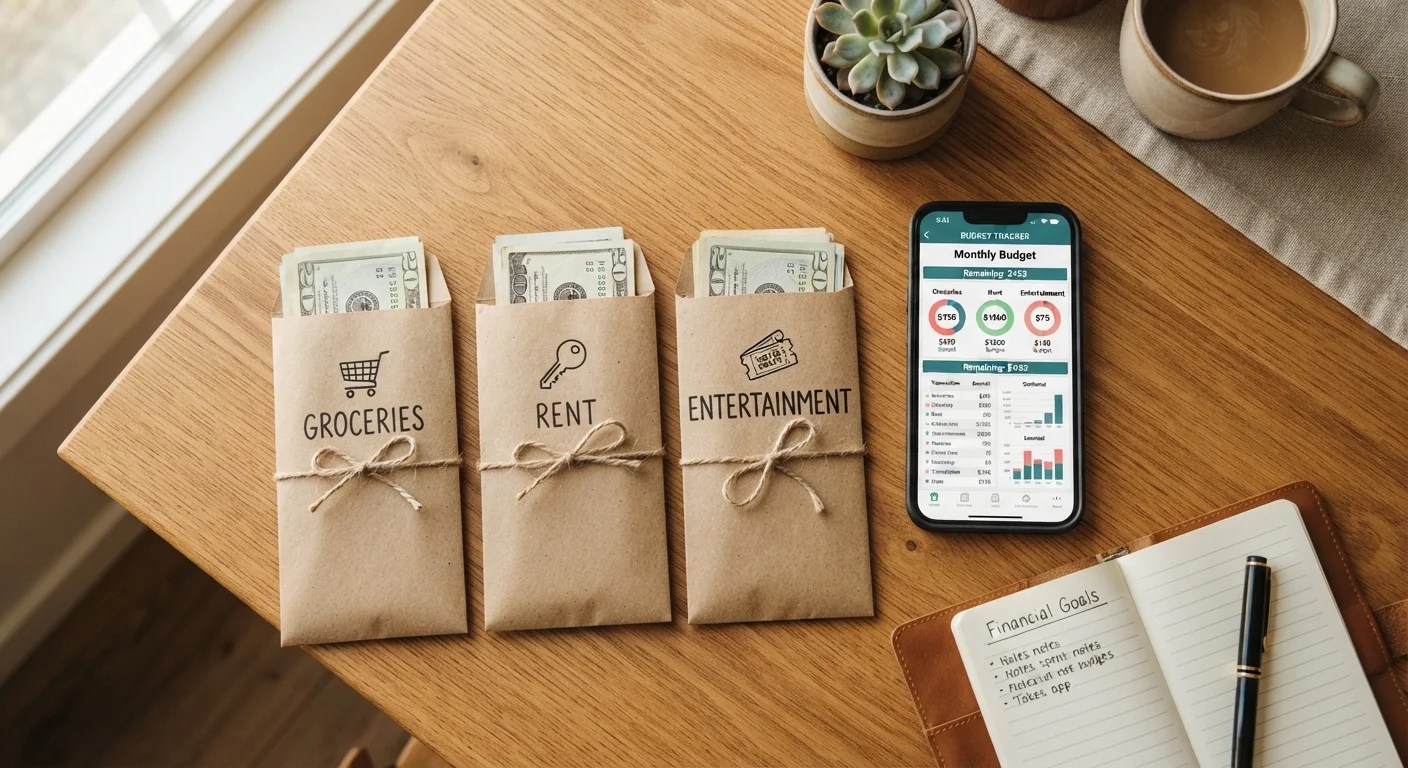
Photo: AscendWit.com | Explore Engaging Blogs. editorial
Key Takeaways
- Envelope budgeting assigns a fixed cash amount to each spending category before the month begins.
- The method is proven to reduce impulse spending, but using physical cash is increasingly impractical.
- Digital envelope apps replicate the system without requiring you to carry cash.
- The method works best for variable spending categories like groceries, dining, and entertainment.
- No single budgeting method fits every household - pairing approaches often works better.
Creates a hard stop on overspending
Each category has a fixed limit, removing the ambiguity of "I think I have enough left." This boundary is especially effective for impulse-prone categories like dining and entertainment.
Builds spending awareness category by category
Allocating money intentionally before the month begins forces you to confront trade-offs - a practice that many budgeting researchers link to better financial decision-making over time.
Simple enough for budgeting beginners
There are no formulas or percentages to memorize. If the envelope has money, you can spend; if it doesn't, you can't. The straightforwardness reduces the learning curve significantly.
Reduces the "invisible spend" problem
Card transactions are easy to ignore in the moment. Envelope depletion - whether physical cash or a digital counter - makes spending feel more real and deliberate.
Flexible across income types
Whether you're paid weekly, bi-weekly, or irregularly, envelope budgeting can be calibrated to each pay cycle rather than requiring a stable monthly income.
Inconvenient for a cashless lifestyle
Online shopping, subscription services, and contactless payments don't fit neatly into a physical cash system. Most people who use cash envelopes today must supplement with a digital workaround anyway.
Requires consistent manual tracking
Unlike some automated budgeting methods, envelope budgeting demands regular attention - logging transactions, checking balances, and adjusting envelopes. Skipping even a few days can undermine the whole cycle.
Rigid structure frustrates unpredictable spenders
Life doesn't follow neat monthly categories. A car repair or medical co-pay can blow up several envelopes at once, making the system feel punishing rather than helpful.
Doesn't address savings or debt goals directly
Envelope budgeting controls day-to-day spending well but doesn't inherently build a savings habit or a debt payoff plan - those require separate strategies layered on top.
Risk of "envelope guilt" derailing progress
Some people respond to overspending an envelope by abandoning the entire budget rather than recalibrating. The all-or-nothing framing can work against long-term consistency.
What Is Envelope Budgeting?
Envelope budgeting is a cash-management method where you divide your take-home pay into physical envelopes, each labeled for a specific spending category - groceries, gas, dining out, entertainment, and so on. Once an envelope is empty, spending in that category stops until the next pay period. No borrowing from next month, no exceptions.
The system has been used in US households for generations and was popularized by personal finance educators as a straightforward way to stop overspending without complex spreadsheets. Its core insight is simple: when money is physical and finite, you feel its limits more viscerally than when swiping a card.
This article is for general informational purposes only and does not constitute personalized financial advice. For guidance specific to your situation, consider speaking with a licensed financial professional.
How the Digital Version Works
Carrying cash in 2024 isn't how most Americans shop. Online purchases, contactless payments, and direct-deposit paychecks have made a purely physical envelope system cumbersome for many households. That's where digital envelope budgeting steps in.
Digital versions replicate the logic using budgeting software or apps. You assign a dollar amount to each virtual "envelope" (or category) at the start of the month. Every transaction you record reduces the balance in the relevant category - just as pulling bills from a paper envelope would. Some apps sync with your bank account and auto-categorize transactions; others require manual entry, which has its own advantages for awareness.
Digital Envelopes vs. Automatic Tracking
The mechanic is identical to the original method - only the medium changes. The discipline of staying within each category limit is what drives results, not the physical cash itself.
To see how envelope budgeting compares with other structured approaches, see how zero-based budgeting and the 50/30/20 rule stack up.
Pros of Envelope Budgeting
The method has earned its staying power for good reasons.
Creates a hard stop on overspending
Each category has a fixed limit, removing the ambiguity of "I think I have enough left." This boundary is especially effective for impulse-prone categories like dining and entertainment.
Builds spending awareness category by category
Allocating money intentionally before the month begins forces you to confront trade-offs - a practice that many budgeting researchers link to better financial decision-making over time.
Simple enough for budgeting beginners
There are no formulas or percentages to memorize. If the envelope has money, you can spend; if it doesn't, you can't. The straightforwardness reduces the learning curve significantly.
Reduces the "invisible spend" problem
Card transactions are easy to ignore in the moment. Envelope depletion - whether physical cash or a digital counter - makes spending feel more real and deliberate.
Flexible across income types
Whether you're paid weekly, bi-weekly, or irregularly, envelope budgeting can be calibrated to each pay cycle rather than requiring a stable monthly income.
74%
Americans living paycheck to paycheck at some point
According to a 2023 LendingClub report, nearly three in four Americans report experiencing paycheck-to-paycheck financial strain - underscoring the need for practical spending controls.
~$1,000
Average monthly discretionary spending per US consumer
Bureau of Labor Statistics Consumer Expenditure data shows significant discretionary spending on categories like food away from home and entertainment - exactly where envelope budgeting is most effective.
For a broader look at habits that help any budgeting method succeed long-term, see habits that make budgets work over time.
Cons of Envelope Budgeting
No method is without trade-offs, and envelope budgeting has real limitations worth understanding before you commit.
Inconvenient for a cashless lifestyle
Online shopping, subscription services, and contactless payments don't fit neatly into a physical cash system. Most people who use cash envelopes today must supplement with a digital workaround anyway.
Requires consistent manual tracking
Unlike some automated budgeting methods, envelope budgeting demands regular attention - logging transactions, checking balances, and adjusting envelopes. Skipping even a few days can undermine the whole cycle.
Rigid structure frustrates unpredictable spenders
Life doesn't follow neat monthly categories. A car repair or medical co-pay can blow up several envelopes at once, making the system feel punishing rather than helpful.
Doesn't address savings or debt goals directly
Envelope budgeting controls day-to-day spending well but doesn't inherently build a savings habit or a debt payoff plan - those require separate strategies layered on top.
Risk of "envelope guilt" derailing progress
Some people respond to overspending an envelope by abandoning the entire budget rather than recalibrating. The all-or-nothing framing can work against long-term consistency.
If envelope budgeting feels too rigid, it's worth exploring other budgeting approaches worth knowing to find a method that better matches how you naturally manage money.
Making It Work in Practice
Whether you go physical or digital, a few practices consistently improve results with envelope budgeting.
- Start with variable categories only. Fixed bills like rent and insurance don't benefit much from envelope logic - focus on the categories where your spending tends to drift.
- Set realistic limits. Underfunding a grocery envelope won't make you eat less; it'll make you abandon the system. Review three months of past spending before setting category amounts.
- Decide on a transfer rule. Will you allow moving money between envelopes mid-month? Having a policy in advance prevents rationalization in the moment.
- Do a monthly review. Envelope budgets often need adjustment in the first few months. A structured end-of-month review helps you catch patterns and refine category amounts.
Envelope budgeting fits within a larger household financial framework. If you're building a complete budget from scratch, the household budgeting complete framework walks through every layer from cash flow to long-term planning.
This article is intended for general educational purposes and does not represent personalized financial, tax, or legal advice. Consult a qualified financial professional for guidance tailored to your circumstances.
The content on this site is for informational purposes only and is not a substitute for professional advice. Always consult a qualified professional for guidance specific to your situation.