
5G on Your Phone: Separating the Hype from What It Actually Delivers

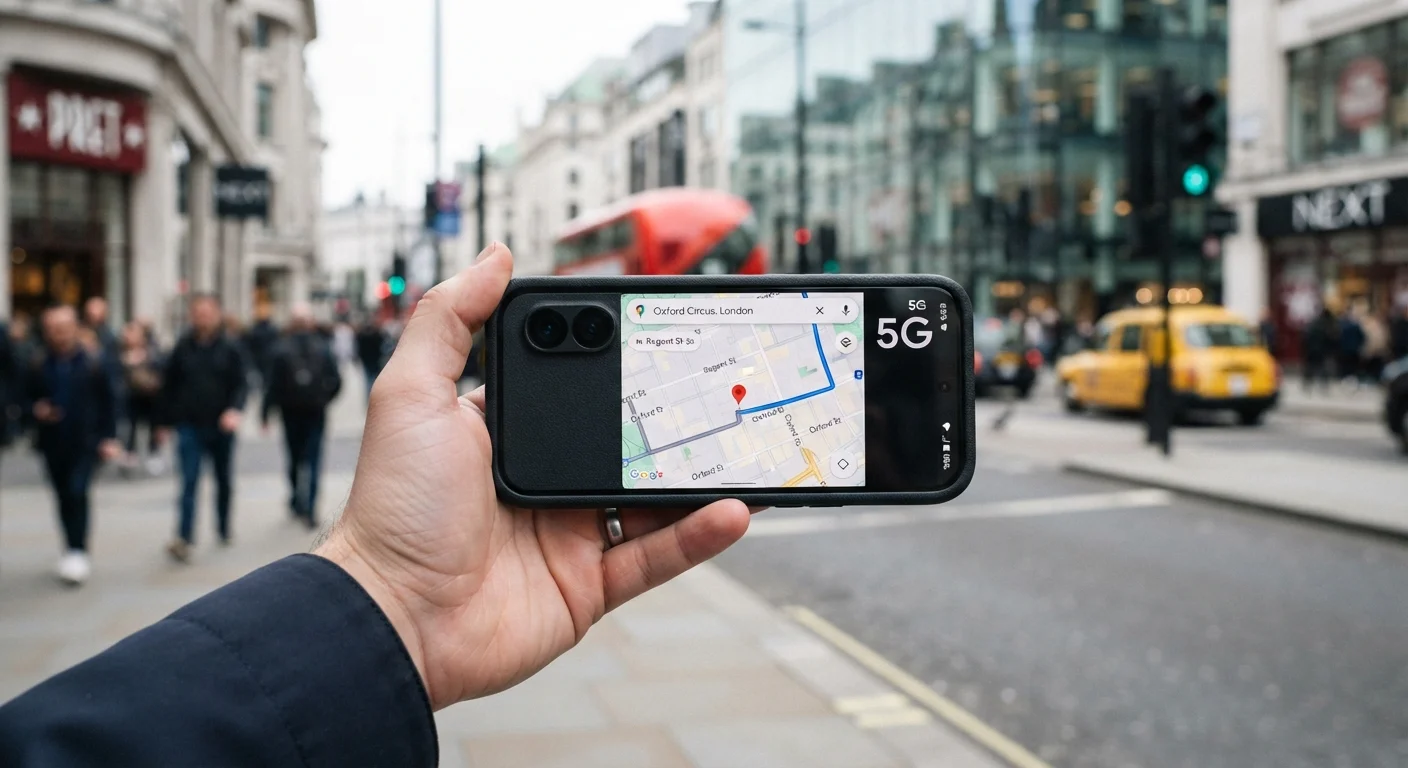
Photo: AscendWit.com | Explore Engaging Blogs. editorial
Key Takeaways
- 5G speeds vary dramatically depending on the frequency band your carrier uses in your area.
- Most everyday smartphone tasks won't feel noticeably faster on 5G compared to a strong 4G LTE connection.
- 5G coverage is still expanding; rural and suburban users may see limited or no benefit yet.
- A 5G phone doesn't guarantee 5G service - your carrier plan and local towers matter just as much.
- Battery drain can increase when your phone actively searches for or maintains a 5G connection.
Why 5G Sounds Revolutionary But Feels Incremental
Carrier ads make 5G sound like a complete reinvention of mobile connectivity. In reality, the experience most users notice day-to-day is more modest. 5G is a genuine improvement over 4G LTE in specific conditions, but those conditions aren't as common as the marketing implies.
The confusion starts with the fact that "5G" isn't a single thing. It covers three distinct frequency bands - low-band, mid-band, and high-band (also called millimeter wave, or mmWave) - and each delivers very different performance. Low-band 5G travels far and penetrates buildings well, but its speeds are often barely faster than 4G LTE. High-band 5G can hit extraordinary speeds in ideal conditions but has an extremely short range and is blocked by walls. Most people, most of the time, are on low-band 5G without knowing it.
Understanding this distinction is the foundation for cutting through the hype. For a broader look at how wireless and wired technologies compare, see our overview of home internet technologies.
Myth
5G is everywhere now, so my new phone will always be on 5G.
Fact
5G coverage is still being expanded and varies significantly by region, carrier, and even neighborhood.
Carriers display 5G on phones whenever any 5G signal is available - including slow low-band 5G that barely outperforms 4G LTE. In many suburban and rural areas, coverage maps show 5G but the actual signal is a low-band connection with modest speed gains. True mid-band 5G, which offers the most meaningful everyday improvement, is concentrated in larger metro areas.
Myth
5G will make everything on my phone dramatically faster.
Fact
For most everyday tasks, the difference between a strong 4G LTE signal and low-band 5G is barely perceptible.
Streaming, browsing, and social media are limited by factors beyond cellular speed alone - including server response times, app performance, and how much data each task actually requires. A 4G LTE connection delivering 30-50 Mbps is already far faster than most apps need. The speed ceiling raised by 5G only matters when you're consistently hitting the limits of your current connection, which most users aren't.
Myth
If my phone shows a 5G icon, I'm getting the fastest 5G available.
Fact
The 5G indicator on your screen only confirms a 5G connection type - not its speed tier or quality.
Low-band, mid-band, and high-band 5G all display the same "5G" label on most phones. Without digging into carrier signal details or running a speed test, there's no visual way to know which type you're on. High-band mmWave - the version with headline-grabbing multi-gigabit speeds - is deployed in very limited locations such as select city blocks and some transit hubs.
Myth
5G is harmful to human health.
Fact
Major health and regulatory bodies have not found evidence that 5G radio frequencies cause harm at exposure levels people encounter.
5G uses radio waves - a form of non-ionizing electromagnetic radiation, similar in nature to earlier cellular generations and Wi-Fi. Regulatory agencies set exposure limits well below levels where any established biological effect occurs. Scientific and health organizations including the World Health Organization continue to monitor research in this area, but current evidence does not support claims of harm from typical 5G exposure. For any personal health concerns, consult a qualified healthcare professional.
Myth
Buying a 5G phone means my carrier automatically gives me 5G service.
Fact
Your phone hardware and your carrier plan are separate - having a 5G device doesn't automatically enroll you in 5G service.
Some carrier plans include 5G access by default; others require a specific plan tier. Additionally, even with the right plan, your phone will only use 5G where your carrier has deployed compatible towers. It's worth checking your current plan details and your carrier's coverage map for your specific area before assuming 5G is active on your line.
What the Numbers Actually Mean for Real Use
Benchmarks showing multi-gigabit 5G speeds exist - but they require being close to a high-band tower outdoors with no obstructions. That's not how most people use their phones. For streaming video, loading web pages, or sending messages, a reliable 4G LTE connection and a strong 5G low-band signal are essentially indistinguishable in practice.
~30-250 Mbps
Typical real-world 5G download speed range
Speed test aggregators consistently show most US 5G users experience speeds in this range - far below the multi-gigabit figures cited in carrier marketing for ideal mmWave conditions.
~72%
US population with some form of 5G coverage
Coverage estimates from industry analysts suggest a large share of Americans live within a 5G footprint, but low-band deployment accounts for the majority of that coverage area.
Where 5G mid-band does deliver a meaningful upgrade is in dense environments: sports stadiums, concerts, airports, and busy urban centers where many people share a cell tower simultaneously. In those scenarios, 5G's greater network capacity can result in faster, more consistent performance compared to congested 4G.
If you're evaluating whether a 5G phone is worth prioritizing, it helps to understand the full picture of smartphone specs. Our plain-language breakdown of smartphone specs covers what those numbers actually mean for daily use. And if you're considering a budget device, check out what budget phones trade off - 5G capability is one factor, but rarely the most important one.
Your Carrier's Network Matters More Than Your Phone
Making a Practical Decision About 5G
For most US consumers, the honest advice is this: if your current phone works well and your carrier's 4G LTE coverage is solid, upgrading purely for 5G is unlikely to produce a noticeable improvement right now. 5G infrastructure is still being built out, and the practical benefits depend heavily on where you live and how your carrier has deployed its network.
That said, most new mid-range and higher-end phones now include 5G modems by default. If you're already due for an upgrade, getting a 5G-capable device makes sense as a form of future-proofing - you'll be ready as coverage improves. Just don't expect an immediate transformation. The same principle applies to home networking upgrades; our guide to Wi-Fi 6 explores a similar gap between promised and delivered performance.
Avoiding common technology myths - whether about mobile or home internet - helps you spend smarter. Our home internet myths article shows how the same pattern of overstated promises applies to broadband plans.
Watch for Battery Drain on 5G Phones
The content on this site is for informational purposes only and is not a substitute for professional advice. Always consult a qualified professional for guidance specific to your situation.