
Small Space, Big Impact: Décor Approaches That Make Rooms Feel Larger

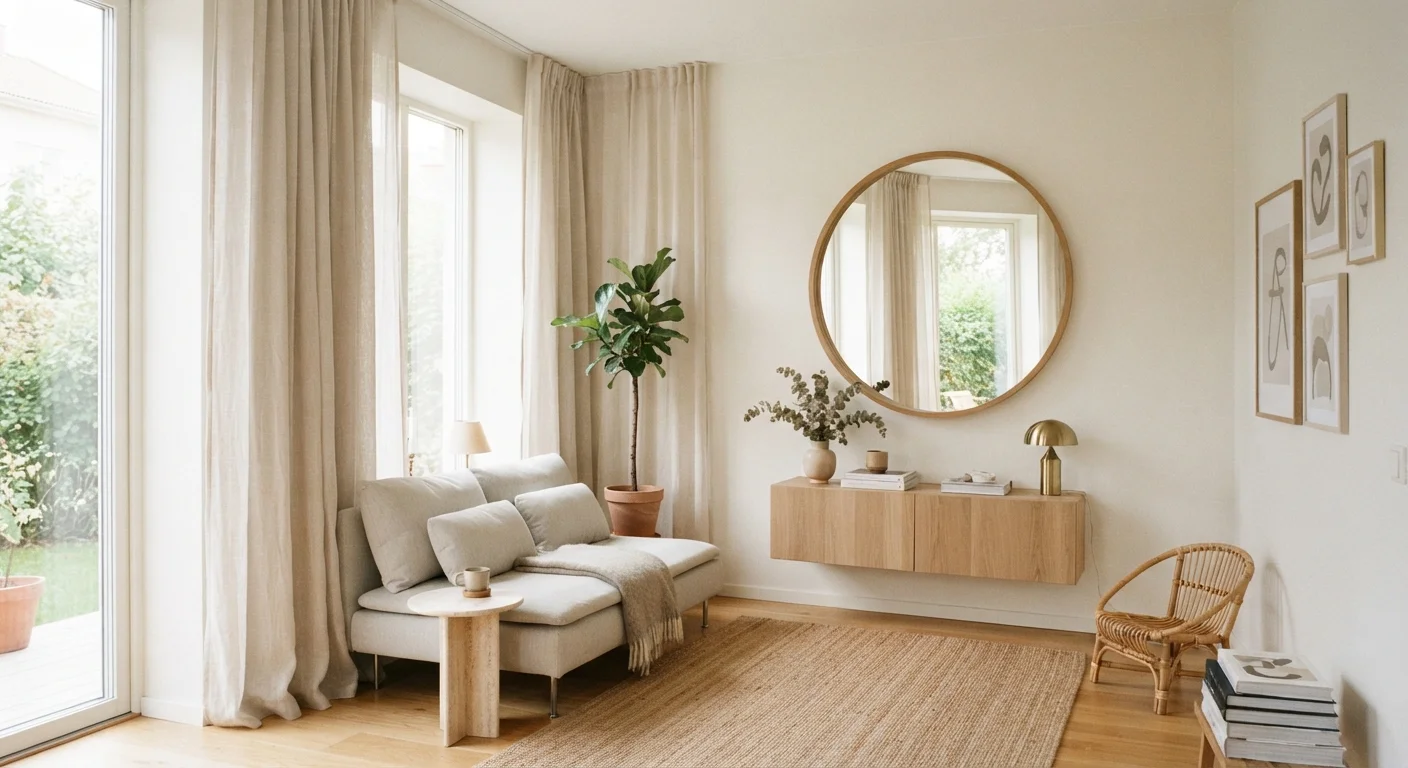
Photo: AscendWit.com | Explore Engaging Blogs. editorial
Key Takeaways
- Light colors on walls and ceilings visually expand a room's perceived dimensions.
- Mirrors placed to reflect natural light are one of the most effective space-expanding tools.
- Right-sized furniture with exposed legs creates a sense of openness and airflow.
- Vertical lines - in curtains, shelving, and trim - draw the eye upward and increase perceived ceiling height.
- Reducing visual clutter through smart storage makes any space feel substantially larger.
Why Small Rooms Feel the Way They Do
A room's perceived size isn't just about square footage - it's shaped by how light moves through the space, where your eye lands, and whether the furniture and color choices work with the room's proportions or fight against them. A 300-square-foot studio can feel cramped or surprisingly livable depending entirely on how it's arranged and finished.
The good news: most of the principles that make a room feel larger don't require renovation. They're about making smarter choices with what you already have or can add affordably. Understanding the underlying logic - covered in depth in our design principles guide - helps you apply these tactics confidently rather than guessing.
Below are seven décor approaches that interior designers and environmental psychology research consistently support for making rooms feel more spacious.
Choose light, low-contrast color palettes
Pale, cool, or neutral wall colors reflect more light back into a room, making the walls appear to recede. Deep, saturated colors absorb light and visually advance surfaces toward you, compressing the perceived space. This doesn't mean every small room must be white - soft greiges, warm creams, and pale blues all work well - but maintaining a low contrast between walls, trim, and ceiling removes the visual boundaries that make a room feel boxed in.
Painting the ceiling the same color as the walls (or one shade lighter) is a particularly underused technique. It eliminates the hard line where walls end and makes the room feel taller and more continuous.
Painting walls and ceiling the same color removes boundaries that make rooms feel boxed in.
Use mirrors to multiply light and depth
A well-placed mirror doesn't just reflect your image - it reflects the room back at itself, creating the impression of an additional space beyond the wall. Position mirrors to face or angle toward a window so they bounce natural light deeper into the room. A large mirror on a short wall can visually double the apparent length of a narrow room.
Lean a floor mirror against a wall rather than hanging it flush to add a sense of depth and dimension. Mirrored furniture and backsplashes can extend this effect without requiring dedicated wall space, though they work best used selectively rather than throughout an entire room.
A large mirror on a short wall can visually double the apparent length of a narrow room.
Scale furniture to the room, not the showroom
Oversized furniture is one of the most common culprits in a cramped-feeling room. A sofa that seats six might seem like good value, but if it fills a living room wall to wall, it leaves no visual breathing room. Choosing pieces that are appropriately proportioned - with some floor space visible around and beneath them - keeps the room from feeling overwhelmed.
Furniture with exposed legs (rather than pieces that sit flush to the floor) allows sightlines to travel under and through the arrangement, which opens up the visual field considerably. Multi-function pieces, like ottomans with storage or drop-leaf tables, reduce the total number of items competing for space. See our beginner decorating guide for help sequencing furniture decisions logically.
Furniture with exposed legs lets sightlines travel through the room, visually expanding the space.
Hang curtains high and wide
Curtain placement is a simple, low-cost intervention with a dramatic impact on perceived ceiling height. Hanging curtains as close to the ceiling as possible - rather than just above the window frame - draws the eye upward and makes the ceiling appear taller. Extending the curtain rod several inches beyond the window frame on both sides means more of the wall is covered, making the window appear larger and the room more expansive when curtains are open.
Choose curtain fabric in a color close to the wall color for a seamless, uninterrupted vertical line. Bold patterns or strong contrasts on curtains interrupt that line and can actually shrink the perceived height of the room.
Curtains hung near the ceiling and extended beyond the window frame dramatically increase perceived room height.
Maximize and layer your lighting
A single overhead fixture in the center of the room creates flat, uniform light that flattens depth and makes a room feel smaller. Layering ambient, task, and accent lighting - from floor lamps to wall sconces to under-shelf strips - creates visual variety that makes the room feel larger and more dynamic. Light in the corners of a room is especially useful; it pushes the perceived boundary of the space outward.
Maximizing natural light matters just as much. Keep window treatments minimal during daylight hours, trim any outdoor plants blocking windows, and use sheer curtains rather than blackout panels where privacy isn't a concern. Our detailed guide to lighting layers explains how to implement all three levels effectively.
Light placed in the corners of a room pushes the perceived boundary outward, expanding the space.
Use vertical lines to draw the eye upward
Vertical elements - tall bookshelves, floor-to-ceiling drapes, vertical shiplap, picture rails near the ceiling, or narrow shelving units - guide the eye upward and create the impression of height. This is particularly useful in rooms with standard eight-foot ceilings, which can feel low and oppressive without visual lifts.
Even small details contribute: hanging artwork slightly higher than you might naturally think to, stacking items vertically on shelves, or choosing a tall headboard over a low platform one. The open shelving guide offers practical advice on how shelf arrangements affect a room's visual weight.
Tall bookshelves and floor-to-ceiling drapes guide the eye upward, making standard ceilings feel higher.
Reduce visual clutter with intentional storage
Clutter - whether physical objects or visual busy-ness from too many patterns and competing colors - makes a room feel smaller because it fragments the eye's path through the space. The brain reads a cluttered room as dense, regardless of actual square footage. Reducing the number of items on display, keeping surfaces cleaner, and using closed or semi-closed storage (drawers, cabinets, baskets) all lower the visual noise level.
This doesn't mean eliminating personality or going fully minimalist. A few well-chosen items with negative space around them read as intentional and considered rather than sparse. Aim for cohesion over matching - a room where each visible element earns its place.
Fewer items on display with space around them read as intentional - and make any room feel larger.
Putting It All Together
No single trick transforms a tight room on its own. The most effective small-space makeovers layer several of these approaches simultaneously - light paint paired with good lighting, appropriately scaled furniture, and controlled clutter. The cumulative effect is significantly greater than any one change alone.
Start with the changes that cost nothing
Before investing in new pieces or paint, it helps to audit the room systematically. Our room planning checklist walks through measurements, light conditions, and traffic flow - a useful first step that often reveals which changes will have the most impact for your specific space.
If something still feels off after making changes, the issue may be a proportion or balance problem rather than size. The common room-balance fixes guide addresses those subtler imbalances that are easy to overlook.
The content on this site is for informational purposes only and is not a substitute for professional advice. Always consult a qualified professional for guidance specific to your situation.