
Home Décor

Before You Redecorate a Room: A Planning Checklist

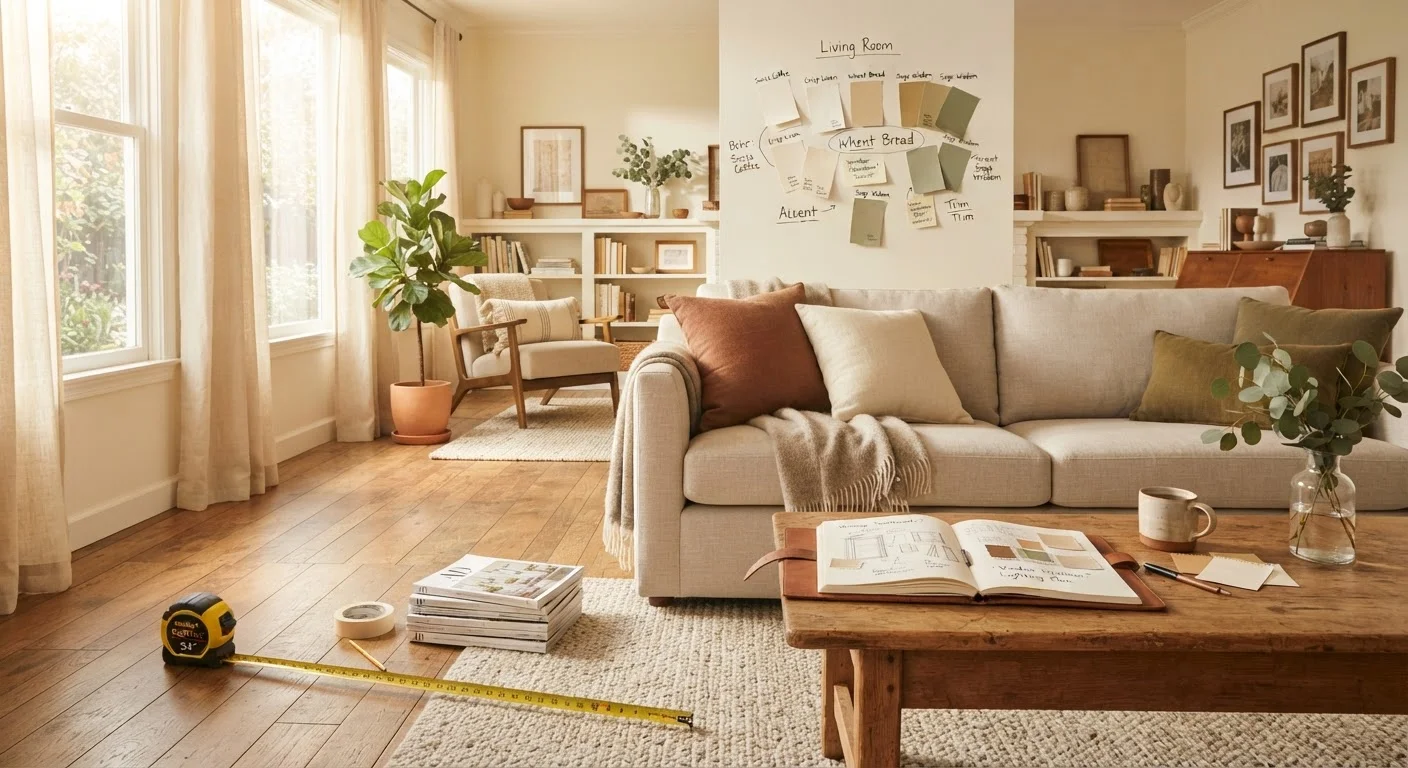
Before You Redecorate a Room: A Planning Checklist

Photo: AscendWit.com | Explore Engaging Blogs. editorial

Measurements, lighting conditions, traffic flow, and budget — a room-by-room audit to work through before spending anything on new décor.

Key Takeaways

  • Measuring your room accurately before shopping prevents costly returns and furniture that doesn't fit.
  • Understanding your room's natural and artificial light conditions shapes every color and material decision.
  • Setting a realistic budget with a contingency buffer keeps a refresh from becoming a financial strain.
  • Identifying what stays versus what goes helps you build a cohesive look rather than starting over unnecessarily.
  • Traffic flow and function should guide layout decisions before aesthetics enter the picture.

Why a Planning Audit Changes Everything

Most redecorating regrets share a common root: decisions made too quickly, without enough information about the room itself. A fresh coat of paint ordered before checking the light, a sofa purchased before measuring the doorway, a rug bought on impulse that swallows the floor plan — these are avoidable mistakes.

This checklist is a room-by-room audit you complete before spending anything. It covers the physical facts of your space, your functional needs, and your budget reality. Think of it as the foundation layer. Once you have this information, the actual decorating decisions — color, furniture, textiles — become far more straightforward.

For a deeper look at the principles that guide every well-styled space, see the design principles behind every well-styled room. If you're starting completely fresh, decorating a room from scratch walks you through what to tackle first.

Measure the Space

Measure the room's full length and width, and note ceiling height. Must
Measure every doorway, hallway, and staircase that furniture must pass through to enter the room. Must
Note the location and dimensions of all windows and doors, including which way doors swing. Must
Measure fixed architectural features — fireplace surrounds, built-in shelving, radiators, or columns — that constrain furniture placement. Must
Sketch a simple floor plan on graph paper or using a free room-planning app to visualize furniture arrangements before buying anything. Should

Assess Light Conditions

Note which direction your windows face (north, south, east, west) — this determines how much natural light the room receives and when. Must
Observe the room at different times of day and note how the quality and intensity of light shifts. Must
Identify any existing artificial lighting — overhead fixtures, lamps, under-cabinet lights — and note whether they cast warm or cool tones. Should
Flag any dark corners or underlit zones that may need a new light source, independent of any decorating purchases. Should

Define How the Room Is Used

Write down the room's primary function and any secondary uses (e.g., a living room that also serves as a home office or homework space). Must
Identify the main traffic paths through the room and make sure your planned layout will keep them clear — typically at least 36 inches for comfortable walkways. Must
Note who uses the room and any specific needs — young children, pets, mobility considerations — that affect material and furniture choices. Should
Identify storage needs the room must fulfill and check whether current solutions are adequate or need to be redesigned. Should

Inventory What Stays and What Goes

Walk through the room and tag every piece of furniture and decor as 'keep,' 'relocate,' 'donate/sell,' or 'discard.' Must
For items you're keeping, note whether they need repair, reupholstering, or refinishing before the refresh is complete. Should
Identify any fixed finishes — flooring, tile, existing cabinetry — that will remain and that new choices will need to coordinate with. Must
Check whether any items you plan to keep have sentimental or financial value that warrants professional cleaning or restoration rather than replacement. Nice to have

Set and Structure Your Budget

Set a firm total budget for the project before researching any products or pricing. Must
Allocate budget across categories — furniture, paint, textiles, lighting, accessories — so no single category consumes the whole amount unexpectedly. Should
Reserve at least 10–15% of your total budget as a contingency for surprises (surface damage uncovered during painting, hardware that doesn't fit, delivery fees). Should
List any items that could be sourced secondhand, repurposed, or DIY'd to free up budget for higher-priority purchases. Nice to have

Tools You'll Need for the Audit

This planning process doesn't require professional equipment — just a few basics you likely already own or can easily borrow. Having everything on hand before you start means the audit goes faster and you're less likely to skip a step.

Required

Tape measure (25 ft)

Used to capture accurate room dimensions, doorway clearances, window placements, and furniture measurements.

Required

Graph paper or room-planning app

Lets you map out furniture arrangements to scale before committing to any purchases.

Required

Notebook or digital notes app

Central place to record all measurements, observations, inventory decisions, and budget allocations.

Optional

Compass (or compass app on a smartphone)

Helps you determine which direction your windows face, which directly affects natural light planning.

Optional

Camera or smartphone

Document the room at different times of day and from multiple angles so you can review it away from home.

If you're renting, keep your lease terms within arm's reach as you work through this checklist. Some audit items — particularly around paint, wall anchors, and flooring changes — are directly affected by what your lease permits. Our guide to renting and still decorating breaks down which upgrades are genuinely reversible.

Check Your Lease Before Making Any Changes

If you rent your home, review your lease agreement before the audit is complete. Many standard leases restrict painting walls, making holes larger than a certain size, or altering fixtures — even temporarily. Proceeding without checking can result in deposit deductions or lease violations. When in doubt, ask your landlord in writing before any work begins.

Putting It All Together

Once you've worked through every item on this checklist, you should have a clear written snapshot of your room: its exact dimensions, its lighting character across the day, its functional demands, the pieces staying and leaving, and a grounded budget. That information transforms vague inspiration into a workable plan.

Rooms that feel cramped often benefit from deliberate choices about scale and color before new furniture is purchased. Our guide on small-space décor approaches that make rooms feel larger covers practical, research-backed strategies worth reviewing once your audit is complete.

Don't Skip the Contingency Budget

Surface damage, discontinued items, and unexpected delivery costs appear in nearly every redecorating project. Without a buffer built into your budget from the start, these surprises force trade-offs that compromise the finished result. Setting aside 10–15% before you begin — not after problems arise — is one of the most protective decisions you can make for the project.

Keep your completed audit notes somewhere accessible — a phone note, a folder, a simple spreadsheet. When you're standing in a store or scrolling through options online, having your measurements and constraints immediately at hand is the difference between a confident decision and a gamble.

Home Editorial Team

AscendWit.com | Explore Engaging Blogs.

Home Editorial Team is the collective byline for our editorial team and contributor network. Articles published under this byline or an editorial pen name are researched, written, and reviewed according to our editorial standards for clarity, consistency, and independence before publication.

Home MaintenanceHome DécorReal Estate Basics
View author profile

The content on this site is for informational purposes only and is not a substitute for professional advice. Always consult a qualified professional for guidance specific to your situation.