
Open Shelving vs. Closed Cabinets: What Works Best in Living Spaces

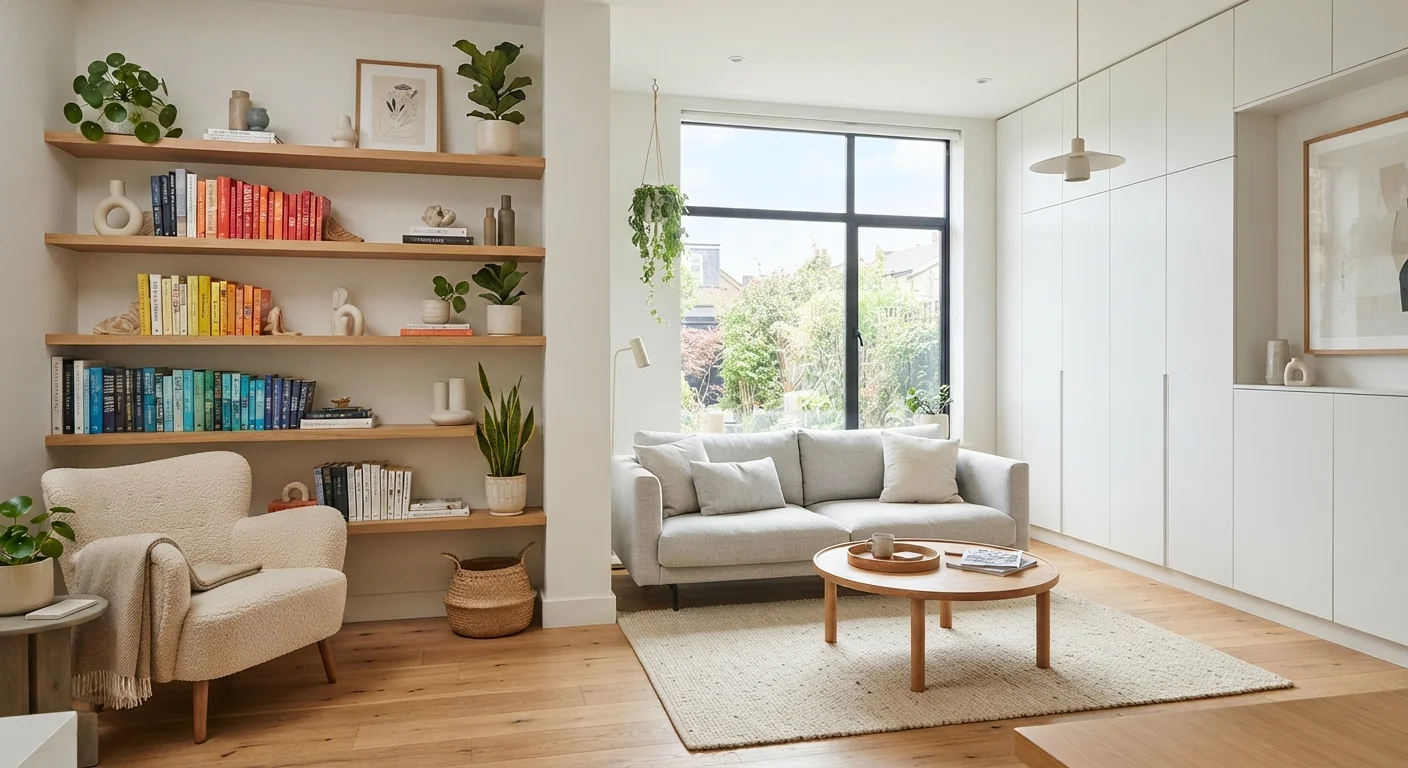
Photo: AscendWit.com | Explore Engaging Blogs. editorial
Key Takeaways
- Open shelving adds visual depth but requires consistent styling and frequent dusting.
- Closed cabinets hide clutter instantly but can make a room feel heavier if poorly scaled.
- Your household habits - not just aesthetics - should drive the decision.
- Combining both styles in one room often delivers the most practical outcome.
- Room size and natural light levels affect how each option reads in a space.
The Core Trade-Off: Visibility vs. Concealment
The fundamental difference between open shelving and closed cabinets is what they do with your stuff: one puts it on display, the other hides it. That might sound simple, but the downstream effects touch everything from how often you clean to how your room feels on an ordinary Tuesday morning.
Open shelving works as both storage and décor - your books, baskets, plants, and objects become part of the room's visual composition. That's appealing when everything is well-styled, but it means disorder is always visible. Closed cabinets neutralize that dynamic entirely. Whatever's inside stays out of sight, so the cabinet's surface becomes the visual endpoint rather than its contents.
Understanding the design principles behind a well-styled room helps clarify why each approach feels the way it does: open shelves create rhythm and depth through layered objects, while closed cabinets contribute solidity and visual calm through uniform surfaces.
| Criterion | Open Shelving | Closed Cabinets |
|---|---|---|
| Visual effect | Adds depth and display interest | Clean, uniform surface |
| Clutter visibility | Everything on show | Contents fully concealed |
| Dust accumulation | High - all surfaces exposed | Low - exterior only |
| Maintenance effort | Regular styling required | Minimal ongoing upkeep |
| Room size impact | Feels lighter, more open | Adds visual weight |
| Flexibility | Easy to reposition or remove | Built-ins are permanent |
| Ideal household type | Curators and tidy households | Busy or clutter-prone households |
Practical Realities: Dust, Maintenance, and Daily Habits
Open shelving accumulates dust on every exposed surface - including the tops and fronts of whatever you've placed there. In high-traffic rooms or homes with pets, that dusting cycle can become a weekly task rather than an occasional one. If that's not a chore you'd realistically keep up with, open shelves will start looking neglected quickly.
Closed cabinets dramatically reduce that burden. Dust settles on the cabinet's flat exterior surfaces only, which are faster to wipe down. The interior stays largely protected. For households with allergy concerns, this is a meaningful practical advantage.
~70%
Homeowners citing clutter as a stress source
Various home organization surveys consistently find that visible clutter is among the top contributors to household stress for US homeowners.
2-3x
More frequent dusting needed for open shelves
Compared to closed storage, open shelving typically requires dusting two to three times more often to maintain a clean appearance.
Maintenance also extends to restocking and reorganizing. Open shelving requires intentional placement every time something is returned to the shelf - stacking random items defeats the visual effect. Closed cabinets are far more forgiving: you can close the door on organized chaos and deal with it later.
Before committing to either, do an honest audit. Check out this room planning checklist to think through how your storage needs, cleaning habits, and traffic patterns interact before making any purchases or permanent changes.
How Each Option Affects Room Feel and Scale
Storage choices have a direct impact on how a room reads spatially. Open shelving, especially when wall-mounted, leaves floor space visible and draws the eye upward - both effects that can make a room feel larger than it is. This is one reason open shelves are frequently recommended for smaller living rooms and studios. For more on that, explore décor approaches that make rooms feel larger.
Closed cabinets, particularly tall or floor-to-ceiling units, add visual mass. In a well-proportioned room with good natural light, that mass can feel grounding and intentional. In a smaller or darker room, it can feel oppressive. The key variables are cabinet depth, door style (flat-front doors recede; ornate profiles advance), and finish - lighter colors and matte surfaces tend to sit quieter than dark or glossy ones.
A practical middle ground many designers favor: combine both. Use closed cabinets for lower storage where clutter accumulates most, and open shelving above for display. This keeps the room visually interesting while containing the mess where it's hardest to control.
Built-In Cabinets Usually Require Permits
The content on this site is for informational purposes only and is not a substitute for professional advice. Always consult a qualified professional for guidance specific to your situation.