
Decorating with Rugs: Size, Placement, and Layering Explained

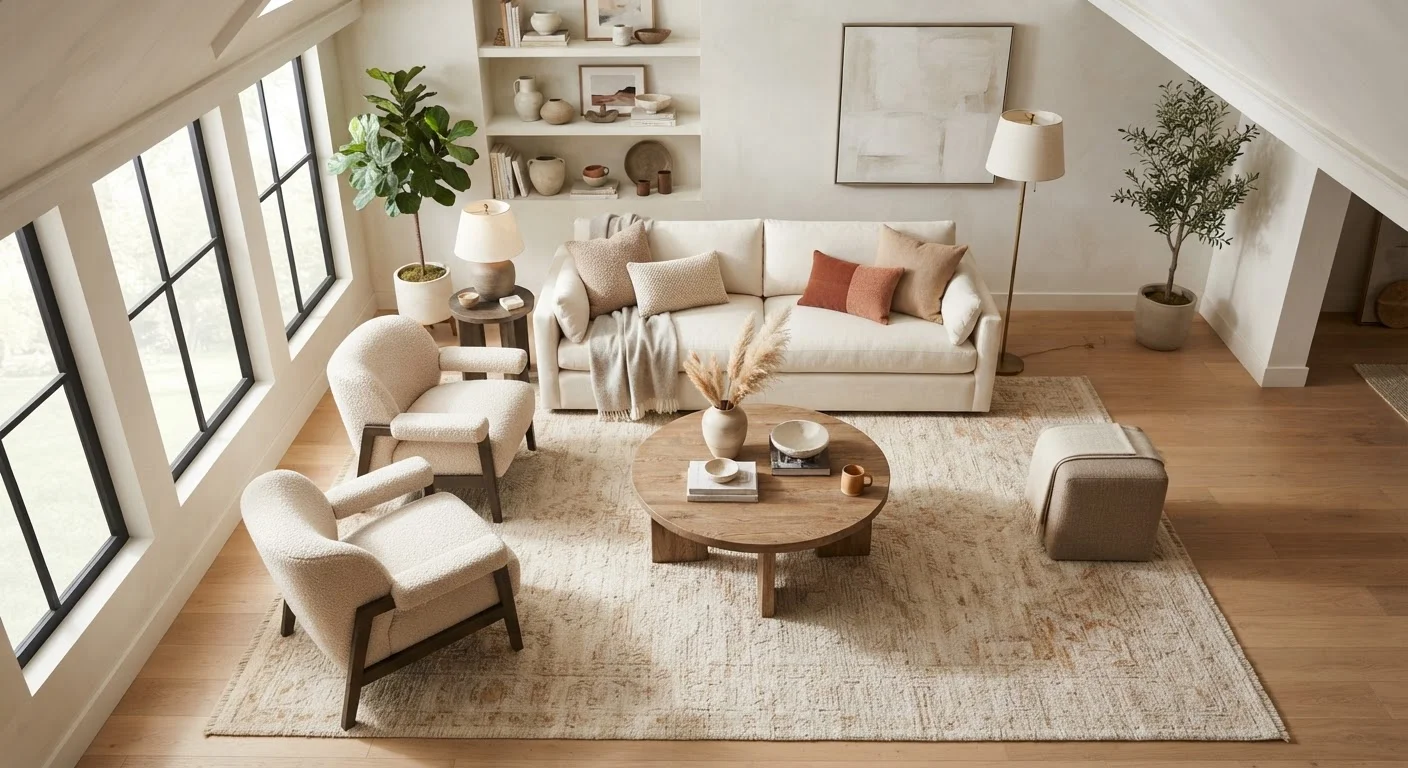
Photo: AscendWit.com | Explore Engaging Blogs. editorial
Why Rug Size Is the First Decision to Make
A rug that's too small is one of the most common - and most fixable - decorating mistakes. When a rug floats in the middle of a room with furniture surrounding it but not touching it, the space feels disjointed and unfinished. Getting the size right is the single most impactful rug decision you can make.
| Most common rug mistake | Choosing a rug that is too small for the room or furniture arrangement |
| Recommended wall clearance | 18-24 inches between rug edge and wall in most rooms |
| Dining room rule | Rug should extend at least 24 inches beyond the table on all sides |
| Most versatile placement method | Front legs of furniture on the rug, back legs off |
| Common rug sizes | 5×8, 8×10, 9×12 feet - each suited to progressively larger rooms |
| Best base for layering | Flat-weave or low-pile rugs (e.g., jute, sisal, or cotton) |
Before shopping, always measure your room and the seating arrangement within it. A general rule of thumb: leave 18 to 24 inches of bare floor between the rug's edge and the wall. This framing makes the rug look intentional rather than accidental. In smaller rooms, 12 inches may be sufficient.
Standard rug sizes (5×8, 8×10, 9×12) map roughly to room scales. An 8×10 works in a medium living room; a 9×12 suits larger spaces. If you're unsure between two sizes, go larger - it's nearly always the right call. See our pre-decorating planning checklist for a step-by-step way to measure and assess your space before buying anything.
Furniture Placement: The Legs-On vs. Legs-Off Rule
How your furniture sits relative to a rug has a bigger visual effect than most people expect. There are three accepted approaches, each creating a different feel:
- All legs on the rug: Every piece of seating fully sits on the rug. This works best in larger rooms with generously sized rugs. It creates a cohesive, contained feel - almost like a room within a room.
- Front legs only on the rug: The most practical and widely recommended approach. The front two legs of sofas and chairs rest on the rug, connecting the furniture to it without requiring a very large rug. It unifies the arrangement while keeping costs manageable.
- All legs off the rug: The rug sits entirely under a coffee table, separate from the seating. This approach only works when the rug is clearly sized for that zone - otherwise it looks like an afterthought.
In a dining room, the rule is simpler: the rug should be large enough that chairs remain on it even when pulled out from the table. A rug that's too small causes chairs to catch on its edge every time someone sits down - a frustrating daily problem.
Understanding design principles like scale and balance helps explain why these placement rules work - they're not arbitrary, but rooted in how the eye reads proportion.
Room-by-Room Placement Guidance
Each room has its own logic for rug placement:
Area rug
A rug sized to cover a defined zone within a room, as opposed to wall-to-wall carpet. Area rugs are used to anchor furniture groupings and add warmth or color.
Runner
A long, narrow rug typically used in hallways, entryways, or alongside beds. Runners are proportioned for linear spaces where a square or rectangular rug would look out of place.
Rug layering
The practice of placing one rug on top of another, typically a smaller, textured or patterned rug over a larger, flatter base rug. This technique adds depth and visual interest.
Non-slip rug pad
A thin underlayer placed beneath a rug to prevent it from sliding on hard floors. Non-slip pads also protect flooring and reduce trip hazards.
Flat-weave rug
A rug with no pile - the surface is smooth and low-profile. Flat-weave rugs are durable, easy to clean, and work well as base layers in a layered rug setup.
Pile height
The length of the rug's fibers, measured from the backing to the surface. Low-pile rugs are easier to clean and layer; high-pile rugs are softer underfoot and create more texture.
- Living Room
- Anchor the main seating arrangement. Use the front-legs-on method if budget limits rug size. In an open-plan space, a rug is one of the best tools for defining the living zone visually.
- Bedroom
- Place a large rug under the bed so that at least 18 to 24 inches extend beyond both sides and the foot of the bed. This means your feet land on something soft when you get up. Alternatively, use two matching runners on either side of the bed for a cleaner look in smaller rooms.
- Dining Room
- Add at least 24 inches beyond the table on all sides. Round tables pair well with round rugs; rectangular tables with rectangular ones.
- Entryway or Hallway
- A runner is the practical choice here. Leave a few inches on each side so the floor is still visible - this avoids a wall-to-wall carpet effect.
If your goal is to make a smaller room feel more open, placement strategy matters here too - a correctly sized rug in a small room creates structure rather than clutter.
Layering Rugs: When and How It Works
Layering rugs - placing one rug on top of another - has moved from a designer trick to a mainstream approach. Done well, it adds depth, texture, and personality. Done poorly, it looks cluttered.
Contrast Is the Key to Successful Layering
The key is contrast. Layer a flat-weave or low-pile rug as the base, then place a smaller, higher-texture or patterned rug on top. A jute or sisal base under a wool or vintage-style top rug is a classic combination. The base rug should be noticeably larger than the top rug.
Layering works especially well in living rooms and bedrooms. In a living room, the base rug defines the zone while the top rug adds visual interest. In a bedroom, a sheepskin or smaller accent rug layered at the foot of the bed adds warmth without the cost of a room-sized rug.
Avoid layering two rugs with heavy patterns - they compete rather than complement. And make sure both rugs are secured with a non-slip pad underneath to prevent movement and tripping hazards.
Layering is also a useful strategy when a rug you already own is slightly too small for a space. Rather than replacing it, use it as the top layer over a larger neutral base. It's a resourceful solution that can look entirely intentional. For more on building a room's visual logic from the ground up, see how to approach decorating a room from scratch.
This article is for general informational and educational purposes. Always consider your specific room conditions, flooring type, and household needs when making décor decisions.
The content on this site is for informational purposes only and is not a substitute for professional advice. Always consult a qualified professional for guidance specific to your situation.