
Reading a Nutrition Facts Label Without the Confusion

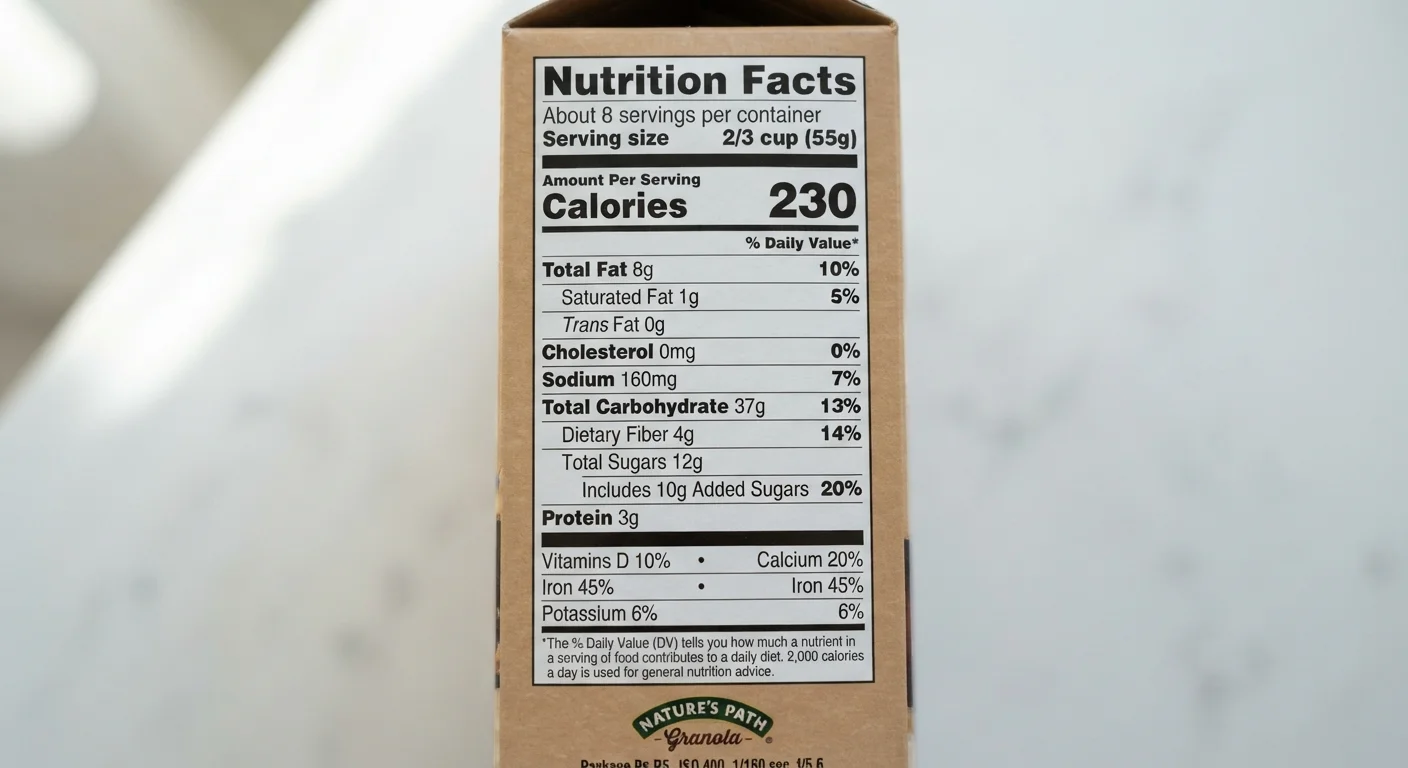
Photo: AscendWit.com | Explore Engaging Blogs. editorial
Key Takeaways
- Serving size is the anchor of the entire label - always check it before reading any other number.
- Daily Value percentages tell you whether a nutrient amount is high or low relative to a 2,000-calorie reference diet.
- Saturated fat, sodium, and added sugars are the three nutrients most Americans benefit from monitoring closely.
- The label lists required vitamins and minerals; aim for higher % DVs in those nutrients.
- Understanding the label is a skill - it gets faster and more intuitive with practice.
Why the Nutrition Facts Label Exists
The Nutrition Facts panel is a standardized, federally regulated snapshot of a food's nutritional profile. The U.S. Food and Drug Administration (FDA) requires it on almost all packaged foods sold in the United States, and the current format - updated in 2020 - was redesigned to reflect what nutrition science now knows about diet and chronic disease.
Think of the label as a cheat sheet, not a verdict on whether a food is "good" or "bad." Its purpose is to give you factual information so you can make choices that align with your own health context. For a deeper look at how these numbers fit into your overall eating pattern, see the comprehensive nutrition guide that contextualizes labels within broader dietary principles.
What you will need
How to Read the Label: Step by Step
Work your way through the panel from top to bottom. Each section builds on the one above it, so skipping ahead often leads to misreading the numbers.
Start with Serving Size and Servings Per Container
Every number on the label is based on one serving - not the whole package. Serving size is listed in a recognizable unit (cups, pieces, grams) followed by the metric weight in parentheses. Servings per container tells you how many of those units are in the package.
If a bag of chips lists a serving size as 1 oz (about 28 g) and contains 2.5 servings, eating the whole bag means multiplying every nutrient number by 2.5. This single step prevents the most common label misreading.
Read the Calorie Count in Context
Calories are printed in large type directly below the serving size. This number represents the energy in one serving. The FDA's general guidance uses 2,000 calories per day as a reference, but individual needs vary based on age, sex, activity level, and health status.
Calories alone don't tell the whole story - a 200-calorie snack of nuts delivers very different nutrients than a 200-calorie cookie. Use calories as one data point, not the only one. For practical frameworks on structuring meals without fixating on calorie counts alone, see building a balanced plate.
Review Total Fat, Saturated Fat, and Trans Fat
The label breaks fat into subcategories. Total fat is the umbrella number. Saturated fat and trans fat are listed separately because they have the strongest links to cardiovascular risk when consumed in excess, according to major health organizations including the American Heart Association and the Dietary Guidelines for Americans.
Unsaturated fats (monounsaturated and polyunsaturated) are not required to be listed, though many manufacturers include them voluntarily. These fats are generally considered more favorable for heart health.
Check Sodium
Sodium appears in milligrams (mg). The Dietary Guidelines for Americans suggest adults limit sodium to 2,300 mg per day. Because sodium is so prevalent in processed and packaged foods, it's easy to reach that ceiling without noticing. Use the % Daily Value (% DV) to quickly gauge whether a single serving is a small or large contributor to that daily limit.
Examine Total Carbohydrate, Dietary Fiber, and Added Sugars
Total carbohydrate is the parent figure. Dietary fiber and total sugars are subcategories listed underneath. Added sugars - sugars incorporated during manufacturing - have their own line and % DV. The 2020 label update made this separation mandatory because added sugars are associated with higher disease risk when consumed in excess, whereas naturally occurring sugars in whole foods come packaged with fiber, vitamins, and minerals.
Dietary fiber has a % DV too - and here, higher is better. Most Americans consume well below the recommended daily amount. Whole grains vs. refined grains explains how grain processing affects the fiber content you'll see on labels.
Note Protein
Protein is listed in grams. Unlike most other nutrients, protein does not always have a % DV displayed - the FDA only requires it when a protein claim is made or when the food is intended for children under 4. For adults, use the gram amount alongside your estimated daily protein needs (which vary by body weight and activity level) rather than looking for a % DV.
Use the % Daily Value Column Strategically
The % DV column runs down the right side of the label. It's calculated based on a 2,000-calorie daily diet. The FDA's quick rule: 5% DV or less is low; 20% DV or more is high. Apply this rule in both directions - you want low % DV for saturated fat, trans fat, sodium, and added sugars, and high % DV for fiber, vitamins, and minerals.
Required vitamins and minerals on the current label include Vitamin D, calcium, iron, and potassium - nutrients identified as commonly under-consumed in the US population. For context on what each of these does in the body, the micronutrients reference breaks them down clearly.
Use the 5/20 Rule as a Quick Filter
Common Misreads and What They Actually Mean
Even with a clear label, a few sections trip people up consistently.
"0 g trans fat" doesn't always mean zero
FDA rules allow a product to list 0 g of trans fat if it contains less than 0.5 g per serving. If you eat multiple servings, small amounts can add up. Check the ingredient list for "partially hydrogenated oils" - that's where artificial trans fat hides.
Calories from fat were removed for a reason
The updated label dropped the "calories from fat" line because research shifted the focus from total fat to type of fat. Not all fat is harmful; saturated and trans fats are the ones most associated with cardiovascular risk.
"Added Sugars" is a newer, more useful line
Before the 2020 update, the label only showed total sugars, making it impossible to distinguish naturally occurring sugar (in fruit or milk) from sugar manufacturers added during processing. Now the two are separated. Learn why added sugar is flagged differently than the sugar naturally present in whole foods.
"Per Serving" Can Be Deceptive
Finally, keep an eye on sodium - it's one of the most under-noticed high-% DV nutrients in packaged foods. A single serving of some soups or frozen meals can exceed 40-50% of the daily reference value.
Putting It All Together at the Store
Reading labels becomes practical when you apply a consistent routine. Pick up the package, check the serving size first, then glance at sodium, saturated fat, and added sugars - the three nutrients most Americans over-consume. Then check fiber and key vitamins and minerals, where higher is generally better. For a fuller picture of what those micronutrients actually do in the body, the plain-English micronutrient reference is a useful companion.
Comparing two similar products? Use the % DV column as a quick equalizer - it lets you compare apples to apples regardless of different serving weights. Be aware, though, that labels can't capture everything: common nutrition traps like health halos and portion distortion often influence choices more than the label itself.
This article is for general informational and educational purposes only and is not a substitute for personalized nutrition or medical advice. Consult a registered dietitian or qualified healthcare professional for guidance specific to your health situation.
The content on this site is for informational purposes only and is not a substitute for professional advice. Always consult a qualified professional for guidance specific to your situation.