
Keeping a Car Long-Term vs. Trading It In Every Few Years

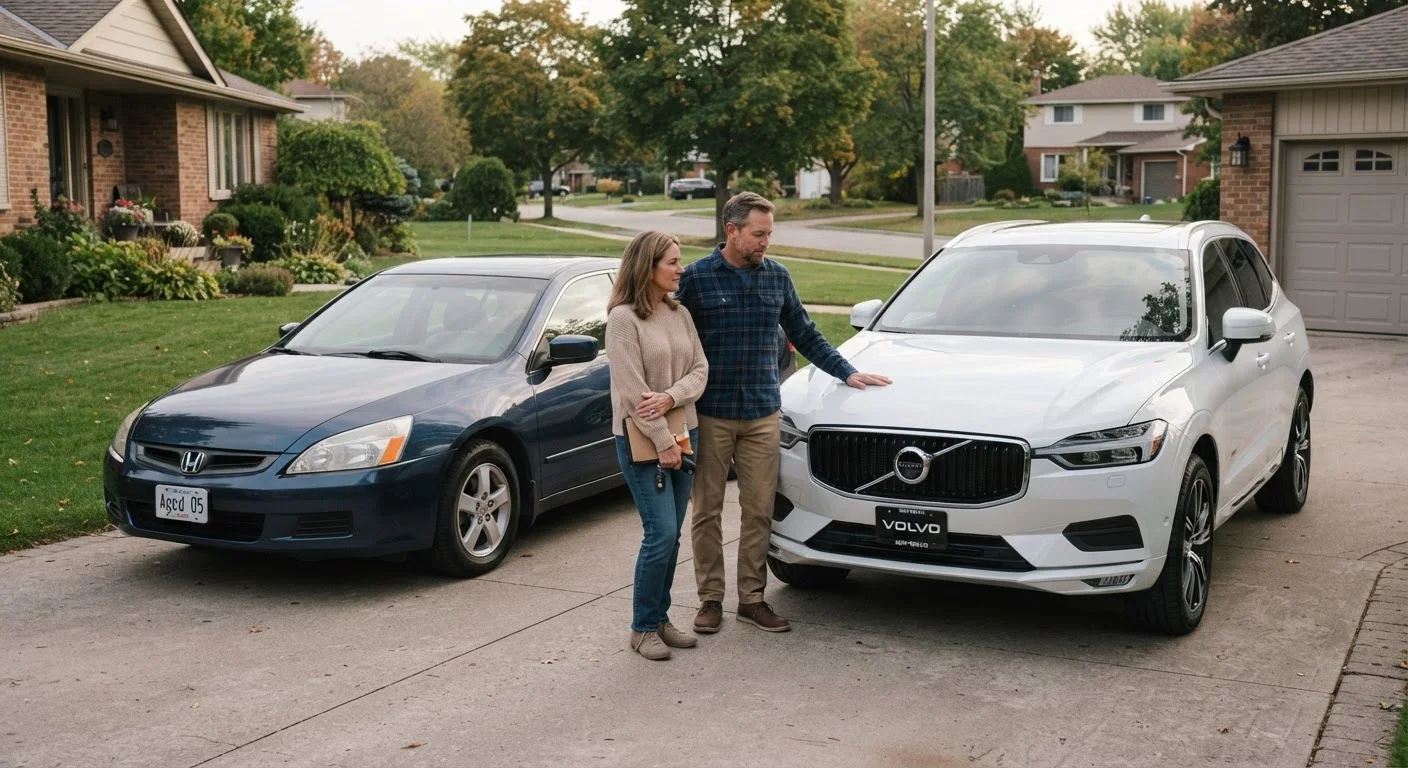
Photo: AscendWit.com | Explore Engaging Blogs. editorial
Key Takeaways
- Keeping a paid-off car typically costs less per month than financing or leasing a newer one.
- Trading in frequently means you may carry a loan balance most of the time, limiting financial flexibility.
- High-mileage vehicles can remain reliable with consistent maintenance, but repair costs do tend to rise.
- Depreciation hits hardest in the first few years, so long-term ownership often captures more of the car's value.
No monthly payment once the loan is paid off
Eliminating a car payment can free up several hundred dollars a month, which can be redirected toward savings or other financial goals.
You avoid repeated depreciation losses
Depreciation is steepest in a vehicle's first few years. Keeping a car long-term means you've already absorbed that curve and aren't restarting it on a new vehicle.
Lower insurance premiums over time
Older paid-off vehicles often qualify for reduced coverage options, which can lower your insurance costs compared to a financed or leased newer car.
You know your car's history
Long-term ownership means you've overseen every service and repair, giving you reliable knowledge of the vehicle's actual condition.
Repair costs tend to rise with age and mileage
Wear items like belts, water pumps, and suspension components eventually need replacing, and costs can become unpredictable as a vehicle ages past 100,000 miles.
Older vehicles may lack modern safety features
Technology like automatic emergency braking and rearview cameras became common in the 2010s; older vehicles may not have these, which can be a genuine safety gap.
Fuel efficiency may lag newer models
Powertrain technology has improved over the years, and an older vehicle may use noticeably more fuel than a comparable newer one, adding to long-term running costs.
Trade-in value decreases the longer you wait
The longer you hold a vehicle, the less it will typically fetch as a trade-in, reducing the credit you can apply toward a future purchase.
The Core Financial Trade-Off
The biggest argument for keeping a car long-term is straightforward: once the loan is paid off, you eliminate a monthly payment that typically runs several hundred dollars. That money can go toward savings, maintenance, or other expenses. A newer car, by contrast, usually means restarting a loan or lease cycle - and with it, ongoing interest charges.
Depreciation is also a key factor. New vehicles lose a significant portion of their value in the first two to three years. Drivers who trade in on a regular cycle often absorb that steepest part of the depreciation curve repeatedly, while long-term owners ride out the flatter portion of the curve where value loss slows considerably.
That said, trading in isn't purely a financial loss. A newer vehicle may come with a manufacturer warranty that covers unexpected repairs, potentially offsetting some of the higher monthly cost. For context on how ownership and leasing compare on monthly outlay, see how buying and leasing compare.
No monthly payment once the loan is paid off
Eliminating a car payment can free up several hundred dollars a month, which can be redirected toward savings or other financial goals.
You avoid repeated depreciation losses
Depreciation is steepest in a vehicle's first few years. Keeping a car long-term means you've already absorbed that curve and aren't restarting it on a new vehicle.
Lower insurance premiums over time
Older paid-off vehicles often qualify for reduced coverage options, which can lower your insurance costs compared to a financed or leased newer car.
You know your car's history
Long-term ownership means you've overseen every service and repair, giving you reliable knowledge of the vehicle's actual condition.
What Keeping Your Car Longer Really Involves
Long-term ownership is not a passive choice - it requires active upkeep. Vehicles with higher mileage need more attention to systems like coolant, transmission fluid, belts, and suspension components. The maintenance schedule becomes more detailed, not less. Skipping services that were optional at 40,000 miles can become costly mistakes at 120,000.
The good news is that modern vehicles are built to last well beyond 150,000 miles when properly maintained. Consistent oil changes, timely fluid replacements, and addressing small issues before they grow are the foundation of long-term reliability. Our guide on keeping a high-mileage car running well covers which systems deserve extra attention as your odometer climbs.
Maintenance Records Matter
Pros and Cons at a Glance
Neither approach is universally better. The right choice depends on your financial situation, how well your current vehicle has been maintained, and what you actually need from a car day to day.
Repair costs tend to rise with age and mileage
Wear items like belts, water pumps, and suspension components eventually need replacing, and costs can become unpredictable as a vehicle ages past 100,000 miles.
Older vehicles may lack modern safety features
Technology like automatic emergency braking and rearview cameras became common in the 2010s; older vehicles may not have these, which can be a genuine safety gap.
Fuel efficiency may lag newer models
Powertrain technology has improved over the years, and an older vehicle may use noticeably more fuel than a comparable newer one, adding to long-term running costs.
Trade-in value decreases the longer you wait
The longer you hold a vehicle, the less it will typically fetch as a trade-in, reducing the credit you can apply toward a future purchase.
~$700
Average new-car monthly payment
According to Experian's automotive finance data, the average monthly payment for a new financed vehicle has risen substantially in recent years, often exceeding $700.
~20%
First-year depreciation for new vehicles
Industry estimates commonly cite roughly 15-20% value loss in the first year of ownership, with the steepest drop occurring in the first two to three years.
When Trading In Makes More Sense
There are real scenarios where trading in is the more practical decision. If your vehicle has a persistent, expensive mechanical problem - or if repair estimates are approaching or exceeding the car's market value - holding on may cost more than it saves. Similarly, if your life circumstances have genuinely changed (a growing family, a new job with a longer commute, or a shift to a location with harsh winters), a different vehicle may simply serve you better.
Safety technology has also advanced meaningfully. Automatic emergency braking, lane-keeping assist, and blind-spot monitoring are now standard or near-standard on many newer vehicles, while older cars may lack them entirely. If that matters to your driving situation, it's a legitimate factor - not just a marketing point.
For a broader look at the new-versus-used question, weighing the real trade-offs between new and used cars lays out what actually changes depending on which direction you go.
The content on this site is for informational purposes only and is not a substitute for professional advice. Always consult a qualified professional for guidance specific to your situation.