
Tire Pressure: Why It Matters More Than Most Drivers Realize

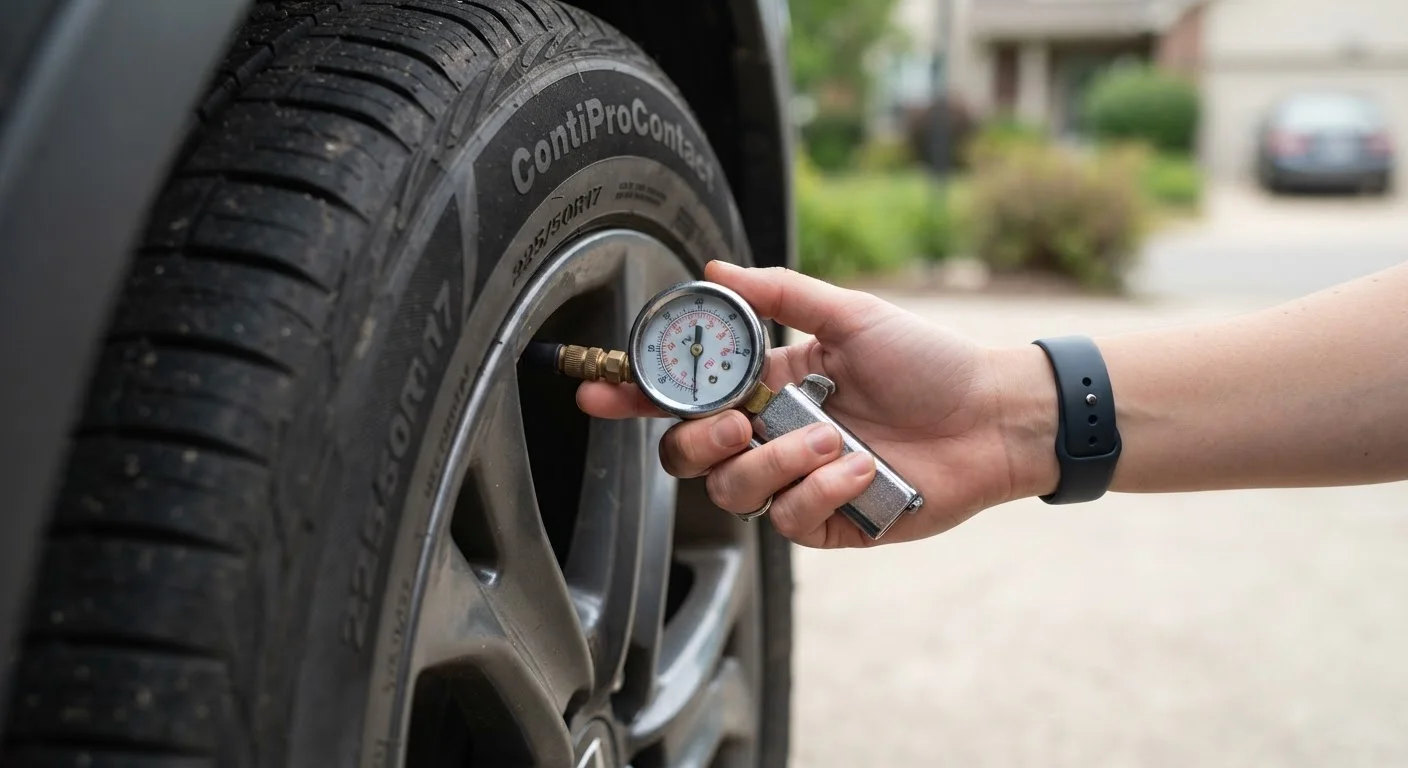
Photo: AscendWit.com | Explore Engaging Blogs. editorial
Key Takeaways
- Your vehicle's correct tire PSI is on the door jamb sticker - not on the tire sidewall.
- Under-inflated tires reduce fuel economy and can cause dangerous blowouts.
- Over-inflated tires reduce traction and wear unevenly in the center of the tread.
- Tire pressure drops roughly 1 PSI for every 10°F decrease in outside temperature.
- Checking pressure monthly and before long trips is a simple habit with real safety payoff.
- The TPMS dashboard warning typically activates only after pressure has dropped significantly - don't rely on it alone.
What Tire Pressure Actually Means
PSI - pounds per square inch - measures the air pressure inside your tires. It's the number that determines how your tire sits on the road, how it flexes under load, and how much grip it can deliver. Too little air and the tire squashes and flexes too much. Too much air and it becomes rigid and bouncy. Either condition changes how your car handles, stops, and uses fuel.
The right PSI for your vehicle is set by the manufacturer based on the car's weight, suspension design, and intended tire size. You'll find it printed on a sticker inside the driver's door jamb - sometimes also listed in the owner's manual. That number is your target, and it's specific to your vehicle, not to the tire itself. The maximum PSI molded into the tire sidewall is a structural limit, not an inflation instruction.
Front and Rear Tires May Differ
What Goes Wrong When Pressure Is Off
Under-inflation is the more common problem. When a tire doesn't have enough air, more of the tread contacts the road than is intended. That increases rolling resistance - meaning the engine has to work harder to move the car forward. The U.S. Department of Energy has noted that under-inflated tires increase fuel consumption. Beyond fuel economy, soft tires build up heat faster, which raises blowout risk, especially at highway speeds. They also wear unevenly along the outer edges of the tread.
Over-inflation creates the opposite issue. The tire's contact patch shrinks, so grip is reduced, particularly on wet pavement. Hard tires transmit more road shock into the vehicle and are more vulnerable to sudden damage from potholes or road debris. They wear fastest in the center of the tread.
Both conditions contribute to costs that catch drivers off guard - from early tire replacement to reduced fuel efficiency. For more on expenses like these, see the hidden costs of car ownership.
~1 PSI
Pressure lost per 10°F temperature drop
The U.S. Department of Energy notes this as a general rule for how outside temperature affects tire inflation.
25%
Pressure drop before TPMS light activates
Federal standards require TPMS systems to alert drivers when pressure falls 25% or more below the vehicle's recommended PSI.
~0.2%
Fuel economy loss per 1 PSI under-inflation
The U.S. Department of Energy estimates fuel economy drops slightly for each PSI that tires fall below the recommended level.
How to Check and Adjust Tire Pressure
You need an inexpensive tire pressure gauge - digital or stick-type both work. Check tires when they're cold, meaning the car has been parked for at least three hours. Driving heats the air inside the tires, which temporarily raises the reading and gives you a false result.
- Remove the valve cap from the tire stem (the small rubber or metal nub sticking out of the wheel).
- Press the gauge firmly onto the stem and read the PSI.
- Compare the reading to the number on your door jamb sticker.
- Add air at a gas station air pump if pressure is low. Release air with the small pin inside the valve stem if pressure is too high.
- Replace the valve cap when done.
The whole process takes about five minutes for all four tires. Many drivers also check the spare while they're at it - a flat spare in an emergency is a problem worth avoiding.
Check Tires Cold for Accurate Readings
Temperature, Seasons, and the TPMS Light
Tire pressure isn't a set-it-and-forget-it figure. Air pressure changes with temperature - dropping roughly 1 PSI for every 10°F decrease in outside temperature. That means tires properly inflated in summer can read low on the first cold morning of fall. Checking pressure when seasons shift is a straightforward habit that prevents a lot of problems.
Most vehicles made after 2008 are required to have a Tire Pressure Monitoring System (TPMS), which triggers a dashboard warning when pressure drops significantly. But the TPMS typically activates only after pressure has fallen around 25% below recommended levels - at that point, handling and efficiency are already compromised. To understand what your TPMS icon and other warning lights are signaling, see dashboard warning lights explained. Manual monthly checks give you earlier and more precise information.
Proper tire pressure also supports everything else you do to maintain your tires. It works alongside regular tire rotations to even out tread wear and extend tire life. Both habits are part of the broader picture covered in routine vehicle maintenance that keeps a car running reliably and safely.
Frequently Asked Questions
The content on this site is for informational purposes only and is not a substitute for professional advice. Always consult a qualified professional for guidance specific to your situation.