
Rotating Your Tires: The Why, When, and What to Expect

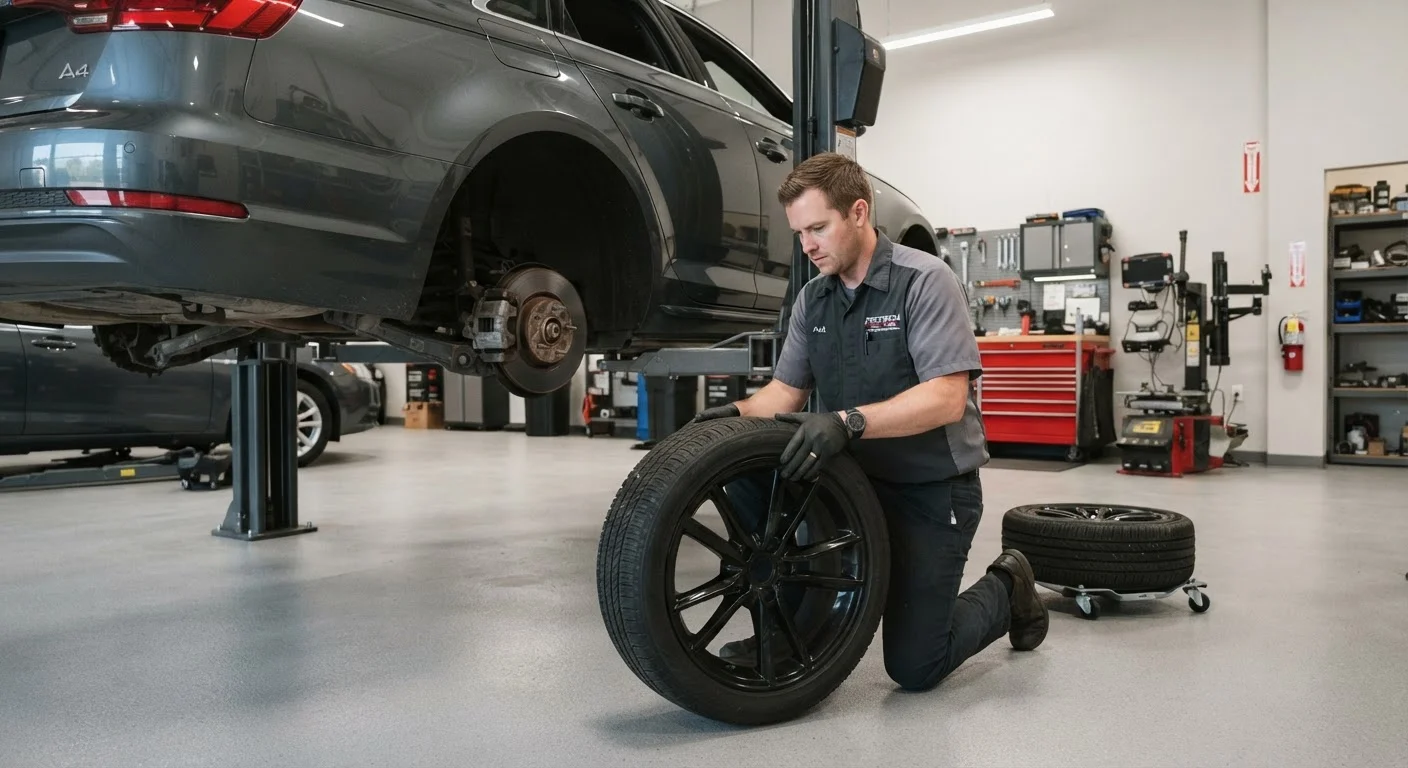
Photo: AscendWit.com | Explore Engaging Blogs. editorial
Key Takeaways
- Tires wear unevenly depending on their position, and rotating them evens out that wear.
- Most vehicles benefit from a tire rotation every 5,000 to 7,500 miles, but check your owner's manual.
- Rotation patterns vary by drivetrain type - front-wheel drive, rear-wheel drive, and all-wheel drive each differ.
- A rotation typically takes under an hour and is often combined with an oil change.
- Skipping rotations shortens tire lifespan and can negatively affect handling.
Why Tire Rotation Matters
Your tires don't all wear at the same rate. The front tires on a front-wheel-drive vehicle, for example, handle steering, braking, and most of the power delivery - all at once. That adds up to significantly more stress than the rear tires experience. Left unaddressed, this uneven wear means your front tires may need replacing long before the rears, costing you more money over time.
Rotating your tires moves each tire to a different position on the vehicle at regular intervals, spreading the wear more evenly across all four. The result: a longer overall lifespan for your tire set, more consistent handling, and better road contact during braking. It's a straightforward maintenance task that pays for itself in extended tire life.
Uneven wear can also create subtle handling quirks - a slight pull in one direction, or mild vibration - that are easy to miss until they become harder to ignore. Staying on a rotation schedule helps you avoid those surprises. For a broader look at how this fits into overall vehicle care, see our guide to routine car maintenance.
Combine Rotation With Your Oil Change
When to Rotate Your Tires
A common rule of thumb is every 5,000 to 7,500 miles, but the best reference is always your vehicle's owner's manual. Some manufacturers build rotation intervals into their recommended service schedule; others tie it to oil change intervals. If you're not sure where to find that information, our maintenance schedule explainer walks you through reading your manual's service chart.
A few signs that your tires may already be overdue for a rotation include: noticeable tread differences between front and rear tires, a pulling sensation when driving straight, or unusual vibration at highway speeds. These don't always mean you need new tires - often, a rotation resolves them.
It's also worth noting that tire pressure plays a role in how evenly tires wear. Consistently under- or over-inflated tires accelerate irregular wear patterns, so checking pressure regularly goes hand-in-hand with rotation. See our article on why tire pressure matters for more detail.
Don't Ignore Significant Tread Differences
How a Tire Rotation Is Done: Step by Step
If you take your vehicle to a shop, the technician handles the process for you. But knowing what's involved helps you understand what you're paying for and verify that the job was done correctly.
What you will need
Identify your drivetrain and rotation pattern
The correct rotation pattern depends on your vehicle's drivetrain. The most common patterns are:
- Front-wheel drive (FWD): Front tires move straight back; rear tires cross to the opposite front corners.
- Rear-wheel drive (RWD): Rear tires move straight forward; front tires cross to the opposite rear corners.
- All-wheel drive (AWD): All four tires rotate in an X-pattern, each moving to the diagonally opposite corner.
Your owner's manual will confirm which pattern applies. Directional tires (those with a one-way tread pattern) can only move front-to-back on the same side and cannot be crossed.
Lift the vehicle safely
If a shop is performing the rotation, this step involves a hydraulic lift that raises all four corners simultaneously. If you're doing it yourself at home, use a floor jack and proper jack stands rated for your vehicle's weight - never work under a car supported only by a floor jack. Consult your owner's manual for the correct lift points to avoid damaging the vehicle's frame or undercarriage.
Remove and reposition the tires
Each tire is unbolted and moved to its new position according to the correct rotation pattern for your drivetrain (identified in Step 1). At this point, a technician will typically inspect each tire's tread depth and sidewall condition, looking for signs of damage, uneven wear, or embedded objects like nails.
Torque the lug nuts to spec
Once each tire is in its new position, the lug nuts are tightened in a star pattern to ensure even seating against the hub. They are then torqued to the manufacturer's specified value - not just tightened by feel. Over- or under-torqued lug nuts can cause wheel wobble or, in extreme cases, a wheel coming loose. Your owner's manual or a service guide will list the correct torque specification for your vehicle.
Check and adjust tire pressure
After the rotation, check the air pressure in all four tires and adjust to the recommended PSI listed on the sticker inside your driver's door jamb. Tires sometimes lose a small amount of air during removal and remounting. Correct pressure ensures the tires seat evenly and wear as expected in their new positions.
What to Expect Afterward
A few things are normal right after a rotation. You might notice slightly different road noise or a minor change in how the vehicle handles - this typically settles within 50 to 100 miles as the tires adapt to their new positions. If you notice pulling, vibration, or unusual noise that persists beyond that break-in period, let your mechanic know. It could point to an alignment issue or uneven wear that was already significant before the rotation.
Keep in mind that rotation alone won't fix tires that are already severely worn or damaged. If tread depth is already low (below 2/32 of an inch, the legal minimum in most states), no amount of rotating will extend their safe service life. In that case, replacement is the right call.
Consistent tire rotations are one piece of a broader maintenance picture. Drivers who stay on top of tasks like this - alongside brake inspections and fluid checks - tend to get more reliable, longer-lasting service from their vehicles. You can learn more about how brakes interact with tire condition in our brake components overview.
The content on this site is for informational purposes only and is not a substitute for professional advice. Always consult a qualified professional for guidance specific to your situation.