
DIY Car Maintenance vs. Taking It to a Shop

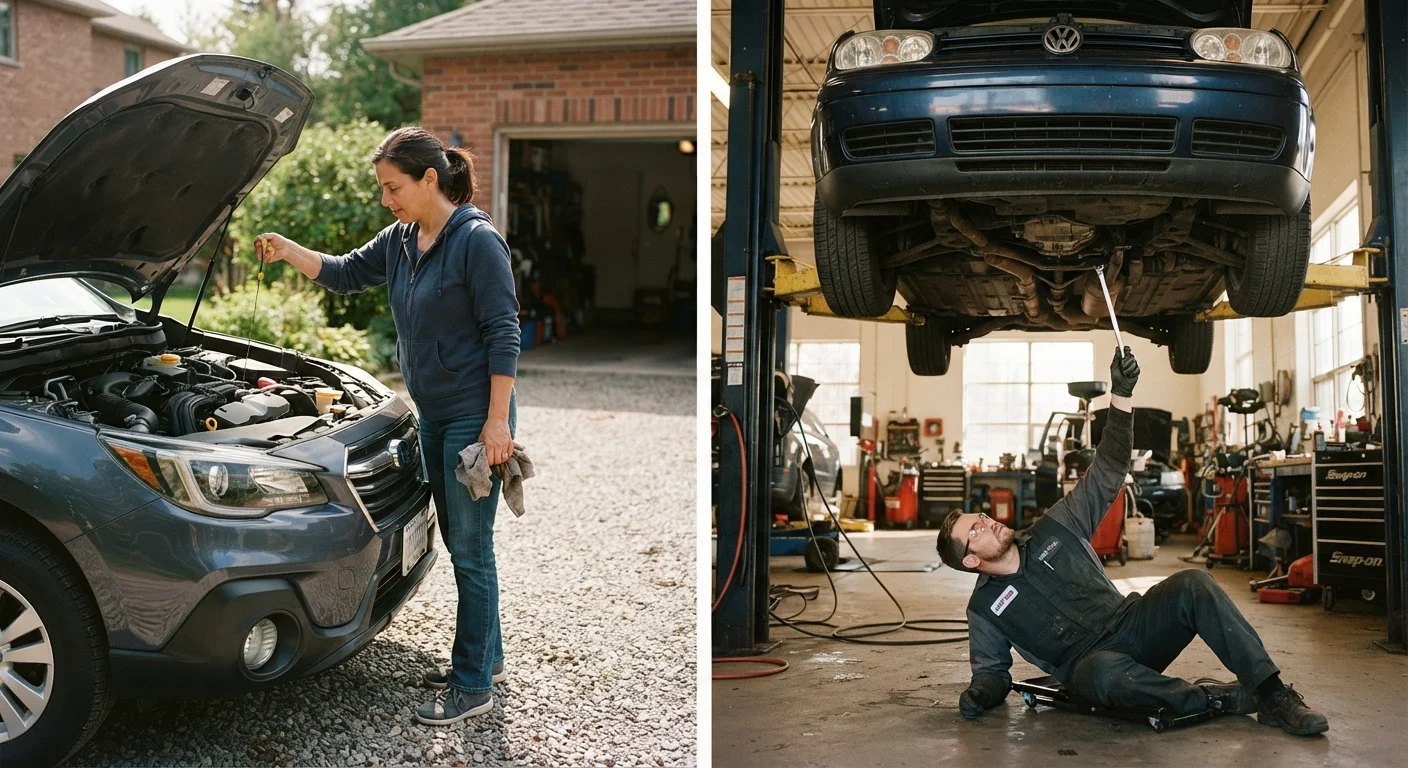
Photo: AscendWit.com | Explore Engaging Blogs. editorial
Key Takeaways
- Routine tasks like oil changes, air filter swaps, and wiper blade replacements are generally safe for DIYers with basic tools.
- Brake system work, suspension repairs, and anything involving airbags or emissions systems should go to a qualified mechanic.
- Your owner's manual is the most reliable guide for what maintenance your specific vehicle needs and when.
- DIY saves money on labor but requires upfront tool investment and honest self-assessment of your skill level.
- Mistakes on safety-critical systems can void warranties and create serious hazards - when in doubt, get a professional opinion.
Why the Choice Matters More Than You Think
Every car owner eventually faces the question: handle it yourself, or drop it off at a shop? The answer isn't always obvious, and getting it wrong in either direction has real consequences. Doing a job you're not ready for can create safety risks or cause more damage. Paying a shop for something straightforward - like replacing wiper blades - costs more than it needs to.
The goal isn't to do everything yourself or to hand every task off. It's to make smart, informed calls based on the specific job, your tools, and your comfort level. For a broader look at what maintenance your car actually needs, see Your Car's Maintenance Schedule, Explained.
| DIY Maintenance | Professional Shop | |
|---|---|---|
| Labor cost | None (your time) | Typically $80-$150/hr depending on shop and region |
| Tool investment | Required upfront for most tasks | Included in service cost |
| Best for | Routine, low-risk consumables | Safety systems, complex diagnostics |
| Risk if done incorrectly | Low on simple tasks; high on safety items | Shop assumes liability for their work |
| Warranty on work | None - you own the outcome | Most shops warranty parts and labor |
| Skill level required | Basic to moderate depending on task | Professional certification for complex work |
Tasks Most Drivers Can Handle at Home
Several routine maintenance jobs require only basic tools, widely available parts, and a little patience. These are good candidates for DIY:
- Engine air filter replacement: Usually a matter of unclipping a housing, swapping the filter, and re-securing the cover. No special tools needed.
- Wiper blade replacement: Instructions often come in the box; most take under five minutes.
- Cabin air filter: Typically located behind the glove box and accessible without tools in most vehicles.
- Checking and topping off fluids: Coolant, washer fluid, and power steering fluid are clearly marked under the hood. Oil levels are checked with a dipstick.
- Battery terminal cleaning: Corrosion on terminals can cause starting problems and can be safely cleaned with a wire brush and baking soda solution after disconnecting the battery.
Oil changes also make this list for many drivers, though they require proper disposal of used oil and a few basic tools. Check Routine Maintenance Every Car Owner Should Know About for a full rundown of what these intervals look like in practice.
Start With Your Owner's Manual
When to Hand the Keys to a Professional
Some jobs look approachable on the surface but involve safety-critical systems where errors carry serious consequences. These belong at a qualified shop:
- Brake system repairs: Pad replacement may seem simple, but improper installation of brake calipers, rotors, or brake lines can cause brake failure. A mechanic has the tools to torque components correctly and test the system.
- Suspension and steering components: Worn ball joints, tie rods, and struts affect vehicle control. Alignment after any suspension work requires specialized equipment.
- Airbag and supplemental restraint systems: Working near airbag components without proper training and equipment carries risk of accidental deployment.
- Transmission service beyond fluid checks: Internal transmission work requires precision and specialized knowledge.
- Emissions and computer diagnostics: A check engine light can mean dozens of different things. A shop with a professional-grade scan tool can read fault codes accurately and interpret them correctly.
If a repair estimate feels unclear or you want to understand what you're actually paying for, Understanding a Mechanic's Estimate breaks down the paperwork line by line.
Don't Underestimate Brake Work
Weighing the Real Costs and Trade-offs
DIY maintenance saves on labor - typically the largest line item in any shop invoice - but it isn't free. You'll invest in tools, spend time researching the correct procedure for your specific vehicle, and take on the responsibility of doing the job correctly. A simple mistake on a fluid type or torque specification can cause damage that costs more to fix than the original shop bill would have been.
Professional shops bring trained technicians, calibrated equipment, and accountability. Most reputable shops also offer a warranty on their labor. The trade-off is cost and, occasionally, scheduling inconvenience.
A practical middle ground works well for many drivers: build a habit of handling the low-stakes items yourself while budgeting for professional service on anything involving brakes, the drivetrain, or electronics. If you're just starting out as a car owner, Car Maintenance From the Ground Up is a solid starting point for building that baseline knowledge.
~35%
Of vehicle repair costs that are labor
Labor typically represents a substantial share of any shop invoice, which is why DIY can offer real savings on straightforward tasks where the job is well within a driver's ability.
17 years
Average age of vehicles on U.S. roads
According to S&P Global Mobility data, the average age of light vehicles in operation in the United States has been rising, meaning more drivers are managing aging vehicles that may need more frequent attention.
The content on this site is for informational purposes only and is not a substitute for professional advice. Always consult a qualified professional for guidance specific to your situation.