
Travel Tips & Safety

Packing Light Without Leaving Something Critical Behind

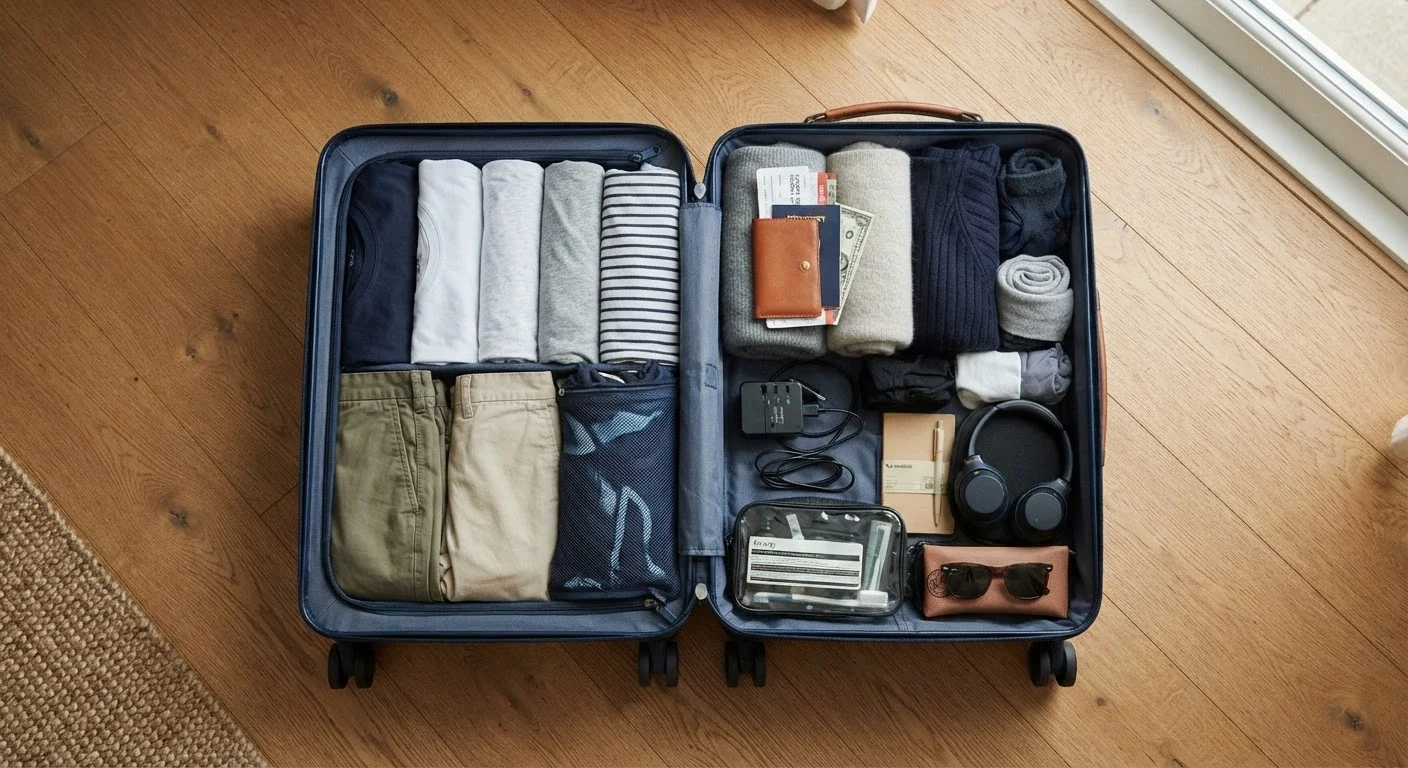
Packing Light Without Leaving Something Critical Behind

Photo: AscendWit.com | Explore Engaging Blogs. editorial

Carry-on only sounds simple until you forget your adapter. This checklist walks through what truly earns a place in your bag.

Key Takeaways

  • Carry-on packing works best when you audit every item against a specific purpose.
  • Documents, medications, and power adapters are the most commonly forgotten critical items.
  • Rolling clothes and using packing cubes meaningfully reduces bulk without cutting essentials.
  • Your destination's climate and activities should drive what makes the final cut.
  • A final walkthrough check the night before travel prevents last-minute scrambles.

Why Packing Light Goes Wrong

Most overpacking happens not from ignorance but from anxiety — the fear of needing something you don't have. The result is a bloated bag that still somehow forgets the one adapter you needed in Europe. Packing light and packing smart are not in conflict, but they require a deliberate approach rather than a last-minute sweep of your bathroom counter.

The checklist below organizes what genuinely earns a place in a carry-on, grouped by category. Work through it the night before you leave, not the morning of. If you're also sorting out pre-departure logistics like mail holds and card notifications, our pre-departure checklist covers those blind spots separately.

Liquids Rules Vary by Route and Airline

The standard 3-1-1 liquids rule applies to US departures, but rules can differ on international legs and at certain airports. Always verify current carry-on liquid restrictions directly with your airline and the departure airport authority before you pack your toiletry kit. Do not assume what worked on your last trip will apply to this one.

What Goes in the Bag: The Full Checklist

Use the groups below to audit your packing decisions. Each item is marked by priority so you can make informed trade-offs when space is tight. For a broader view of everything that goes into a well-planned trip, see the complete trip planning checklist.

Documents & Identity

Confirm your passport is valid for at least six months beyond your return date and pack it in an accessible outer pocket. Must
Print or save offline copies of your booking confirmations, hotel addresses, and any required visas. Must
Carry a physical copy of your travel insurance policy number and the emergency claims contact. Must
Pack a backup form of photo ID (driver's license or government ID) separate from your passport. Should

Power & Connectivity

Pack the correct plug adapter for each country on your itinerary — verify the outlet type before you travel. Must
Bring a portable power bank with enough capacity to fully charge your phone at least twice. Must
Pack charging cables for every device you're bringing, and consider a multi-port USB charger to reduce cable count. Should
Download offline maps, boarding passes, and key documents to your phone before departure. Should

Clothing & Footwear

Choose a core color palette of two to three neutral tones so that every piece mixes with the others. Must
Pack clothing suited to the coldest conditions on your trip — it's easier to layer up than to buy warm layers at the destination. Must
Limit footwear to two pairs: one comfortable walking shoe and one pair appropriate for nicer dinners or varied terrain. Should
Include one lightweight packable layer (a thin down jacket or rain shell) regardless of forecast. Should
Pack a small collapsible day bag for excursions so you don't carry your main bag everywhere. Nice to have

Health & Medications

Pack all prescription medications in their original labeled containers and carry them in your personal item, not checked luggage. Must
Include a basic over-the-counter kit: pain reliever, antidiarrheal, antihistamine, and adhesive bandages. Must
Carry any necessary vaccination records or health documentation required by your destination. Must
Pack hand sanitizer and a small supply of any personal hygiene items that may not be available at your destination. Should

Final Walkthrough

Lay out everything you plan to pack, then remove one item from each category that you could genuinely do without. Must
Lift and carry your packed bag — if it's uncomfortable now, it will be worse after a long transit day. Must
Check that liquids are within carry-on limits (typically 3.4 oz / 100 ml per container in a single quart-sized bag for US departures) and verify current rules with your airline. Must

Traveling with prescription medications adds another layer of planning. Rules on quantities, documentation, and storage vary by destination — review how to travel with medications before you pack your toiletry kit.

Tools That Make It Easier

A few practical items help you pack more efficiently without adding significant weight. None of these are required, but each solves a specific friction point that repeat travelers tend to encounter.

Required

Packing Cubes

Compress and organize clothing by category, making it easier to find items and keep the bag tidy throughout the trip.

Required

Universal Plug Adapter

Handles multiple outlet types across regions so you don't need to carry separate adapters for each country.

Optional

Digital Luggage Scale

Lets you weigh your bag before departure to avoid airline overweight fees, especially useful on multi-leg trips.

Optional

Compression Dry Bags

Protect items from moisture and reduce volume for bulkier clothing like fleece or rain gear.

Keep Critical Items in Your Personal Item

Medications, travel documents, your passport, and any irreplaceable valuables should always travel in the bag that stays with you under the seat — not in the overhead bin and certainly not in checked luggage. Overhead compartments can fill up, forcing gate agents to check your carry-on unexpectedly. Keeping essentials in your personal item protects against this scenario entirely.

Travel Editorial Team

AscendWit.com | Explore Engaging Blogs.

Travel Editorial Team is the collective byline for our editorial team and contributor network. Articles published under this byline or an editorial pen name are researched, written, and reviewed according to our editorial standards for clarity, consistency, and independence before publication.

Trip PlanningTravel DestinationsTravel Tips & Safety
View author profile

The content on this site is for informational purposes only and is not a substitute for professional advice. Always consult a qualified professional for guidance specific to your situation.