
Traveling with Medications: Rules, Documentation, and Practical Tips

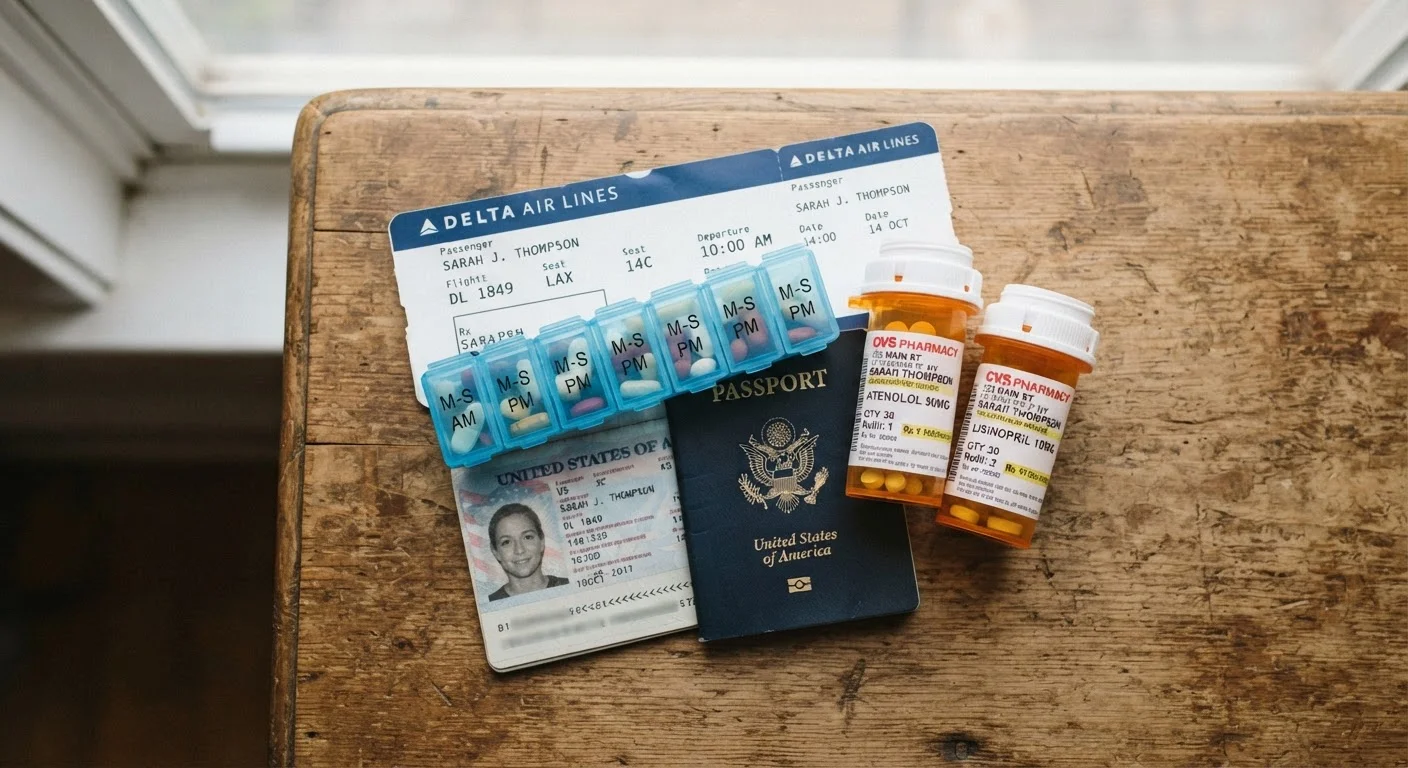
Photo: AscendWit.com | Explore Engaging Blogs. editorial
Why Medication Travel Rules Are More Complex Than You'd Expect
Carrying prescription drugs across borders isn't simply a matter of tossing a pill bottle in your bag. Customs regulations, controlled substance classifications, and quantity limits all vary by country - and what's legal at home may be restricted or outright prohibited at your destination. Getting this wrong can mean confiscation, fines, or delays at the border.
Medication planning belongs on every pre-trip checklist. See our trip planning checklist for a full overview of what to confirm before departure, and review how to research destination-specific rules - including drug laws - well in advance of your trip.
| Recommended documentation | Original prescription label + physician's letter (US State Department travel guidance) |
| Typical personal-use supply limit | 30-90 days, varies by country (Destination country customs rules vary) |
| Where to verify destination drug laws | Destination country's embassy website; US State Department country pages |
| TSA liquid medication rule | Medically necessary liquids over 3.4 oz allowed; must be declared (TSA official guidelines) |
| Controlled substance import permits | May require advance application (weeks ahead) from destination health authority |
| Storage recommendation | Always carry medications in carry-on luggage, never checked bags |
Documentation You Should Carry
Proper paperwork is your strongest protection at customs. Before traveling internationally with any prescription drug, gather the following:
- Original prescription label: Keep medications in the pharmacy-dispensed container with your name, prescribing physician, and dosage clearly printed. Loose pills in unlabeled containers raise immediate flags.
- Physician's letter: A signed letter on official letterhead explaining your condition (without unnecessary medical detail), the medication name, dosage, and that it's medically necessary for travel.
- Translation if needed: For countries where English isn't widely used officially, consider having your letter translated or ask your physician's office to provide a brief translated version.
- Customs forms: Some countries require advance declaration of controlled substances. Check the destination country's embassy website for specific form requirements.
Travelers carrying injectable medications - such as insulin - should also carry documentation from their prescribing provider, as needles and syringes are subject to additional scrutiny. This is one of the details that catch first-time international travelers off guard.
Controlled substance
A drug regulated by government due to its potential for abuse or dependency. Classification varies by country - a medication legal with a prescription in the US may be a controlled or prohibited substance abroad.
Import permit
An official document issued by a destination country's government authorizing a traveler to bring a specific controlled substance into the country. Often required weeks before departure.
Physician's letter
A signed letter from a prescribing doctor explaining the patient's need for a medication, its name, dosage, and medical necessity. Used to support a traveler at customs or border inspection.
Personal-use quantity
The maximum supply of a medication a traveler may bring into a country for their own use, typically expressed in days. Exceeding this limit can trigger customs intervention.
Controlled Substances and Country-Specific Restrictions
A medication classified as a controlled substance in the US - such as opioid pain relievers, benzodiazepines, or stimulants used for ADHD - may face completely different rules abroad. Some countries prohibit these drugs entirely regardless of a valid prescription. Others require an import permit obtained weeks in advance from the destination country's health ministry or embassy.
Japan and Some Gulf States: Extra Scrutiny Required
Before traveling, verify rules through two sources: the destination country's embassy or consulate website in the US, and the US State Department's country information pages. For countries with strict drug laws - including several in Southeast Asia, the Middle East, and Japan - this step is not optional.
It's also worth checking whether your medication contains any ingredient that's restricted at your destination even if the drug itself isn't a controlled substance at home. Some combination products include compounds banned elsewhere.
Packing and Storage Essentials
How you store medications during travel affects both their efficacy and how they're perceived at security checkpoints.
- Carry-on only: Never check critical medications. Luggage can be delayed, lost, or exposed to extreme temperatures in cargo holds.
- Temperature-sensitive drugs: Medications like insulin, certain biologics, and some eye drops require refrigeration or protection from heat. Use an insulated travel case and research whether your accommodation can store items safely.
- Quantity limits: Most countries allow a 30- to 90-day supply for personal use, but limits differ. Carrying more than needed creates scrutiny; carrying too little creates risk if your trip is extended.
- TSA screening: In the US, the TSA allows medications in carry-on bags and does not require them to be in original containers - though it's strongly recommended. Liquids over 3.4 oz are permitted if medically necessary but must be declared at screening.
If you're traveling with children or elderly family members on multiple medications, the complexity multiplies. Our guide to family trip planning covers health prep considerations for multigenerational groups. Also review what truly earns a place in your bag - medications always make the cut.
This article provides general travel information only and is not medical or legal advice. Always consult your prescribing physician and verify entry requirements with official government sources before traveling with any medication.
The content on this site is for informational purposes only and is not a substitute for professional advice. Always consult a qualified professional for guidance specific to your situation.