
Wireless Earbuds and Hearing Health: Separating Concern from Fact

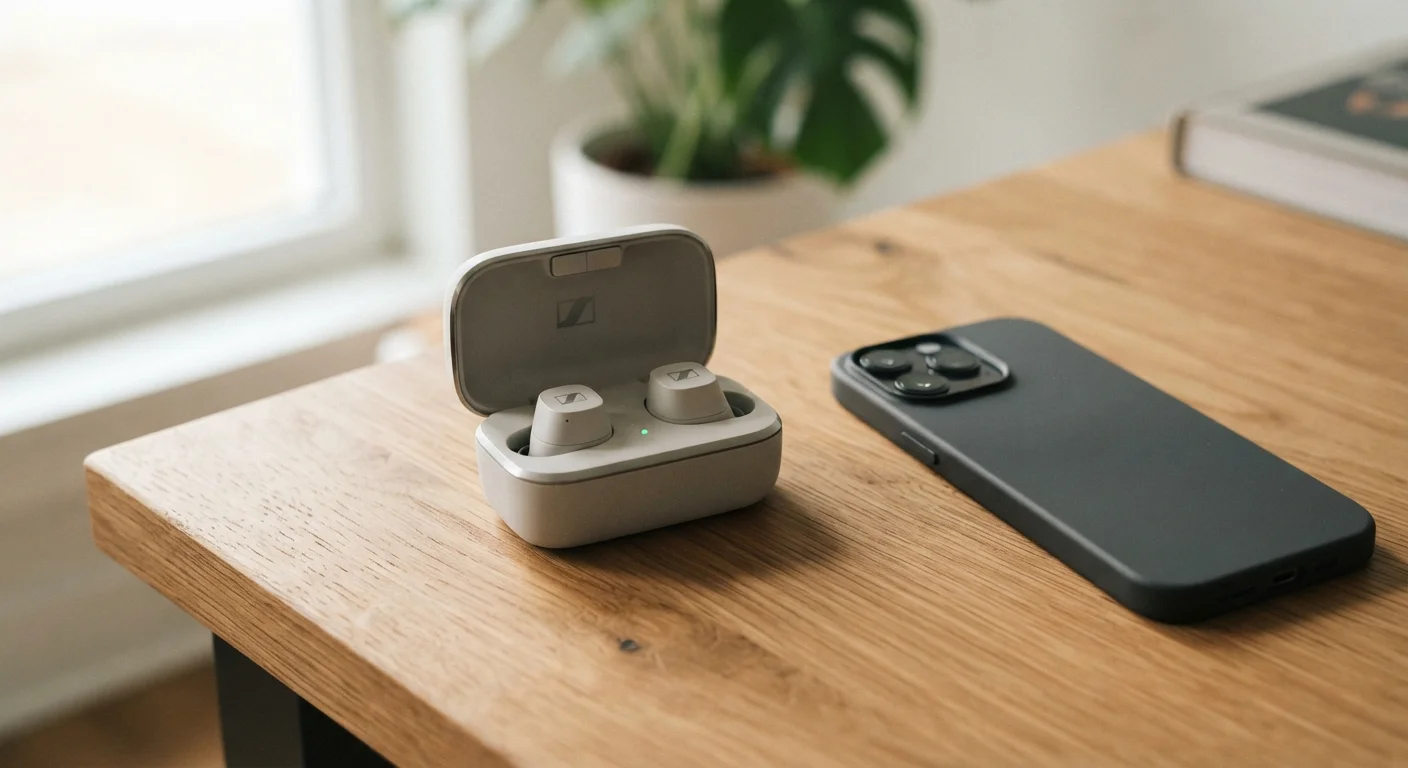
Photo: AscendWit.com | Explore Engaging Blogs. editorial
Key Takeaways
- Volume level matters far more than whether earbuds are wired or wireless.
- The World Health Organization recommends keeping listening volume at or below 85 decibels.
- Noise-canceling features can actually help protect hearing by reducing the urge to raise volume.
- Short, regular breaks during listening sessions meaningfully reduce cumulative sound exposure.
- There is no confirmed scientific evidence that Bluetooth radio waves harm the inner ear.
Why Hearing Concerns Around Earbuds Are Worth Taking Seriously
Wireless earbuds have become one of the most widely used personal tech devices in the United States. Millions of people wear them while commuting, exercising, working, and unwinding - sometimes for several hours a day. That kind of sustained, close-range sound exposure has prompted legitimate questions about long-term hearing health.
Noise-induced hearing loss is a real and well-documented condition. According to the Centers for Disease Control and Prevention (CDC), approximately 17% of American adults report some degree of hearing difficulty - and noise exposure is among the leading contributing factors. So the concern isn't unfounded. But the popular conversation around earbuds has also attracted a fair amount of misinformation. Understanding what the evidence actually shows helps you make informed choices without unnecessary anxiety.
This article is general health information and education, not medical advice. If you have concerns about your hearing, consult a qualified healthcare professional.
Common Myths - and What the Evidence Says
Below are some of the most widespread misconceptions about wireless earbuds and hearing health, paired with what research and health authorities currently understand.
Myth
Wireless earbuds are more dangerous to hearing than wired headphones.
Fact
The transmission method - wireless or wired - has no effect on hearing risk. What matters is the volume delivered to your ear.
The concern here conflates two separate things: how audio is transmitted and how loud it plays. Bluetooth earbuds send audio using low-power radio signals, but by the time sound reaches your eardrum, it's converted to ordinary air pressure waves - the same as any speaker or wired headphone. A wired earbud played at 100 decibels is just as damaging as a wireless one at the same level. The wire itself provides no protection.
Myth
Bluetooth radiation from earbuds causes inner ear damage.
Fact
Bluetooth operates using non-ionizing radio frequency energy at very low power levels, and there is currently no confirmed scientific evidence linking it to hearing damage.
Bluetooth signals are a form of non-ionizing radiation - the same broad category as FM radio and Wi-Fi. Unlike ionizing radiation (such as X-rays), non-ionizing radiation does not carry enough energy to break chemical bonds or damage tissue at the cellular level. The inner ear structures responsible for hearing are not known to be affected by low-level radio frequency exposure. Major health bodies, including the World Health Organization, have not identified Bluetooth emissions at consumer device levels as a hearing hazard.
Myth
If audio doesn't feel painfully loud, it can't be damaging your hearing.
Fact
Hearing damage accumulates gradually. Prolonged exposure to moderately loud sound - levels that feel comfortable - can cause lasting harm over time.
The inner ear contains roughly 15,000 sensory hair cells that do not regenerate once damaged. Exposure to sound above 85 decibels (dB) over extended periods is associated with cumulative hearing loss, according to the National Institute on Deafness and Other Communication Disorders (NIDCD). The problem is that 85 dB - roughly the level of heavy city traffic - doesn't feel painfully loud to most people. It's the duration combined with the level that drives risk, not discomfort alone.
Myth
In-ear earbuds are more dangerous than over-ear headphones because they sit closer to the eardrum.
Fact
Proximity to the eardrum matters less than the actual sound pressure level produced. Both form factors can be equally safe or equally harmful depending on volume and usage habits.
In-ear earbuds do create a tighter acoustic seal, which can make them more efficient - meaning you may need slightly less volume to achieve the same perceived loudness compared to open-back over-ear headphones. That efficiency can actually work in your favor if it means you naturally listen at lower levels. The key variable remains the decibel level reaching your eardrum, not the physical distance between the driver and your ear canal. Comparing headphone types on this dimension alone is misleading.
Myth
Noise-canceling earbuds are a gimmick that doesn't affect hearing health.
Fact
Active noise cancellation can meaningfully support hearing health by reducing the need to raise volume in loud environments.
One of the most common causes of excessive earbud volume is background noise - on trains, planes, busy streets, or loud offices. When users can't hear their audio clearly, they raise the volume, sometimes significantly above safe thresholds. Active noise cancellation (ANC) works by using microphones to detect ambient sound and producing an opposing audio signal to cancel it out. The result is that users often listen at lower volumes without sacrificing clarity, reducing cumulative sound exposure. This is a practical, evidence-supported benefit - not a marketing claim.
Practical Habits That Actually Protect Your Hearing
Once the myths are cleared away, the guidance for protecting your hearing is straightforward. Most audiologists and public health organizations point to the same core principles.
85 dB
Safe maximum volume threshold
The World Health Organization identifies 85 decibels as the upper limit for safe, prolonged sound exposure in occupational and recreational settings.
1.1 billion
Young people at risk globally
The WHO estimates over 1 billion young people worldwide may be at risk of hearing loss due to unsafe listening practices, including personal audio device use.
17%
U.S. adults with hearing difficulty
The CDC estimates roughly 17% of American adults report some trouble hearing, with noise exposure cited as a leading contributing factor.
- Follow the 60/60 guideline: Many hearing specialists suggest keeping volume at or below 60% of maximum and limiting continuous listening to about 60 minutes before taking a break.
- Use volume-limiting features: Most smartphones and earbuds now include settings that cap maximum output volume. Enabling these adds a useful safety floor, especially for younger listeners.
- Choose noise-canceling when possible: Active noise cancellation (ANC) reduces background sound so you don't need to raise the volume to compete with it. This is one of the clearest hearing-health arguments for the feature.
- Give your ears recovery time: Auditory hair cells - the tiny structures in the inner ear that convert sound into nerve signals - need quiet periods to recover from loud exposure. Regular breaks matter.
If you're curious how wireless audio technology works at a technical level, see our guide to Bluetooth vs. Wi-Fi for a plain-language explanation. And if you use earbuds while driving, it's worth reading about hands-free devices and their real-world limitations before assuming they always make you safer on the road.
Ringing After Listening Is a Warning Sign
The content on this site is for informational purposes only and is not a substitute for professional advice. Always consult a qualified professional for guidance specific to your situation.