
Your Home's Annual Maintenance Calendar, Season by Season

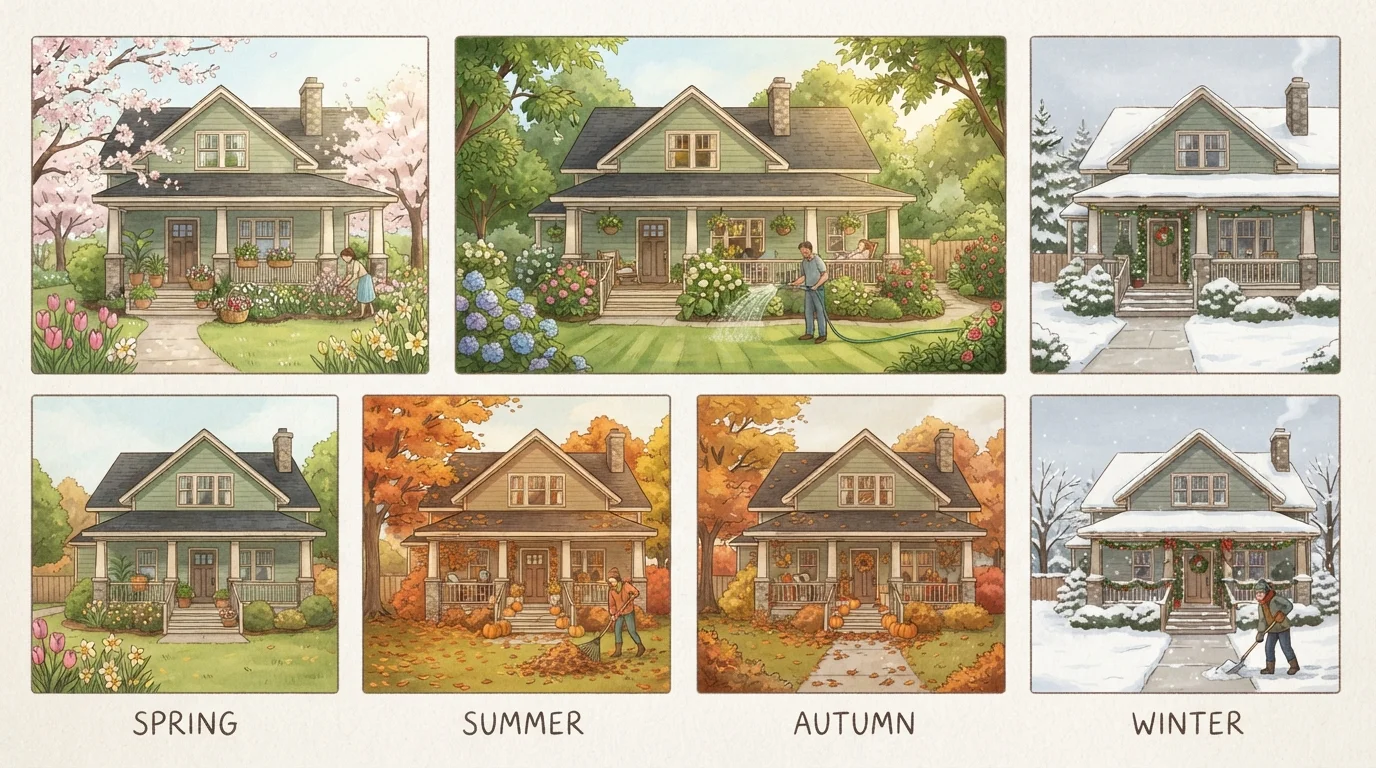
Photo: AscendWit.com | Explore Engaging Blogs. editorial
Why a Seasonal Maintenance Calendar Works
Most home problems don't arrive without warning - they build slowly over months of deferred attention. A seasonal calendar turns that reality into an advantage: by spreading tasks across the year, you avoid the overwhelming (and expensive) pile-up that comes from ignoring everything at once.
This reference guide organizes the most impactful maintenance tasks by season. It applies broadly to single-family homes in US climates, though your specific tasks may vary depending on your region, home age, and whether you rent or own. Renters should check their lease to clarify which responsibilities fall to them versus the landlord.
| Seasons covered | Spring, Summer, Fall, Winter |
| Most time-sensitive season | Fall (pre-freeze deadlines) |
| Applies to | Homeowners and renters (task scope varies by lease) |
| Dryer vent cleaning frequency | At least once per year (U.S. Fire Administration guidance) |
| Water heater typical lifespan | 8-12 years (General industry estimate) |
| Smoke detector battery check | Every 12 months minimum (National Fire Protection Association (NFPA)) |
Just as your car benefits from a regular upkeep schedule - see your car's maintenance schedule explained - your home rewards consistent, proactive attention over reactive repairs.
Spring: Inspect, Repair, and Refresh
After winter, a thorough walk-around reveals what the cold season left behind. Focus on the exterior first.
- Roof and gutters: Look for missing or lifted shingles. Clear gutters of debris and check that downspouts direct water at least a few feet away from the foundation.
- Foundation and grading: Walk the perimeter after rain. Water pooling near the foundation is a warning sign; the soil should slope away from the house.
- Windows and doors: Check weatherstripping for gaps or cracks. Damaged seals let conditioned air escape and drive up energy bills.
- HVAC transition: Before switching to air conditioning, replace or inspect filters. HVAC filter maintenance is one of the most commonly skipped tasks - and one of the most impactful.
- Deck and outdoor structures: Probe wood surfaces for soft spots indicating rot. Tighten any loose railings; this is a safety priority.
Summer: Systems, Safety, and the Exterior
Summer is ideal for exterior projects and safety system checks, since dry weather makes outdoor work manageable.
- Smoke and carbon monoxide detectors: Test every unit. Replace batteries if they haven't been swapped in the past year. Note expiration dates on the back of each detector.
- Attic ventilation: Confirm attic vents are unobstructed. Poor attic airflow traps heat, strains the AC, and can warp roof decking over time.
- Caulking and exterior paint: Re-caulk around windows, doors, and any penetrations where two different materials meet. Touch up chipped paint to prevent moisture intrusion.
- Irrigation and drainage: Check sprinkler heads for coverage gaps or heads that spray onto structures. Adjust as needed.
- Dryer vent: Clean the dryer vent duct from the outside cap inward. A lint-clogged duct is a leading cause of home fires.
Ice dam
A ridge of ice that forms at the edge of a roof when heat escapes through the attic and melts snow, which then refreezes at the colder eaves. Ice dams can force water under shingles and cause interior water damage.
Weatherstripping
Sealing material applied around doors and windows to block drafts and prevent conditioned air from escaping. It degrades over time and should be inspected annually.
Creosote
A flammable byproduct of burning wood that builds up inside chimney flues over time. Excess buildup is a leading cause of chimney fires and requires professional removal.
Grading
The slope of the soil around a home's foundation. Proper grading directs rainwater away from the foundation, reducing the risk of basement water intrusion and structural damage.
Fall: Winterize Before the Cold Arrives
Fall tasks are time-sensitive - many must be done before the first hard freeze.
- Heating system: Schedule a professional furnace or heat pump inspection before you need it urgently. Change the filter and test the thermostat.
- Exterior faucets and hoses: Disconnect and drain garden hoses. Shut off outdoor water supply valves and open outdoor faucets to drain residual water. Frozen pipes are one of the most expensive and disruptive winter failures.
- Chimney and fireplace: Have a certified chimney sweep inspect and clean the flue before your first fire of the season. Creosote buildup is a fire hazard.
- Gutters (second pass): Once leaves have fully fallen, clean gutters again so they're clear heading into winter. Ice dams form when water backs up behind clogged gutters.
- Weatherization: Add door sweeps to exterior doors with visible gaps. Check attic insulation levels; inadequate insulation leads to heat loss and ice dam risk.
This is also a good time to review your home maintenance fund and set aside funds for any repairs the season revealed.
Winter: Monitor, Document, and Plan Ahead
With the exterior buttoned up, winter maintenance is mostly about monitoring and indoor systems.
- Pipe protection during cold snaps: Know where your main water shut-off is. During extreme cold, let faucets on exterior walls drip slightly and keep cabinet doors under sinks open to allow warm air circulation.
- Water heater: Visually inspect for rust, mineral buildup around connections, or signs of a slow leak. Most water heaters have a lifespan of 8-12 years.
- Reverse ceiling fan direction: Most fans have a switch to run clockwise in winter, which pushes warm air near the ceiling back down into the living space.
- Log your maintenance: Winter downtime is ideal for updating records. A home maintenance log helps you track what's been done and supports insurance claims or future resale.
#1
Cause of home fires: heating equipment
Heating equipment is the leading cause of home fire deaths in the US during winter months, according to the National Fire Protection Association.
~$1,000
Average cost of a burst pipe repair
Water damage from frozen and burst pipes can cost $500-$1,500 or more depending on location and extent, per general contractor estimates.
As you plan spring projects, use this quiet season to get quotes, pull permit information, and prioritize the work that came up during your fall walkthrough.
The content on this site is for informational purposes only and is not a substitute for professional advice. Always consult a qualified professional for guidance specific to your situation.