
Lighting Layers: How Ambient, Task, and Accent Light Shape a Room

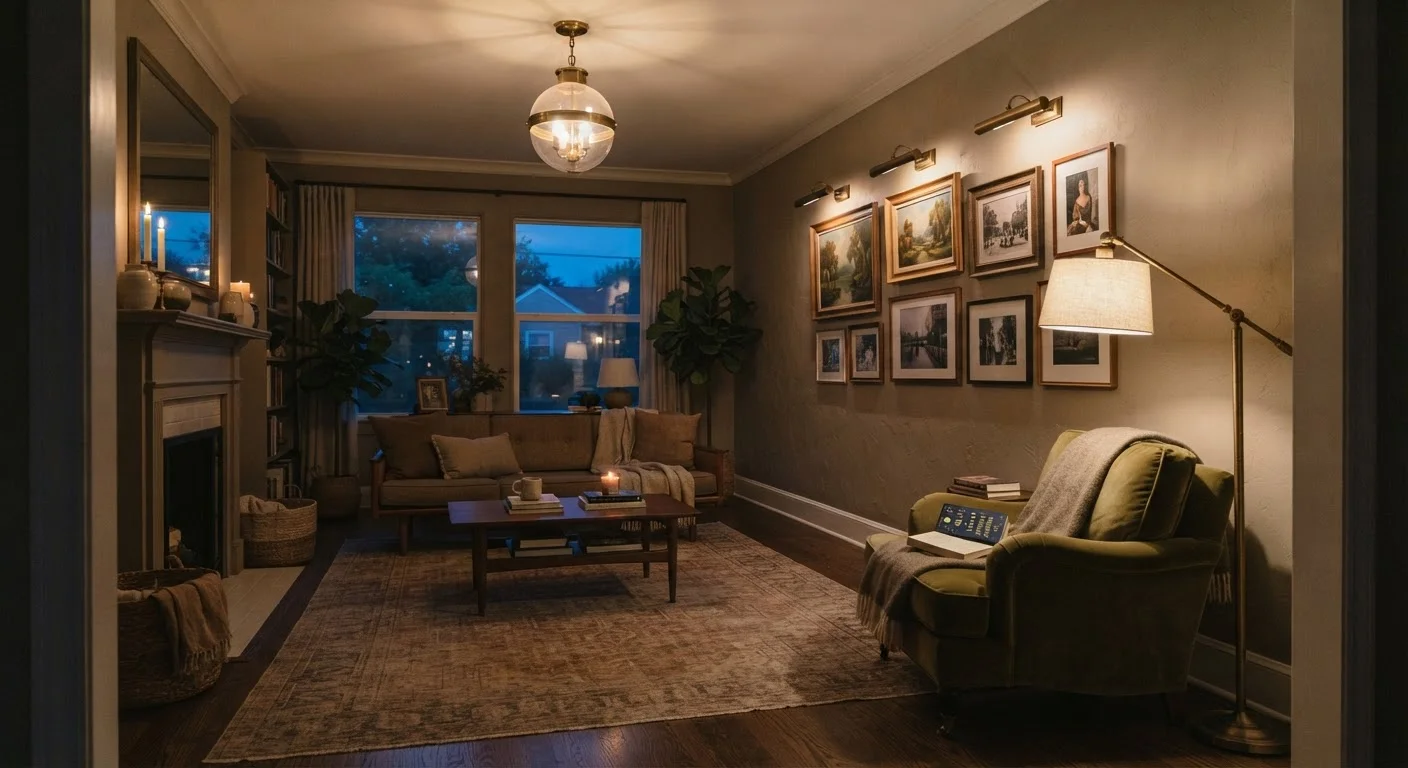
Photo: AscendWit.com | Explore Engaging Blogs. editorial
Key Takeaways
- Relying solely on overhead lighting is the most common home lighting mistake.
- Ambient light provides general illumination; task light supports specific activities; accent light adds depth and drama.
- Dimmers let you shift between lighting moods without adding new fixtures.
- Most rooms benefit from at least three separate light sources at different heights.
- Layered lighting can make a room feel larger, warmer, and more intentional without major renovation.
Why One Overhead Light Is Never Enough
Walk into a room lit only by a single ceiling fixture and something feels off - flat, clinical, or simply uninviting. That's because one light source casts uniform brightness without shadow or variation, which is how our eyes perceive space as dull. Real environments - natural daylight included - always involve multiple light sources coming from different directions and heights.
Layered lighting solves this by intentionally combining three types of light in a single room. The result isn't just prettier; it's more functional. You can read comfortably, display objects with impact, and shift the mood from bright and energetic to calm and dim - all within the same space, often just by switching which lights are on.
If you're starting from scratch or reassessing a room you already have, see our guide on decorating a room from scratch - lighting decisions fit naturally into that planning process.
68%
Homeowners dissatisfied with their current lighting
A commonly cited figure in interior design surveys suggests the majority of homeowners feel their home lighting is inadequate or poorly planned.
3-4
Recommended light sources per room
Interior designers generally recommend a minimum of three to four separate light sources per room to achieve effective layering.
2700K-3000K
Ideal warm white bulb color temperature
This color temperature range is widely recommended by lighting designers for living areas and bedrooms to create a warm, inviting atmosphere.
The Three Layers Explained
Ambient Light: The Foundation
Ambient light is the base layer - it fills the room with enough general illumination to move around safely and comfortably. Ceiling fixtures, recessed downlights, and flush-mount lights are the most common sources. The key is that ambient light shouldn't be your only layer, and it doesn't need to be blinding. A dimmer switch on your main fixture gives you immediate control over the room's overall mood.
Task Light: Purposeful and Focused
Task lighting is positioned to support a specific activity: reading, cooking, applying makeup, or working at a desk. It's brighter and more directed than ambient light, and it goes where the work happens. A desk lamp, under-cabinet kitchen lighting, a bedside reading light, or a floor lamp angled toward a chair are all task lights. Without this layer, people tend to strain in pools of ambient light that weren't designed for close-up work.
Accent Light: Depth and Drama
Accent lighting highlights - a piece of artwork, a textured wall, a plant, or an architectural feature like a fireplace surround. It draws the eye intentionally and creates visual depth by producing contrast between lit and unlit surfaces. Picture lights, directional spotlights, LED strip lights behind shelving, and candles all function as accent sources. This layer is where personality enters a room.
Start With a Dimmer Switch
Putting the Layers Together in Practice
Applying all three layers doesn't require a full renovation or a large budget. Start by auditing what you already have: most rooms already include ambient light, but lack task and accent sources. Adding a floor lamp near a seating area and a small LED strip inside a bookcase can immediately shift how a room reads.
A few practical principles help:
- Vary the height. Ceiling, mid-height (lamps on tables or shelves), and low sources (floor lamps, candles) create visual rhythm. Lighting at only one height flattens a room.
- Control independently. If all your lights are on one switch, you lose the ability to choose layers. Plug-in lamps on separate switches - or smart bulbs - solve this without rewiring.
- Match color temperature within a room. Mixing warm and cool bulbs in the same space creates visual discord. Stick to one temperature range per room for a cohesive result.
Lighting is one of the foundational elements covered in the design principles behind every well-styled room - understanding how light interacts with scale, color, and contrast will sharpen every design decision you make.
Room-by-Room Considerations
Each room has different functional needs, which shifts how you weight the three layers.
Living rooms benefit most from flexibility - a mix of ambient, accent, and task sources that can be adjusted for conversation, TV-watching, or reading. Dimmers are especially valuable here.
Kitchens lean heavily on task lighting. Under-cabinet lights directly over countertops eliminate the shadow your own body casts when the overhead light is behind you. Ambient and accent layers still matter - pendants over an island add both.
Bedrooms prioritize low, warm light. Overhead fixtures at full brightness are rarely appropriate at night. Bedside lamps as task lights and a subtle accent source (a lamp behind a headboard, for example) create a calming environment.
Bathrooms require task light at face level for grooming. Side-mounted vanity lighting eliminates shadows that overhead lighting creates on the face. An ambient ceiling light rounds out the room.
If you're planning a larger room refresh, our room planning checklist includes a lighting audit as a key step before any spending begins.
Lighting and Room Size Perception
Frequently Asked Questions
The content on this site is for informational purposes only and is not a substitute for professional advice. Always consult a qualified professional for guidance specific to your situation.