
Home Workouts vs. Gym Training: Choosing the Setting That Fits Your Life

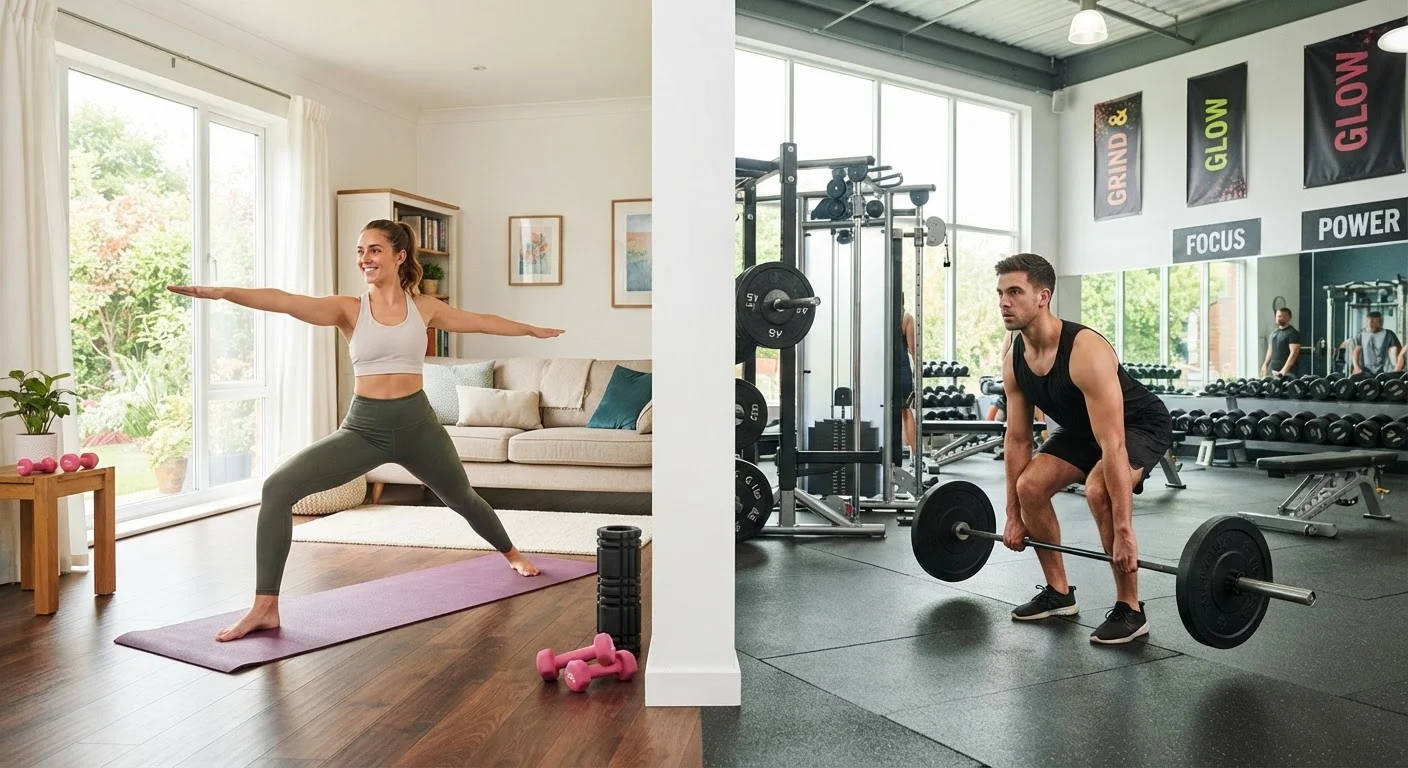
Photo: AscendWit.com | Explore Engaging Blogs. editorial
Key Takeaways
- Both home and gym training can produce meaningful fitness results when done consistently.
- Home workouts eliminate commute time and ongoing membership costs, but equipment is limited.
- Gyms offer diverse equipment and a motivating social environment, but require a recurring financial commitment.
- Your personality, schedule, and specific fitness goals should drive the choice between settings.
- Many people benefit from a hybrid approach, combining both environments across the week.
Convenience and Accessibility
One of the most underrated factors in any fitness plan is how easy it is to actually do the workout. Research consistently shows that proximity and friction are powerful predictors of exercise adherence. When a workout requires a 20-minute drive, finding parking, and changing in a locker room, the mental barrier grows - especially on low-energy days.
Home workouts remove nearly all of that friction. You can train in 15 minutes, in any room, at any hour. This matters enormously for parents, shift workers, or anyone juggling irregular schedules. If you're new to building a routine, see our guide to starting a fitness routine for practical first steps.
Gyms, however, offer something home environments rarely can: dedicated space. Walking into a facility where the sole purpose is exercise creates a psychological shift for many people. The absence of household distractions - laundry, screens, family interruptions - allows deeper focus during sessions.
| Criterion | Home Workouts | Gym Training |
|---|---|---|
| Upfront cost | Low to none | Membership fees required |
| Commute required | None | Yes, travel time needed |
| Equipment variety | Limited unless purchased | Extensive, all included |
| Privacy | High | Shared public space |
| Social / motivational environment | Minimal | Strong - classes, trainers, peers |
| Flexibility of hours | 24/7, fully flexible | Limited to facility hours |
| Strength progression ceiling | Moderate without added weight | High with full weight range |
| Space needed | Small clear area sufficient | None at home required |
Equipment, Exercise Variety, and Progression
Equipment access is where the gap between home and gym training is most apparent. A standard gym provides barbells, cable machines, cardio equipment, free weights across a full range, and specialty tools like pull-up rigs and leg press machines. This variety directly supports progressive overload - the principle of gradually increasing training demands - which is foundational to building strength and endurance over time.
Home training is more limited by default, though the ceiling rises considerably with even modest investment in adjustable dumbbells, resistance bands, or a pull-up bar. Bodyweight training alone can build meaningful fitness; however, advancing past intermediate strength levels without external load becomes genuinely difficult. For a direct look at this trade-off, our article on bodyweight vs. free weights breaks down the practical differences.
It's also worth noting that variety itself has fitness value. Repeating identical movement patterns limits adaptation - a principle explored in our piece on why doing the same workout every day can backfire. Gyms make it structurally easier to rotate exercises, whereas home trainers need to be more intentional about introducing new stimuli.
~30%
Adults meeting weekly aerobic activity guidelines
The CDC reports that fewer than one in three US adults meet federal physical activity recommendations, highlighting that the biggest barrier is consistency, not setting.
67%
Gym members who rarely use their membership
Industry analyses have repeatedly found that a large share of gym members visit infrequently, suggesting that access alone does not guarantee consistent training.
2-3x/week
Minimum frequency for strength adaptation
Exercise science guidelines, including those from the American College of Sports Medicine, generally recommend resistance training at least two to three days per week for meaningful adaptation.
Cost, Motivation, and Long-Term Sustainability
Gym memberships in the US typically range from roughly $10 to $80 per month for standard facilities, with premium gyms running higher. Over years, that cost compounds. Home training, by contrast, can cost nothing beyond whatever equipment you already own. Initial investments in basic gear - a set of resistance bands or a pair of dumbbells - are a one-time expense.
Motivation is more nuanced. Some people find that paying for a membership creates accountability. Others feel self-conscious in a gym environment, particularly when starting out, and train more freely at home. Neither response is wrong - the sustainable choice is the one that matches how you actually stay consistent.
A Hybrid Approach Is Completely Valid
For those with joint concerns or mobility limitations, both settings can accommodate low-impact training. Our overview of low-impact exercise options outlines joint-friendly approaches that work in either environment. Tracking your progress beyond the scale - through endurance markers, strength gains, and functional improvements - also helps sustain motivation regardless of where you train. See our guide on measuring fitness gains without a scale for practical methods.
This article is for general informational and educational purposes only and does not constitute medical or professional fitness advice. Consult a qualified healthcare provider or certified fitness professional before beginning any new exercise program, particularly if you have an existing health condition or injury.
The content on this site is for informational purposes only and is not a substitute for professional advice. Always consult a qualified professional for guidance specific to your situation.