
Roundabouts, Four-Way Stops, and Yield Signs: Who Actually Goes First

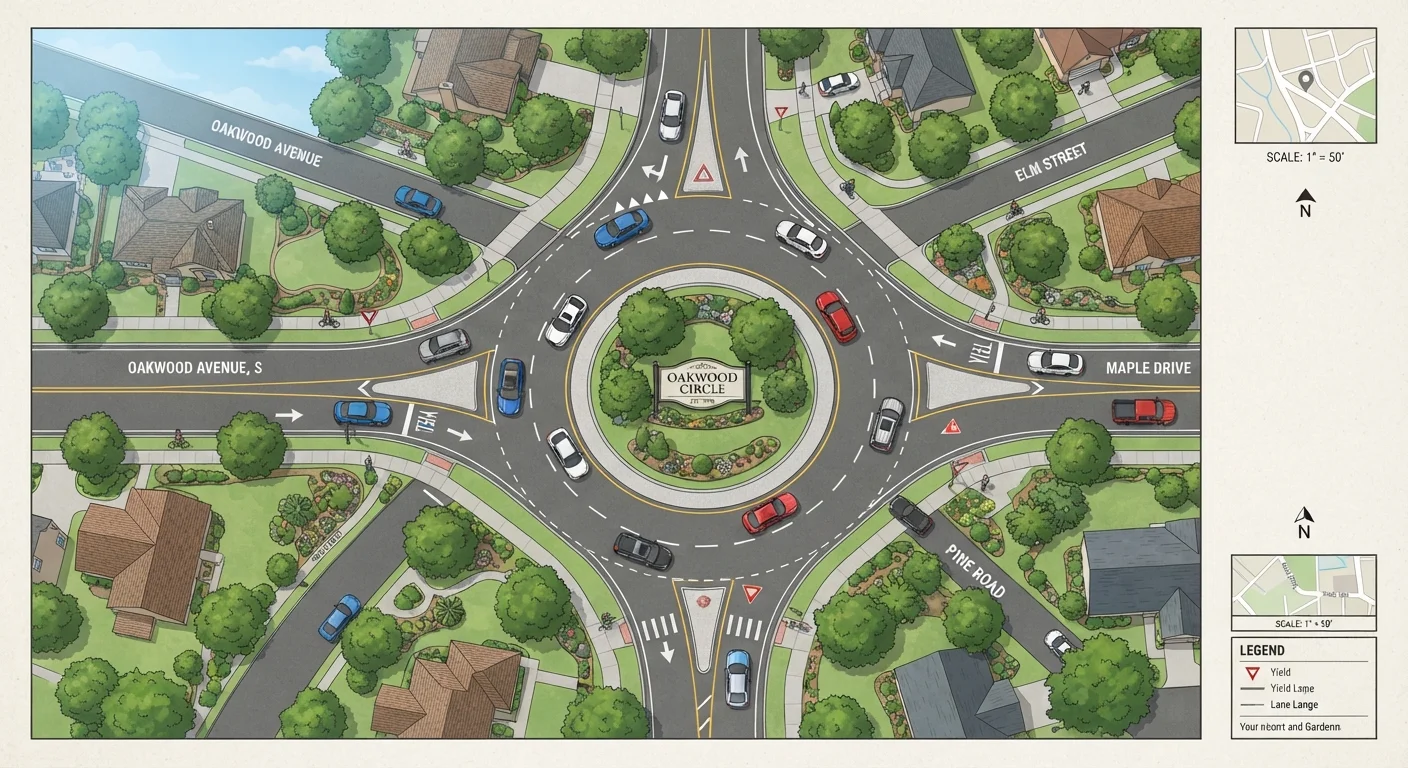
Photo: AscendWit.com | Explore Engaging Blogs. editorial
Why Right-of-Way Rules Trip Up So Many Drivers
Intersections are where most collisions happen - and a big reason is that drivers aren't always sure who's supposed to go first. Right-of-way rules aren't just bureaucratic formalities; they're the shared agreement that keeps traffic moving without anyone having to guess. Yet surveys by highway safety organizations consistently find that many licensed drivers can't correctly explain the rules for a four-way stop or a yield sign. If you've ever hesitated at a roundabout or waved another driver through awkwardly, you're not alone.
This guide walks through three intersection types where confusion is most common: roundabouts, four-way stops, and yield signs. Understanding each one builds real confidence behind the wheel - the kind that comes from knowing the rule, not just hoping for the best.
For newer drivers just getting comfortable on the road, our guide to car ownership basics covers a lot of this foundational territory as well.
| Roundabout entry rule | Yield to all vehicles already inside the circle (Uniform vehicle codes, US traffic law) |
| Four-way stop tiebreaker | Driver on the left yields to driver on the right (Standard US traffic law) |
| Yield sign requirement | Slow and assess; stop only if traffic requires it (MUTCD (Manual on Uniform Traffic Control Devices)) |
| Pedestrian priority | Pedestrians in marked crosswalks always have right of way (US traffic law, all states) |
| Roundabout traffic direction | Counterclockwise in the United States |
Roundabouts: Yield Before You Enter
A roundabout is a circular intersection where all traffic flows in one direction - counterclockwise in the United States. The fundamental rule is straightforward: yield to traffic already in the circle. Before you enter, you must give way to any vehicle currently traveling through the roundabout. Once the path is clear, you enter and take your exit.
Common mistakes include treating roundabouts like four-way stops (stopping when you don't need to) or entering without yielding, which can cause a direct side collision. In multi-lane roundabouts, stay in your chosen lane throughout - don't weave between lanes inside the circle.
- Slow down as you approach the yield line.
- Yield to circulating traffic - vehicles already inside go first.
- Signal your exit - use your right turn signal as you approach your exit.
- Do not stop inside the roundabout unless traffic requires it.
Research from the Insurance Institute for Highway Safety indicates roundabouts reduce fatal crashes significantly compared with traditional intersections - largely because they eliminate head-on and high-speed right-angle collisions.
~75%
Reduction in fatal crashes at roundabouts vs. traditional intersections
According to the Insurance Institute for Highway Safety (IIHS), roundabouts reduce fatal crashes by approximately 90% compared with signalized intersections in some study sets, with commonly cited figures ranging around 75-90% depending on the study context.
~40%
Of all traffic fatalities occur at or near intersections
The National Highway Traffic Safety Administration (NHTSA) has reported that a significant share of fatal crashes involve intersection-related conflicts.
Four-Way Stops: Order, Timing, and the Tie-Breaker
A four-way stop (also called an all-way stop) requires every vehicle to stop completely before proceeding. The rules follow a clear priority order:
- First to stop, first to go. Whoever arrived at the stop line first has the right of way.
- Simultaneous arrival: yield to the right. If two vehicles stop at the same time, the driver on the left yields to the driver on the right.
- Facing vehicles turning left yield to oncoming traffic going straight. If you're turning left and a car across from you is going straight, they go first.
The most common error here is a polite but confusing wave-through when the rules already dictate who goes. Well-meaning gestures can actually create uncertainty and risk. Trust the rules - first in, first out - and only use a wave when the situation is genuinely ambiguous after eye contact is made.
Even experienced drivers can develop lazy habits at familiar intersections. Our article on dangerous assumptions experienced drivers make gets into exactly this kind of complacency.
When Rules Are Clear, Skip the Wave
Yield Signs: Merge Without Stopping (When It's Safe)
A yield sign does not mean stop. It means slow down, assess oncoming or cross traffic, and proceed only when it's safe to do so. If traffic requires it, you stop - but stopping every time you see a yield sign is actually incorrect behavior and can disrupt traffic flow.
Yield signs are common at:
- Roundabout entries (as described above)
- Freeway on-ramps and merge points
- T-intersections where one road feeds into another
- Crosswalk areas near pedestrian islands
The key skill with yield signs is reading traffic early - looking far enough ahead to judge gaps and adjust speed smoothly. Braking hard at a yield sign usually means you weren't scanning far enough in advance. See our piece on how skilled drivers scan the road ahead for practical techniques.
One important legal note: pedestrians always have the right of way at marked crosswalks, regardless of what sign controls a given intersection. That rule applies everywhere.
Right-of-way
The legal priority given to one driver, cyclist, or pedestrian to proceed before others at a shared point. It is not a physical right - it must be granted, not taken.
Roundabout
A circular intersection where vehicles travel counterclockwise around a central island. Entering vehicles must yield to those already circulating.
Four-way stop
An intersection where all approaching roads have stop signs. Drivers proceed in the order they arrived; simultaneous arrivals yield to the driver on the right.
Yield sign
A triangular red-and-white sign directing a driver to slow down and give way to crossing or merging traffic. A full stop is only required if conditions demand it.
Circulating traffic
Vehicles that are already inside a roundabout and moving through the circle. They always have priority over vehicles trying to enter.
The content on this site is for informational purposes only and is not a substitute for professional advice. Always consult a qualified professional for guidance specific to your situation.