
Reading an Ingredient List Without a Chemistry Degree

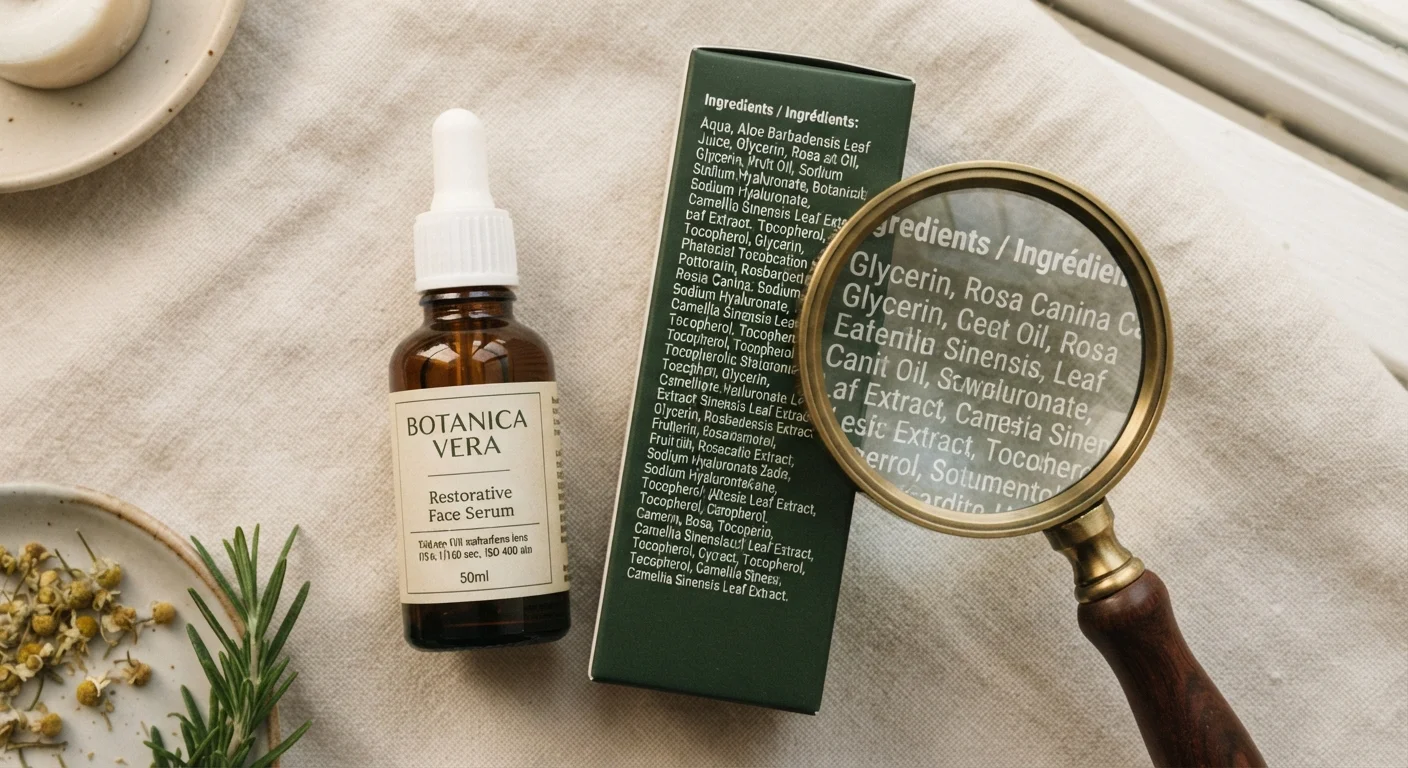
Photo: AscendWit.com | Explore Engaging Blogs. editorial
Key Takeaways
- Ingredients are listed in descending order by concentration, so the first five matter most.
- Active ingredients do the real work; everything else supports texture, stability, or shelf life.
- Fragrance and certain preservatives are common irritants worth learning to recognize by name.
- A long ingredient list doesn't mean a product is better or worse - context matters.
- You don't need to recognize every ingredient, just know which categories to prioritize.
Why Ingredient Lists Look So Overwhelming
Cosmetic ingredient lists use INCI names - a standardized, globally recognized naming system based largely on Latin and chemical terminology. This is why your familiar vitamin E shows up as tocopherol, and shea butter appears as Butyrospermum parkii. The naming system exists for scientific accuracy and international consistency, not to confuse you.
The good news: you don't need to recognize every ingredient. You just need a framework for knowing which ones to pay attention to and why. Much like learning to read a nutrition label - see our guide on reading a nutrition facts label without confusion for a comparable skill-building approach - ingredient literacy improves quickly with a few core concepts.
What you will need
How to Read the List: Step by Step
Use the steps below to build a consistent, efficient process for evaluating any skincare product label. You won't need to do this exhaustively every time - once you recognize common ingredients, the scan becomes intuitive and takes under a minute.
Product ingredient label
The primary source you'll be reading and analyzing during this process.
Ingredient lookup database
A free online resource to identify unfamiliar INCI (International Nomenclature of Cosmetic Ingredients) names.
Notepad or notes app
Useful for tracking ingredients that work well or cause issues across multiple products.
Understand the order ingredients appear in
In the US, cosmetic ingredients must be listed in descending order of concentration - meaning the ingredient present in the largest amount appears first. The first five or so ingredients typically make up the bulk of the product's formula. If water (aqua) is first, the product is water-based. If an oil or butter leads, it's richer and more occlusive.
Ingredients present at 1% or less can appear in any order after the main list, which is why some active ingredients appear near the bottom despite being functionally important.
Identify the key active ingredients
Active ingredients are the ones doing the targeted work - exfoliating, hydrating, brightening, or firming. Common examples include hyaluronic acid (hydration), niacinamide (barrier support and tone), retinol (cell turnover), salicylic acid (exfoliation), and ascorbic acid (vitamin C). These are often highlighted on the front label, but always verify their position in the full list.
Position matters: an active listed near the bottom may be present in too small a concentration to be effective, though some actives (like retinol) work at very low percentages. If you're unsure what concentration a product uses, check the brand's published information or look up the ingredient's typical effective range from a reputable dermatological source.
Recognize common filler and functional ingredients
Most ingredients on a label aren't actives - they're doing important supporting work. Emollients (like dimethicone or squalane) smooth and soften. Humectants (like glycerin) draw moisture in. Emulsifiers hold oil and water together. Thickeners give products their texture. None of these are red flags - they're necessary for a product to feel and perform the way it should.
Understanding these categories helps you see past a long, intimidating ingredient list. A 30-ingredient serum isn't necessarily complex - many of those entries may be stabilizers, pH adjusters, or texture agents that are inert on your skin.
Spot potential irritants for your skin type
Certain ingredient categories are more likely to cause reactions in sensitive or reactive skin. Fragrance - listed as 'fragrance,' 'parfum,' or specific essential oils - is one of the most common triggers. To learn more about how fragrance functions in formulas, see our overview on fragrance in skincare.
Preservatives like methylisothiazolinone or certain parabens may also cause sensitivity in some people. High concentrations of alcohol (listed as alcohol denat. or SD alcohol near the top of a list) can be drying for some skin types, though not everyone reacts negatively. Build a short personal list of ingredients your skin has reacted to - this becomes your most reliable screening tool over time.
Cross-reference with your known sensitivities
Once you've mapped out the actives, fillers, and potential irritants, do a quick scan for anything on your personal sensitivity list. If you've never had a reaction, this step is still useful for building awareness over time. Keep a simple note tracking which products worked and which didn't - patterns often reveal a recurring ingredient that your skin doesn't tolerate well.
This habit is especially valuable if you're managing a skin condition. Always work with a dermatologist for guidance specific to your situation, since ingredient tolerance is highly individual and varies with skin barrier health, climate, and product layering.
Use Free Ingredient Databases
Patch Test Before Committing
Don't Assume 'Natural' Means Safe
What the List Won't Tell You
Ingredient lists are genuinely useful, but they have limits. They don't reveal the exact concentration of most ingredients (except in regulated drug products like sunscreens), the quality of the raw materials used, or how the formula was processed and stabilized. Two products with identical ingredient lists can perform very differently depending on these factors.
Labels also don't account for how you're layering products. Combining certain actives - like retinol and exfoliating acids - can increase irritation risk even if each product alone seems mild. This is where building ingredient literacy pairs well with paying attention to your skin's actual responses over time, not just the label in the store.
This article is for informational purposes only and does not constitute medical, dermatological, or professional skincare advice. If you have a skin condition or experience persistent reactions, consult a qualified dermatologist.
The content on this site is for informational purposes only and is not a substitute for professional advice. Always consult a qualified professional for guidance specific to your situation.