
The Difference Between a Passport and a Passport Card

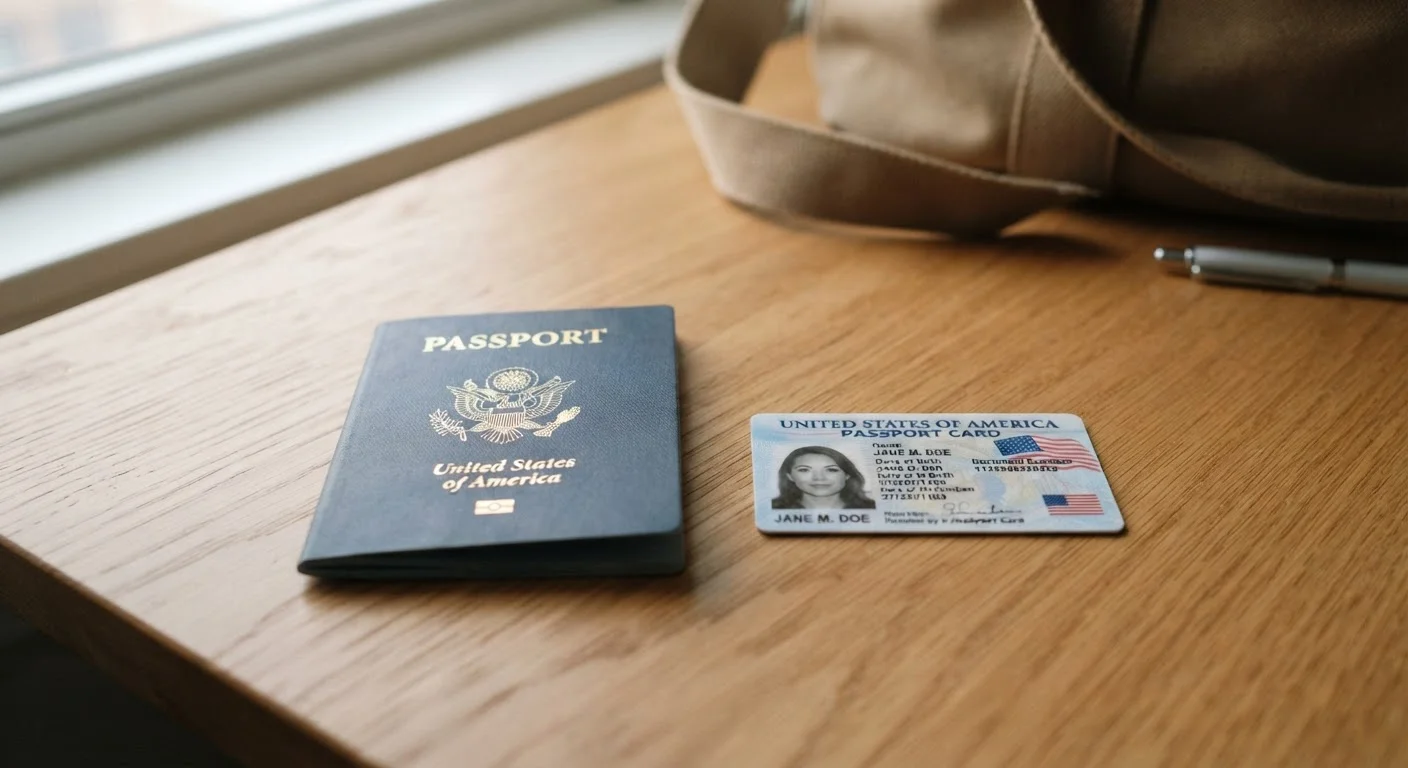
Photo: AscendWit.com | Explore Engaging Blogs. editorial
Key Takeaways
- A passport book is accepted for all international travel, including air travel; a passport card is not valid for international flights.
- The passport card is accepted only at land border crossings and designated sea ports between the US, Canada, Mexico, Bermuda, and the Caribbean.
- Both documents cost less if you're applying for or renewing both at the same time through the US Department of State.
- Processing times and required documents are nearly identical for both; you apply through the same State Department system.
- Neither document replaces a visa where one is required - always verify entry requirements for your specific destination.
What Each Document Actually Is
Both the US passport book and the passport card are official identity and citizenship documents issued by the US Department of State. They confirm your identity and your right to travel as a US citizen. However, they differ in format and - critically - in where they are accepted.
The passport book is the familiar navy booklet with pages for visa stamps and entry records. It is valid for 10 years for adults (5 years for children under 16) and is accepted at all international ports of entry worldwide, including airports, seaports, and land borders.
The passport card is a wallet-sized, credit-card-format document introduced to simplify frequent short-distance crossings. It carries the same legal weight as proof of citizenship but has strict geographic and transportation-mode limitations built into its design. For a fuller breakdown of all US travel document types, see our guide to passport, visa, and entry requirements.
Where Each One Is - and Isn't - Accepted
This is the most important practical distinction between the two documents.
| Criterion | Passport Book | Passport Card |
|---|---|---|
| Format | Booklet with visa pages | Wallet-sized card |
| International air travel | Accepted worldwide | Not accepted |
| Land border crossings | Accepted | Accepted (US, Canada, Mexico) |
| Sea/cruise travel | Accepted at all seaports | Accepted at designated seaports only |
| Validity (adults) | 10 years | 10 years |
| Portability | Larger booklet | Fits in a wallet |
| RFID chip | No | Yes |
The passport card's acceptance is explicitly limited by the US government. It is not valid for international air travel under any circumstances - even if your destination country would otherwise accept it. If you attempt to check in for an international flight with only a passport card, airlines are required to deny boarding.
At land border crossings, the card works smoothly. It also incorporates a radio-frequency identification (RFID) chip, allowing border agents to pull up your records quickly at land ports, which can speed up processing.
Costs, Timelines, and How to Apply
Applications for both documents go through the same US Department of State system - you can apply at a passport acceptance facility, a regional passport agency, or by mail for renewals.
10 years
Validity period for adult applicants
Both the passport book and passport card are valid for 10 years when issued to applicants aged 16 and older, according to the US Department of State.
5 years
Validity for children under 16
Minor passports - both book and card - are issued for 5 years due to the pace of physical changes in children, per US Department of State policy.
Applying for both documents simultaneously reduces the total fee compared to applying for each separately. Current fees are published on the State Department's official website (travel.state.gov) and are updated periodically, so always check there for the latest figures before you apply.
Standard processing times are typically the same for both documents. Expedited processing is available for both, though it carries an additional fee. If you have urgent travel needs, contact a regional passport agency directly - the State Department's site maintains a current list of locations and appointment availability.
Required documentation is essentially identical: proof of US citizenship (such as a birth certificate), a government-issued photo ID, a completed application form, and a passport-style photo. Renewals by mail follow a slightly different process.
Which One Should You Get?
The right answer depends entirely on how and where you travel. Here's a straightforward way to think about it:
- If you ever fly internationally, a passport book is not optional - it's required.
- If you cross into Canada or Mexico by car, bus, or train on a regular basis, the card offers a convenient, wallet-friendly alternative for those specific trips.
- If you take cruises that begin and end at a US port and visit only eligible destinations, the card may suffice - but confirm with your cruise line before departure, as policies can vary.
Many travelers find value in holding both: the book for air travel and the card for routine land crossings. Since applying for both at once saves money, it's worth considering if you travel in both contexts regularly.
Whatever you decide, verify the entry requirements for each destination you plan to visit. A US passport - book or card - does not replace a visa where one is required, and entry rules can change. Always consult official government sources such as the US Department of State and the destination country's embassy before you travel.
This article provides general information about US travel documents for educational purposes. Entry requirements, fees, and processing times can change; always verify current details directly with the US Department of State at travel.state.gov before applying or traveling.
The content on this site is for informational purposes only and is not a substitute for professional advice. Always consult a qualified professional for guidance specific to your situation.