
New Orleans Neighborhoods, Mapped for the Curious Traveler

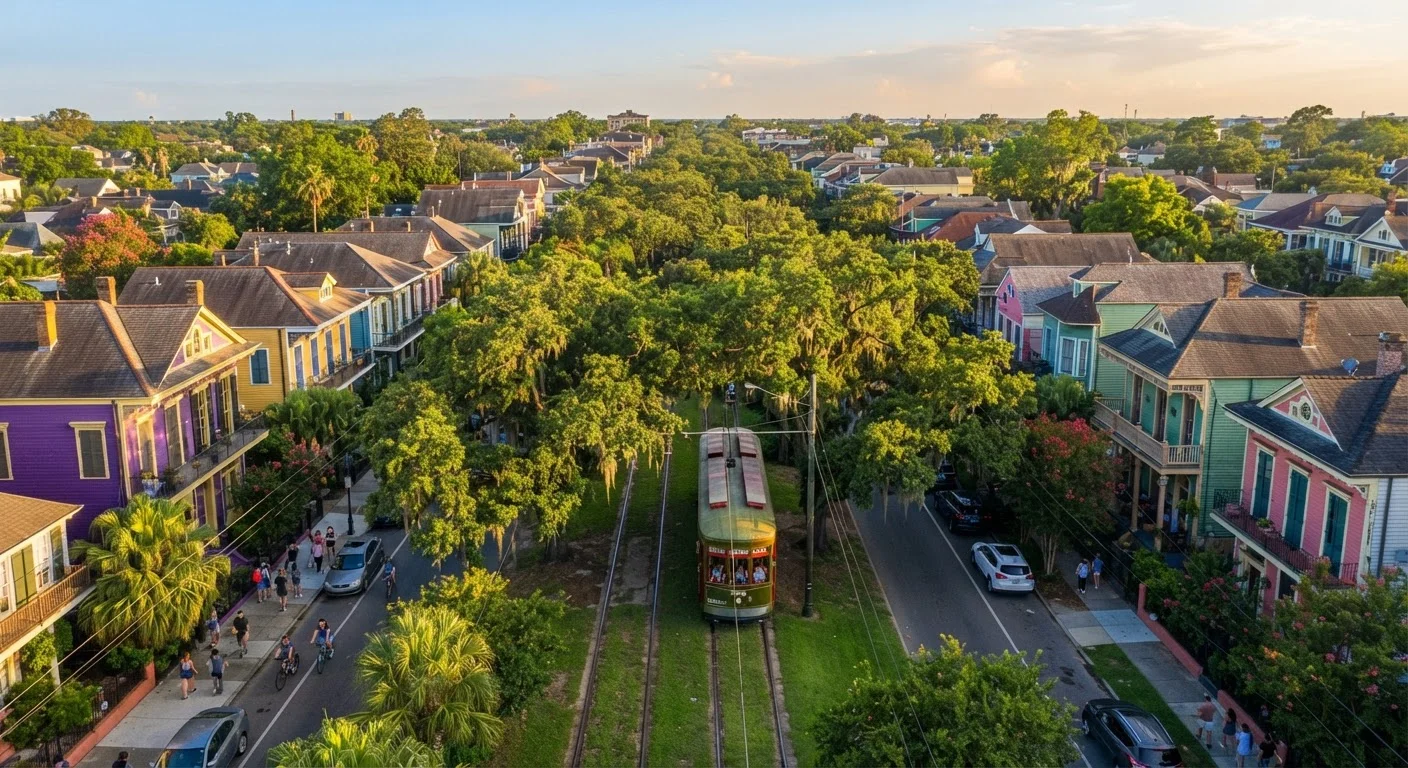
Photo: AscendWit.com | Explore Engaging Blogs. editorial
The French Quarter and Faubourg Marigny
The French Quarter is where most first-time visitors begin - and with good reason. Its dense grid of wrought-iron balconies, 18th-century Creole architecture, and round-the-clock energy make it unlike any other American neighborhood. Bourbon Street draws the loudest crowds, but Royal Street and Chartres Street offer quieter galleries, antique shops, and neighborhood restaurants that serve locals alongside tourists.
Just downriver, the Faubourg Marigny (commonly called the Marigny) is where many visitors find the music scene they were actually hoping for. Frenchmen Street hosts a string of live music clubs in an intimate, walkable strip. The neighborhood's colorful shotgun houses and Creole cottages - see the
Shotgun house
A long, narrow home style common in New Orleans where rooms are aligned in a straight row from front to back, with no hallway. The name comes from the idea that a bullet fired through the front door would pass through every room and exit the back.
Creole cottage
A low-profile, four-room house style originating in New Orleans in the 18th and 19th centuries, often sitting flush with the sidewalk and featuring a steeply pitched roof.
Second line
A style of New Orleans street parade rooted in brass band tradition, where a main procession is followed by a 'second line' of community members dancing with umbrellas or handkerchiefs.
Neutral ground
The New Orleans term for the median strip running down the center of major streets. The phrase dates to the 19th century and is used city-wide.
Bywater and the 9th Ward
Continuing downriver from the Marigny, Bywater has become one of New Orleans' most talked-about creative neighborhoods. Its National Register Historic District status has helped preserve a dense collection of working-class Creole cottages and shotgun doubles. Today the neighborhood is home to artist studios, independent coffee shops, and farm-to-table restaurants. It suits travelers who prefer local, residential energy over tourist infrastructure.
The broader 9th Ward encompasses Bywater along with the Upper and Lower 9th Ward. Visitors interested in New Orleans' history of resilience - particularly following Hurricane Katrina in 2005 - may find meaningful context walking or driving through these areas. Community-led organizations offer tours focused on recovery, architecture, and cultural preservation. Travelers should approach these neighborhoods with respect for the communities that live and work there.
Verify Conditions Before You Visit
Garden District and Uptown
The Garden District sits on the upriver side of downtown and represents a distinctly different chapter of New Orleans history. Developed largely by American merchants in the early 19th century - as a deliberate counterpoint to the Creole French Quarter - it features some of the grandest Greek Revival and Italianate mansions in the South. The neighborhood is walkable, quiet, and lined with live oaks. Magazine Street, its main commercial corridor, runs for miles and is lined with independent boutiques, cafes, and restaurants.
Uptown extends further upriver and is anchored by Tulane and Loyola universities. It carries a more residential, academic feel with leafy side streets, neighborhood bars, and a lively stretch of Magazine Street. The St. Charles streetcar - one of the oldest continuously operating lines in the world - connects both neighborhoods to downtown, making car-free exploration genuinely practical.
| Number of distinct neighborhoods | Approximately 73 recognized neighborhoods (City of New Orleans neighborhood planning districts) |
| French Quarter size | Roughly 13 city blocks by 7 blocks |
| St. Charles streetcar line | One of the oldest continuously operating streetcar lines in the world (New Orleans Regional Transit Authority) |
| Bywater designation | Listed on the National Register of Historic Places (National Park Service) |
| Garden District home style | Predominantly Greek Revival and Italianate architecture |
| Frenchmen Street | Located in the Faubourg Marigny, known for live music venues |
Mid-City, Tremé, and Beyond
Mid-City occupies the geographic center of New Orleans and is often overlooked by visitors who stay close to the river. It's a largely residential neighborhood with a welcoming food scene and easy access to City Park - one of the largest urban parks in the United States, housing the New Orleans Museum of Art and extensive walking and cycling paths.
The Tremé, just north of the French Quarter, is widely recognized as one of the oldest African American neighborhoods in the country. It holds deep roots in jazz history, Mardi Gras Indian tradition, and the second-line parade culture that remains central to New Orleans identity. Several cultural landmarks and community organizations are based here. Travelers who want to understand New Orleans beyond Bourbon Street will find Tremé essential - and should engage respectfully as a guest in a living, active community.
73+
Recognized neighborhoods in New Orleans
The City of New Orleans officially recognizes more than 70 distinct neighborhood planning areas, each with its own identity.
~1.4 miles
Length of the French Quarter
The French Quarter stretches roughly 13 blocks along the Mississippi River, making it walkable end-to-end in under 30 minutes.
The content on this site is for informational purposes only and is not a substitute for professional advice. Always consult a qualified professional for guidance specific to your situation.