
Sedentary Job? Movement Strategies That Fit Into a Desk-Bound Day

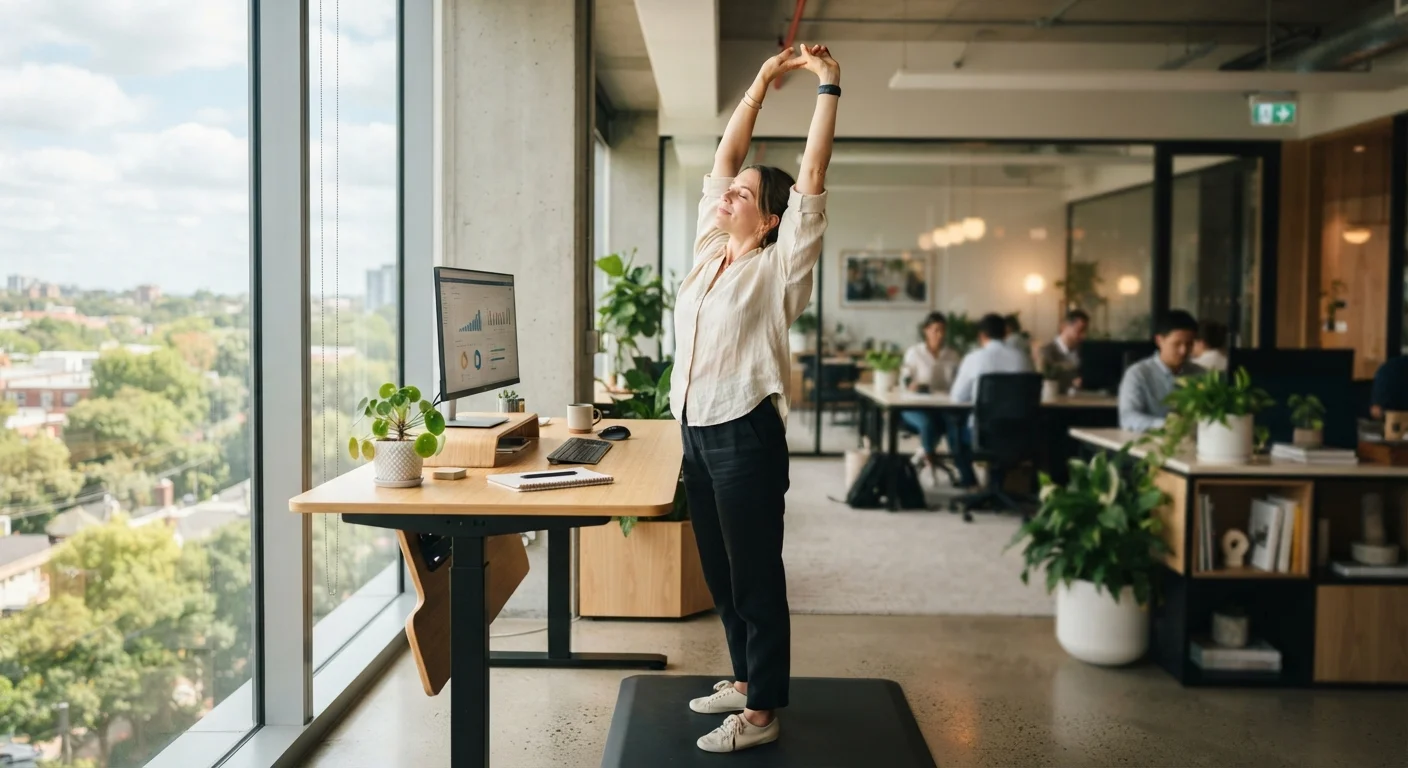
Photo: AscendWit.com | Explore Engaging Blogs. editorial
Key Takeaways
- Prolonged sitting is linked to increased health risks even among people who exercise regularly.
- Breaking up seated time every 30-60 minutes with brief movement is more effective than one long workout break.
- Simple strategies like standing calls, desk stretches, and walking meetings require no equipment.
- Habit-stacking movement onto existing work routines makes consistency easier to maintain.
- Small, frequent movement bursts contribute to daily physical activity goals over time.
Why Prolonged Sitting Is a Distinct Health Concern
Public health researchers now describe excessive sitting as a behavior with health risks that operate somewhat independently of whether a person exercises. Studies, including large cohort analyses reviewed by bodies such as the World Health Organization, indicate that long, unbroken periods of sedentary time are associated with elevated risks for cardiovascular disease, type 2 diabetes, and all-cause mortality - even among individuals who meet weekly exercise guidelines.
The underlying mechanisms include reduced muscle contraction (which normally helps regulate blood glucose and lipid clearance), slowed circulation in the lower limbs, and sustained postural loading on the spine and hip flexors. Put simply: the body was not designed to remain still for six to eight hours at a stretch, and it responds accordingly.
The encouraging news is that the evidence also shows interrupting sitting frequently - even with low-intensity movement - can meaningfully offset some of these effects. You don't need a gym, dedicated workout clothes, or a large block of time. You need a workable strategy and a few reliable cues.
This Is General Information, Not Medical Advice
How to Add Movement to a Desk-Bound Day
The steps below are designed to be practical, low-barrier, and compatible with a standard office or remote-work environment. Work through them in order to build a layered approach, or start with the one or two that fit your current schedule most naturally.
What you will need
Interval timer or phone alarm
Prompts movement breaks at regular intervals throughout the workday.
Comfortable footwear
Supports safe standing and walking during desk breaks.
Standing desk or desk riser
Allows alternating between sitting and standing without leaving the workstation.
Set a movement reminder every 30-60 minutes
Use a phone alarm, a calendar notification, or a wearable device to prompt you to move at regular intervals. Research published in journals including Medicine & Science in Sports & Exercise suggests that breaking up prolonged sitting every 30 minutes - even briefly - is associated with improved blood sugar regulation and reduced fatigue compared to uninterrupted sitting.
Keep the reminder tone or label positive and specific, such as "Stand for two minutes" rather than a generic alert, to make it easier to act on immediately.
Stand or walk during phone calls and virtual meetings
Any call that does not require you to type or share your screen is an opportunity to stand, pace gently, or walk in place. This is one of the lowest-friction movement strategies available because it adds no extra time to your schedule - the meeting was already happening.
If your meetings are audio-only, consider stepping outside or walking a short indoor loop while you listen, which also supports alertness and focus.
Incorporate standing or walking micro-tasks
Identify routine tasks that can be performed away from your chair: printing, filing, refilling water, or delivering a message to a colleague in person rather than by message. These micro-movements are sometimes called incidental activity - movement that occurs as a byproduct of normal tasks rather than dedicated exercise time.
Incidental movement and low-intensity activity contribute meaningfully to overall daily energy expenditure in ways many people underestimate.
Add a short desk stretch sequence
A 2-3 minute sequence of seated or standing stretches can reduce muscle tension in the neck, shoulders, and hip flexors - areas commonly affected by prolonged desk posture. Focus on:
- Neck rolls: Slowly drop your ear toward your shoulder and hold for 10-15 seconds each side.
- Chest opener: Clasp your hands behind your back and gently lift, opening the chest.
- Hip flexor stretch: Stand and step one foot forward into a gentle lunge, keeping the torso upright.
Move gently and stop if you feel sharp or unusual pain. These stretches are not a substitute for joint-friendly structured movement, but they help offset postural strain between sessions.
Build a lunchtime walk into your schedule
A 10-15 minute walk during a lunch break is one of the most well-supported ways to accumulate moderate physical activity on workdays. Walking at a comfortable pace outdoors has also been associated with improved mood and reduced afternoon fatigue in occupational research contexts.
Block the time in your calendar as a recurring appointment so it is protected from meeting overlap. Even a walk around your building or a nearby block counts. If consistency is a challenge, structuring your week deliberately around small commitments like this can significantly improve long-term adherence.
Track your total daily movement, not just formal workouts
Step counts, active minutes, and standing time all feed into a broader picture of daily movement. Reviewing this data weekly helps you identify patterns - such as particularly sedentary days - and adjust your strategies accordingly.
Consider how your workday movement fits alongside your broader weekly activity. A balanced weekly routine incorporates cardio, strength work, flexibility, and rest - your desk-day strategies are one layer within that larger picture.
Stack Movement Onto Existing Habits
Sitting Less Doesn't Replace Structured Exercise
This article is for informational purposes only and is not a substitute for professional medical advice, diagnosis, or treatment. Always consult a qualified healthcare provider with questions about your health or physical activity level.
The content on this site is for informational purposes only and is not a substitute for professional advice. Always consult a qualified professional for guidance specific to your situation.