
Fitness Terms Every New Exerciser Should Know

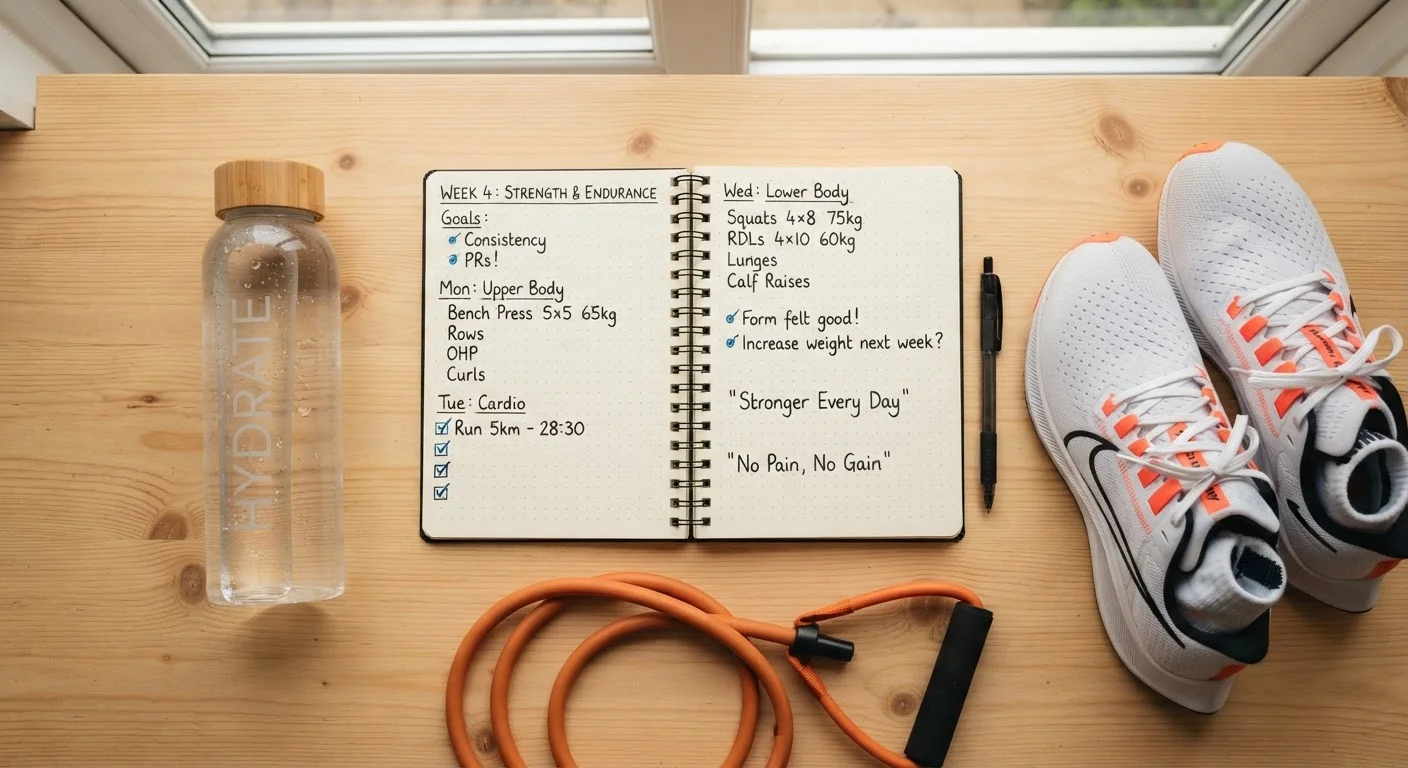
Photo: AscendWit.com | Explore Engaging Blogs. editorial
Why Fitness Jargon Matters More Than You Think
Walk into any gym, open a fitness app, or follow a workout video and you'll immediately run into words like superset, RPE, or progressive overload. For a new exerciser, this language can feel like a barrier - but it doesn't have to be. Knowing what these terms mean helps you follow instructions accurately, avoid injury, and communicate with trainers or workout partners without guesswork.
This glossary covers the vocabulary you're most likely to encounter when starting a fitness routine for the first time. Think of it as a reference you can return to as your workouts evolve.
| Most common beginner structure | 3 sets × 8-12 reps per exercise (Standard recommendation in introductory strength training programs) |
| Rest between sets (strength training) | 60-180 seconds, depending on intensity (General guideline from exercise science literature) |
| Moderate RPE for most beginners | 5-6 out of 10 (Borg RPE scale, widely used in fitness and clinical settings) |
| Weekly physical activity guidance (adults) | 150 min moderate or 75 min vigorous aerobic activity (U.S. Physical Activity Guidelines for Americans) |
| Muscle groups typically targeted in compound lifts | 2 or more simultaneously (Basic exercise classification used in certified training curricula) |
Core Training Terms: Reps, Sets, and Structure
Most workout programs are built around a handful of structural terms that tell you exactly how much work to do and how to organize it.
- Repetition (rep): One complete movement - for example, one squat from standing to full depth and back up.
- Set: A group of consecutive reps performed without resting. "3 sets of 10" means you do 10 reps, rest, and repeat twice more.
- Rest interval: The recovery period between sets. Shorter rests (30-60 seconds) keep your heart rate elevated; longer rests (2-3 minutes) help muscles recover for heavier lifting.
- Superset: Two exercises performed back-to-back with little or no rest between them, usually targeting different muscle groups.
- Circuit: A series of several exercises completed in sequence, typically with minimal rest, before repeating the full round.
- Progressive overload: The principle of gradually increasing exercise demand over time - more weight, more reps, or less rest - so your body continues to adapt and improve.
Rep (Repetition)
One complete cycle of a movement from start to finish and back. Counting reps helps you track volume and follow program instructions accurately.
Set
A group of consecutive reps performed without stopping to rest. Most programs prescribe a specific number of sets per exercise.
Progressive Overload
The gradual increase of training stress - through more weight, reps, or reduced rest - to prompt continued physical adaptation over time.
HIIT
High-Intensity Interval Training: a method alternating short, intense work periods with recovery intervals. It is time-efficient but physically demanding.
RPE
Rate of Perceived Exertion - a personal scale (commonly 1-10) used to self-assess workout intensity without needing heart rate equipment.
VO2 Max
The maximum volume of oxygen your body can use per minute during peak exercise. It is a standard measure of aerobic fitness capacity.
Compound Exercise
A multi-joint movement that recruits multiple muscle groups at once - such as a squat or push-up - providing broad training stimulus efficiently.
Hypertrophy
An increase in muscle fiber size resulting from consistent resistance training. It is the primary mechanism behind visible muscle growth.
Eccentric Phase
The portion of a strength movement where the working muscle lengthens under tension - for example, lowering the bar during a bench press.
Superset
Two exercises performed consecutively with minimal rest between them, often pairing opposing muscle groups to save time and maintain training density.
Cardio and Intensity: HIIT, Steady-State, and More
Cardiovascular training comes with its own vocabulary, especially around intensity.
- Steady-state cardio: Sustained exercise at a consistent, moderate pace - like a 30-minute jog at the same speed throughout.
- HIIT (High-Intensity Interval Training): Alternating short bursts of high-effort work with recovery periods. Common for time efficiency, though it's demanding and not recommended as a starting point for complete beginners.
- RPE (Rate of Perceived Exertion): A self-reported scale - usually 1 to 10 - describing how hard an effort feels. An RPE of 5-6 is a moderate conversation pace; 8-9 is near-maximum effort.
- VO2 max: The maximum rate at which your body can consume oxygen during intense exercise. It's a measure of cardiovascular fitness often cited in research; higher values generally reflect better aerobic capacity.
- Target heart rate zone: A heart rate range - typically expressed as a percentage of your estimated maximum heart rate - used to guide workout intensity.
It's worth noting that many popular claims about specific cardio methods are more complicated than headlines suggest. The fitness myths that keep people from getting started article addresses several of those misconceptions directly.
Strength and Muscle Terms You'll See Often
Strength training vocabulary describes both technique and physiology.
- Concentric phase: The part of a movement where the muscle shortens under load - the "up" phase of a bicep curl.
- Eccentric phase: The controlled lengthening of the muscle - the "down" phase of the same curl. Eccentric control is important for joint health and strength development.
- Compound exercise: A movement that uses multiple joints and muscle groups simultaneously - squats, deadlifts, and push-ups are classic examples.
- Isolation exercise: A movement that focuses on a single muscle group, like a leg extension or lateral raise.
- Hypertrophy: The process of muscle cells growing larger, typically stimulated by moderate-to-high rep strength training.
Understanding how flexibility, strength, endurance, and balance each play a role - covered in depth in our guide on the four components of fitness - will help you build a more complete routine rather than focusing on just one area.
150 min
Recommended weekly moderate aerobic activity for adults
Per the U.S. Physical Activity Guidelines for Americans, this is the minimum suggested for general health benefits.
2×
Minimum weekly muscle-strengthening sessions recommended
The U.S. Physical Activity Guidelines recommend strength training targeting all major muscle groups at least twice per week.
This article is for general informational purposes only and is not a substitute for advice from a qualified fitness or healthcare professional. Consult a professional before beginning any new exercise program, especially if you have existing health conditions.
The content on this site is for informational purposes only and is not a substitute for professional advice. Always consult a qualified professional for guidance specific to your situation.